

Pros

-
 - Stunning styling and design make it a joy to use<br />- Best image quality yet from a Four Thirds camera<br />- Easy to adjust image processing settings on a shot-by-shot basis
Cons

-
 - Viewfinder is smaller than similarly priced competitors<br />- Confusing menu makes some features difficult to access<br />- No weather sealing
Build and Handling
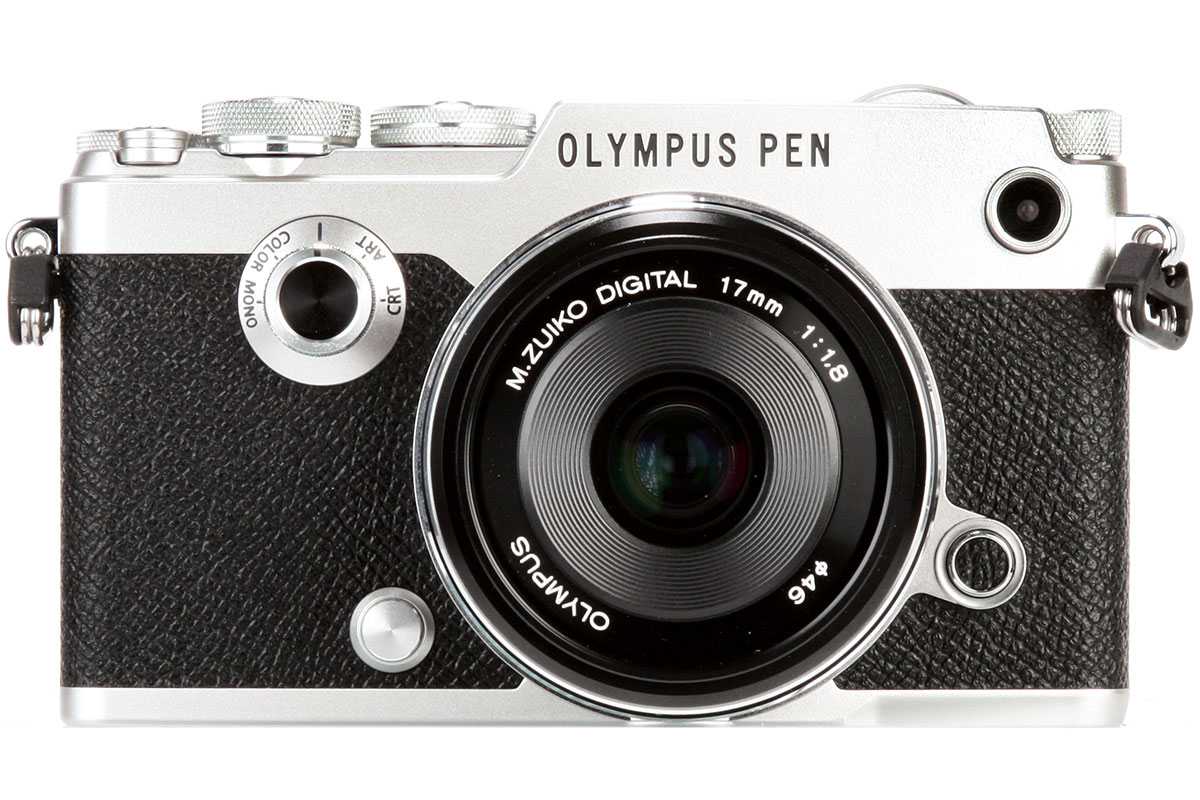

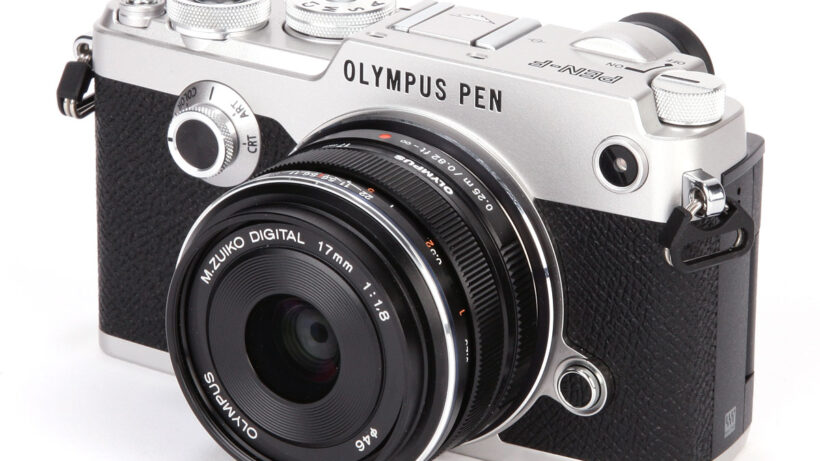
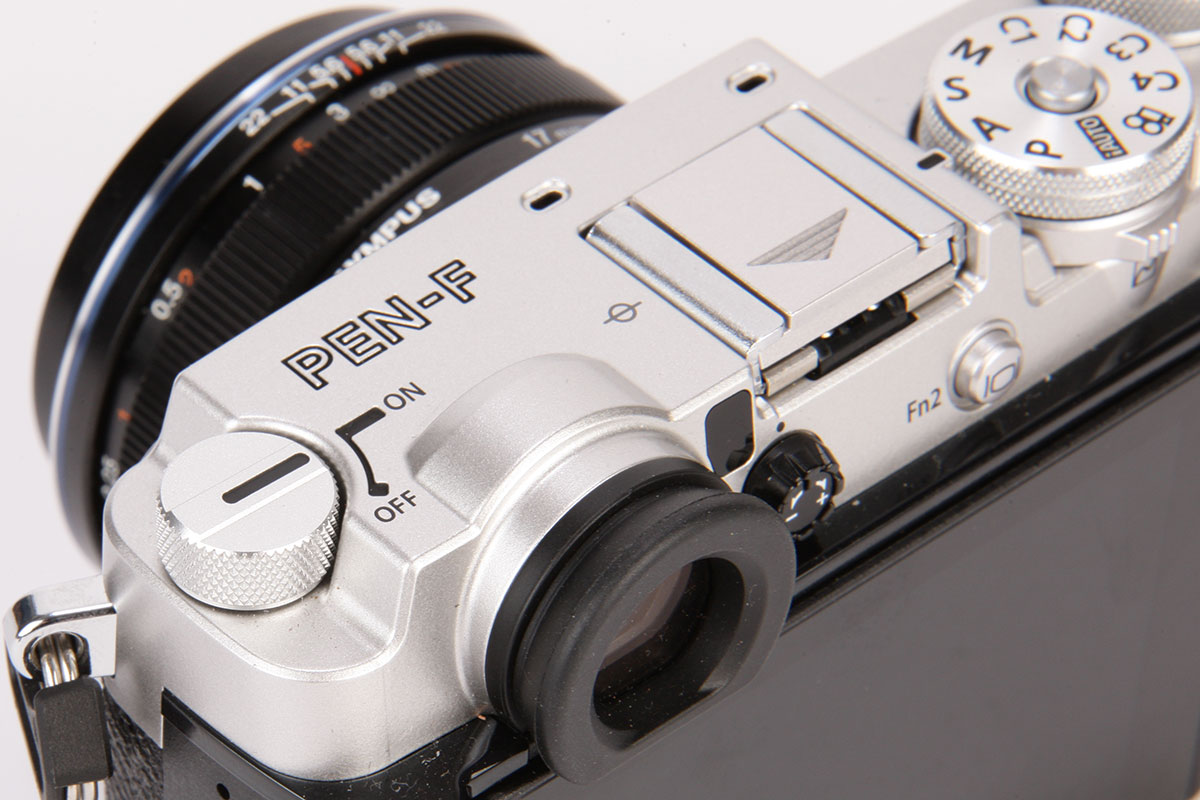
The Pen-F is a stunning-looking camera, and its build quality certainly lives up to expectations. The all-metal body feels solid and robust, with the engraved top plate adding a touch of class. All of the dials have a beautifully milled finish and click precisely as they’re turned. Even the film-rewind-esque power switch is a miniature work of art. While there’s no front grip at all, a deeply recessed thumb grip on the back gives a secure hold, aided by the non-slip leatherette covering. Olympus has paid a lot of attention to getting such little design details right over the past few years, and with the Pen-F it’s certainly paid off.
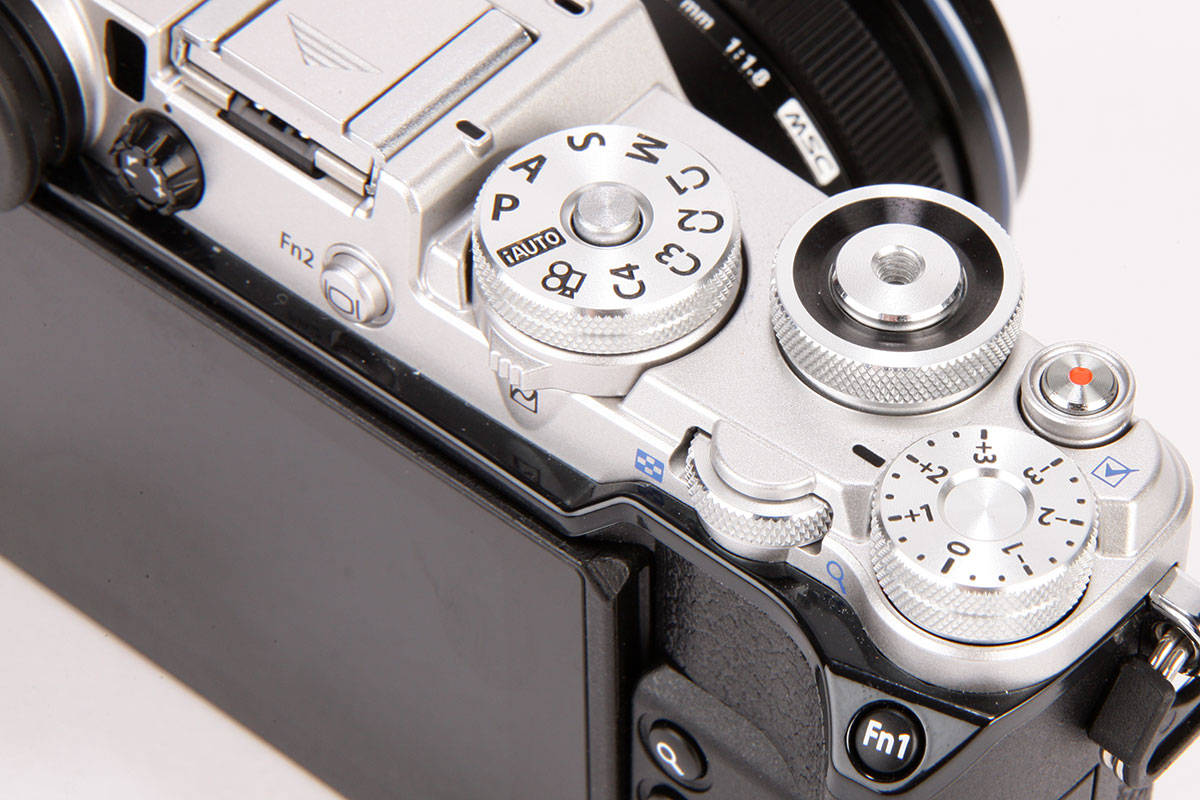
Olympus has included a dedicated exposure compensation dial that’s easy to turn with your thumb while looking through the viewfinder, but difficult to knock accidentally (a feat most other manufacturers find difficult to emulate). This works with front and rear electronic control dials that can be customised for each exposure mode. For example, I set the rear dial to change ISO directly in aperture priority, which is my most-used mode. Overall, the Pen-F is probably the best Olympus camera yet to shoot with.
The touchscreen can be used for certain operations, for instance to reposition the focus point while shooting. Being a left-eyed user, I didn’t get on with this when using the viewfinder, as I found myself frequently resetting the focus point with my nose (right-eyed shooters should have no such trouble). Instead, I reconfigured the d-pad to move the focus area. It’s a little small and not as quick as the touchscreen could be, but worked fine for me. This is the great advantage of having such a customisable camera: you have a lot of scope to set it up to suit you, rather than having to adapt how you shoot to get around the camera’s limitations.
While Olympus suggests the Pen-F is best suited to shooting with small primes, I tried it with a wide range of lenses up to the Olympus 40-150mm f/2.8 Pro and found that in reality, it worked just fine with all of them. Compared with previous Pen models, it works a lot better with telephotos due to the built-in EVF. However, I’d say the SLR-like form of the OM-D range does give more balanced handling with heavier lenses. A more pressing practical issue is the tripod socket, which is placed right at the front of the body adjacent to the lens mount, that itself is placed at the bottom of the body. As a result, even slightly larger lenses such as the Olympus 12-40mm f/2.8 Pro can block many quick release plates from screwing on properly. Here the optional ECG-4 handgrip should help, as it has a built-in Arca Swiss dovetail plate running along the base, but at £109.99 it’s a costly solution.
Olympus’s menus are huge, labyrinthine and often incomprehensible. The problem is that the company has added loads of new features over the years, but is terrified of removing or reorganising anything in case it alienates existing users. The result is an incredibly well featured and customisable camera but, unfortunately, one that often feels almost impossible to master, unless you happen to have a degree in science or engineering.
For example, those who enjoy shooting with third-party optics using mount adapters will appreciate that it’s now possible to program each of their lenses into the camera, with the lens name recorded into the EXIF and the focal length fed to the IS system. This function can be assigned to a custom button for easy recall and I set it up as part of a custom set-up on the mode dial, with the depth of field preview button reassigned to activate focus peaking. Unfortunately, though, Olympus has buried this deep in the menu, making it uncommonly difficult for newcomers to the brand to configure.