

Pros

-
 - Stunning styling and design make it a joy to use<br />- Best image quality yet from a Four Thirds camera<br />- Easy to adjust image processing settings on a shot-by-shot basis
Cons

-
 - Viewfinder is smaller than similarly priced competitors<br />- Confusing menu makes some features difficult to access<br />- No weather sealing
Viewfinder and screen
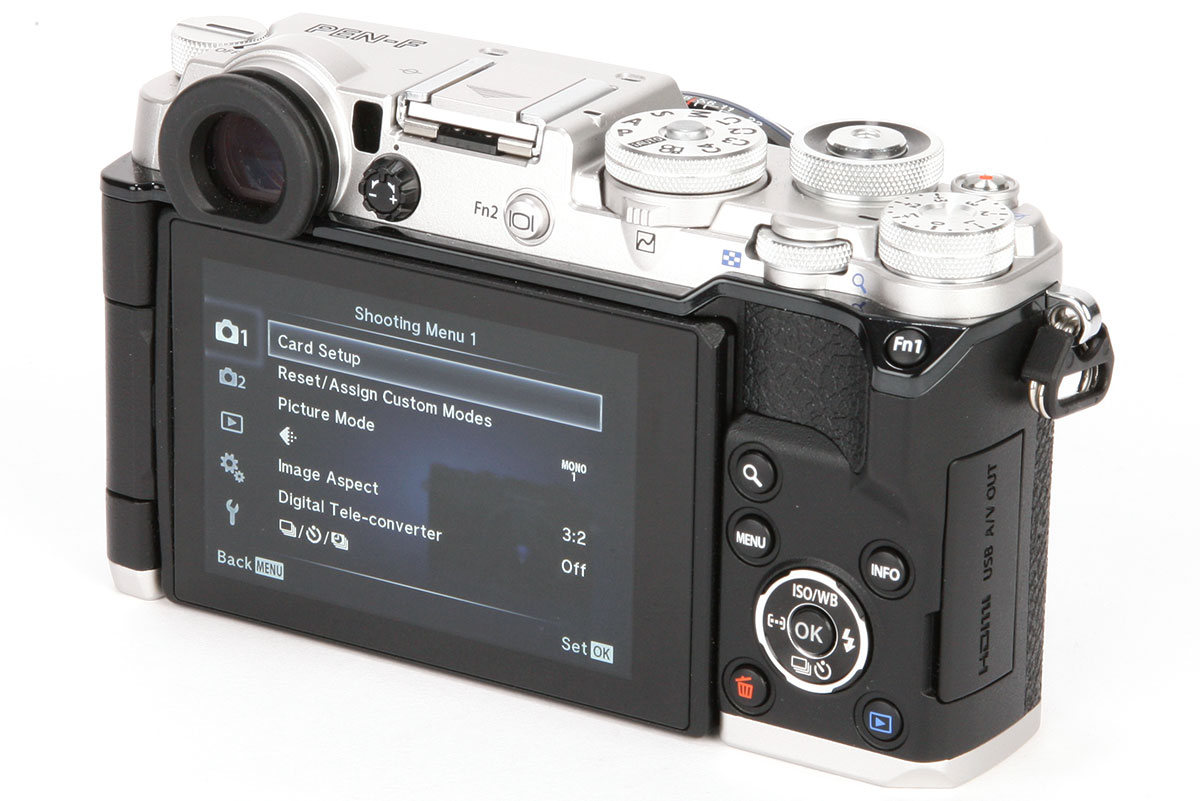

The Pen-F offers a choice of two viewing options: either the built-in EVF or the fully articulated touchscreen. The viewfinder is a 2.36-million-dot unit with 100% coverage and 0.62x magnification. It includes Olympus’s adaptive brightness technology that adapts the display to match the ambient lighting conditions. It’s bright and clear, and almost identical to the EVF in the OM-D E-M10 II. This means that it’s noticeably smaller than those in the E-M1 and E-M5 II, but that’s the price you pay for the more compact body design.
By default the finder is designed to preview the camera’s image processing and exposure settings but, if you prefer, it can be set to a neutral rendition using the ‘simulated optical viewfinder’ mode. Thanks to the relatively large circular eyecup, it’s a bit less susceptible to being overpowered by oblique sunlight than the corner-mounted finders on some similar cameras.
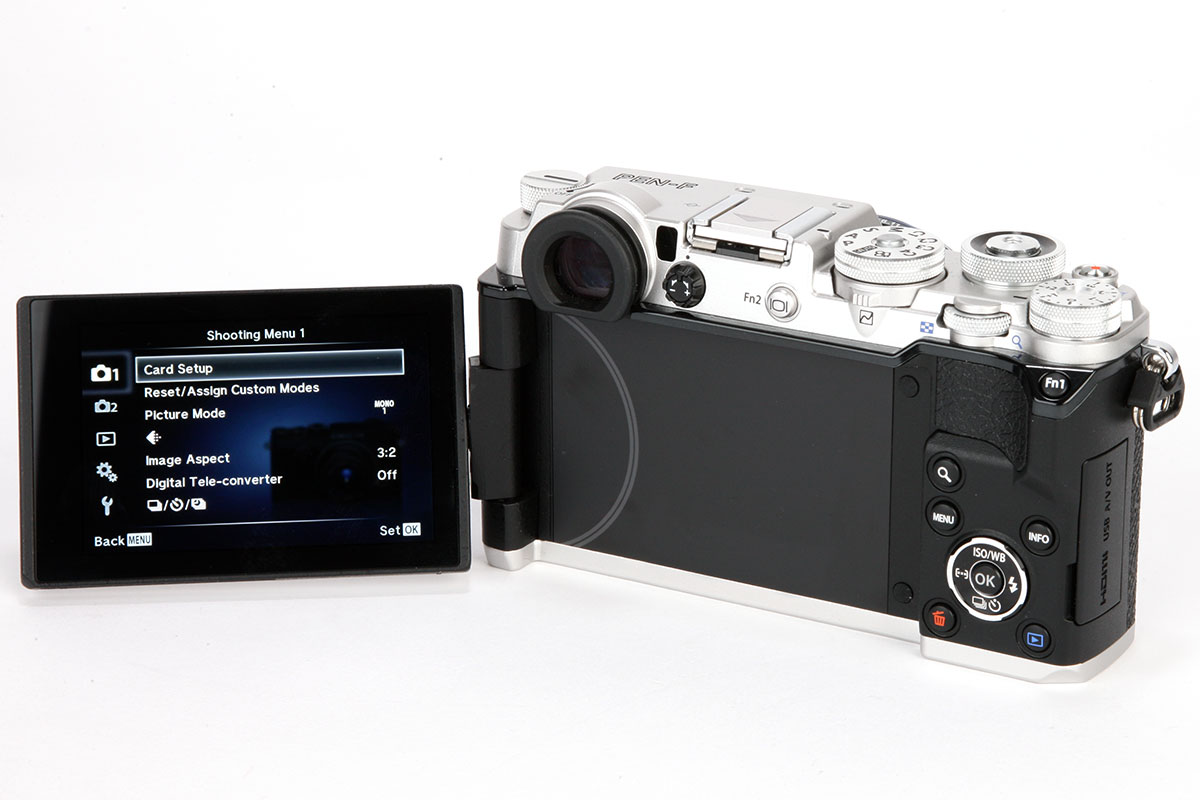
The rear screen is similarly excellent. It’s a 1.04-million-dot LCD that can be set for waist-level or overhead shooting when photographing in both portrait and landscape formats. This design means it’s also easy to shield from the sun when shooting in bright light, although I found it was easy enough to see on a sunny day anyway. As with the EVF, you can overlay a huge amount of useful shooting information, including a live histogram, gridline and electronic levels.
The choice of these two viewing methods gives a great degree of flexibility during shooting. I spent most of my time using the viewfinder, but switched to the LCD for tripod work or to get shots at awkward angles. The fact that the camera operates equally well in both modes is a useful advantage over DSLRs.