

Pros

-
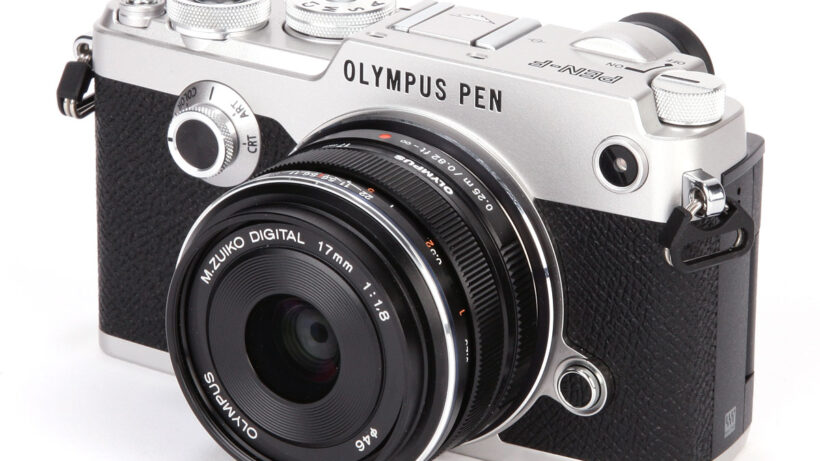
 - Stunning styling and design make it a joy to use<br />- Best image quality yet from a Four Thirds camera<br />- Easy to adjust image processing settings on a shot-by-shot basis
Cons

-
 - Viewfinder is smaller than similarly priced competitors<br />- Confusing menu makes some features difficult to access<br />- No weather sealing
Features
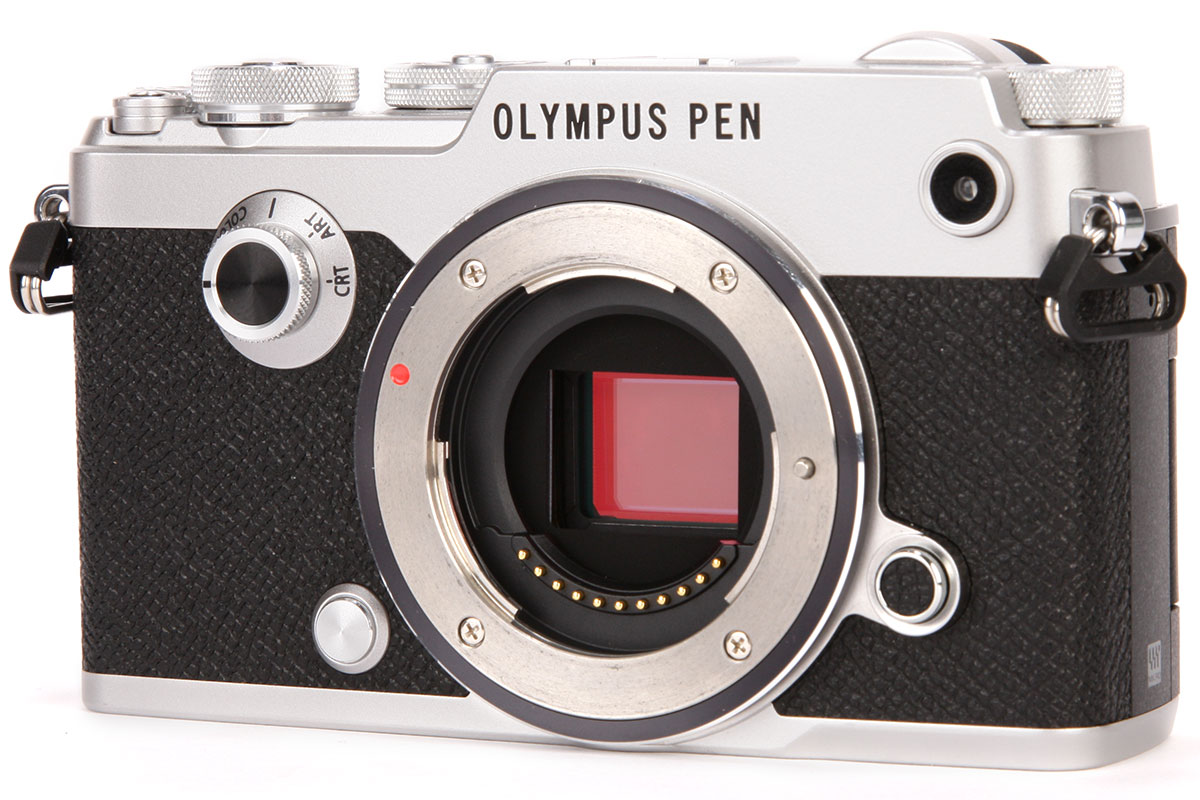

Don’t be fooled by its retro design: the Pen-F is a thoroughly modern camera that’s packed with advanced features. Its 20-million-pixel Four Thirds sensor offers a standard sensitivity range of ISO 200-25,600, with an extended ISO 80-equivalent setting that gives lower noise, but risks clipping highlight detail. Bursts of images can be captured at 10 frames per second with focus fixed, or 5 frames per second with refocusing between frames. Autofocus is handled by on-chip phase detection, with 81 selectable points arranged across almost the entire frame. Face detection is also onboard, including the ability to identify and focus specifically on your subject’s eyes.
One of the Pen-F’s biggest selling points is Olympus’s in-body 5-axis image stabilisation system, which works with every lens you can mount on the camera. It’s remarkably effective for both stills and video shooting, and with all kinds of lenses from wide angle to long telephoto. This matters because it can often offset the smaller Four Thirds sensor’s noise performance disadvantage compared with the APS-C sensors found in its competitors.
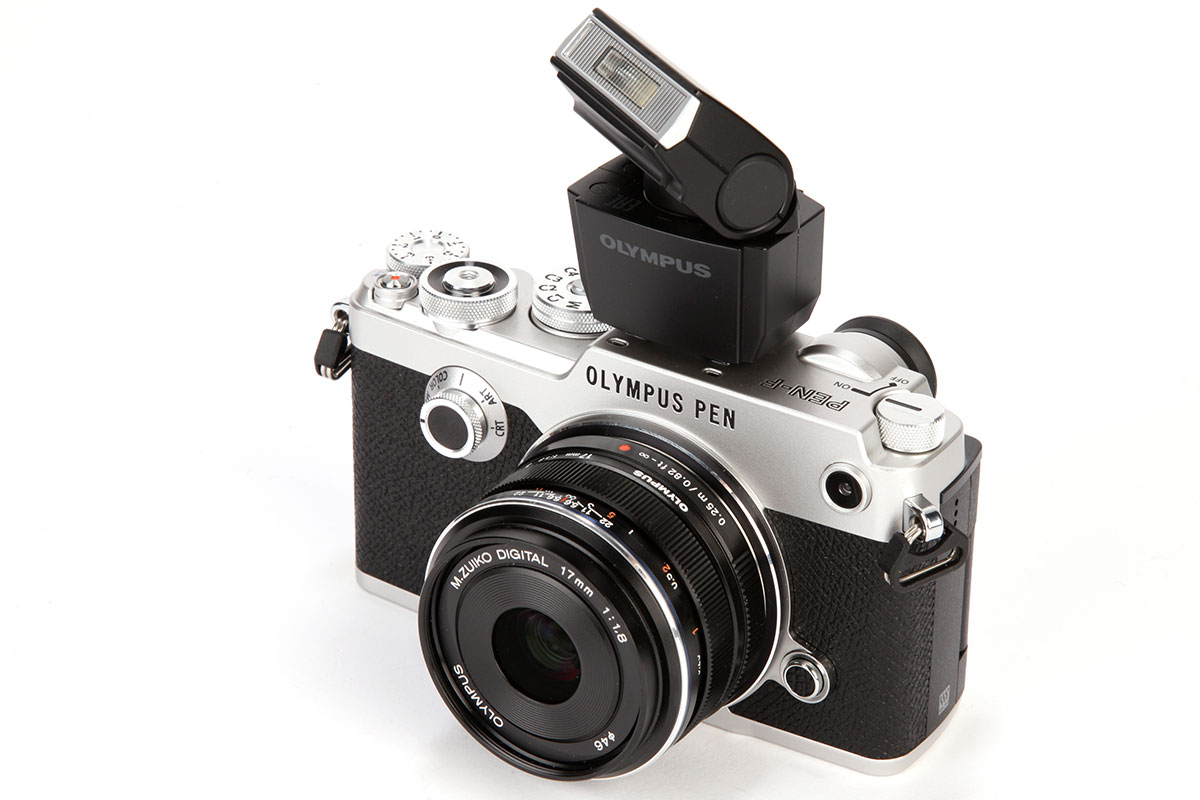
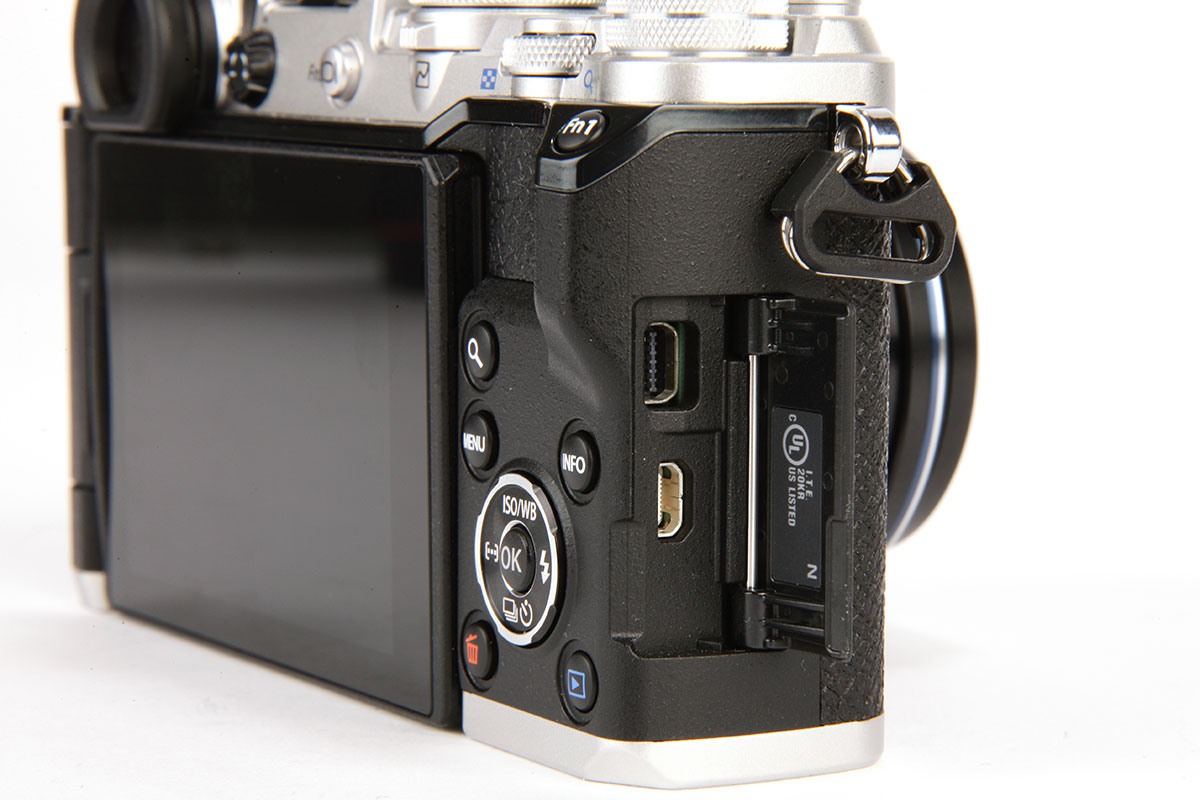
Video recording is available at Full HD resolution and frame rates up to 60fps. A dedicated position on the mode dial gives access to lots of video-specific features, including full manual control of exposure, fast- and slow-motion modes, and some unusual image effects. Wi-Fi is built-in too, giving full remote control of the camera from a smartphone or tablet, along with the ability to copy images to your device for sharing with family and friends.
In Olympus’s usual fashion there’s a whole slew of additional clever features hidden inside the Pen-F and mostly accessed from the ‘Shooting menu 2’. Here you’ll find an array of bracketing options, including exposure and focus bracketing; high dynamic range shooting; keystone correction for fixing converging verticals in-camera; and electronic first curtain and fully electronic shutter modes. The mechanical shutter operates with a quiet, discreet snick, while the electronic option is completely silent.
Also on board is Olympus’s unique High Res shot, which combines eight exposures while moving the sensor fractionally between each to generate a 50-million-pixel image. This requires the camera to be mounted on a tripod and the subject not to move at all during the process, but with a good lens it can deliver astonishing levels of detail. However, for some reason I found it more prone to giving image artefacts on the Pen-F compared with the OM-D E-M5 II, even when taking all possible precautions to avoid them.