
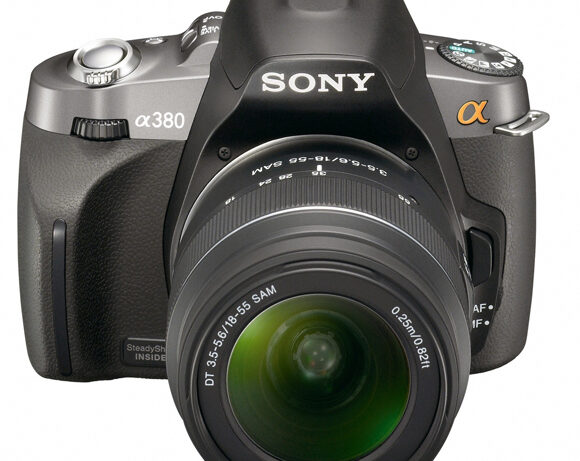

That the Sony A380 is only a minor upgrade indicates one of two things. Either the entry-level user is already well-catered for, with everything they need to take the kind of images they would require, or a better-specified model which would sit a little higher up is in the pipeline. After all, a replacement for the A700 is long overdue, and the video recording and high-resolution LCD screens tend to be seen as niceties geared towards the mid-range market than limitations to this one. It's when using live view that the camera shines, and while other manufacturers have made their own advances in this area Sony still remains on top. It's only really the design of the body which may be problematic, though of course, this won't bother everyone. Even so, the usual advice of handling a camera before you buy it is something we'd strongly suggest here.
Sony A380 – Image Quality

Exposure
During this test I was consistently impressed by the accuracy of the A380’s metering system. The only time it tended to err was when I would have expected it to (such as when shooting against backlighting) but even then the Dynamic Range Optimisation is keen to bring out shadow detail. Shooting a predominantly light subject gave it no problems, with no need for manual intervention to get the exposure right.
Colour and tone
The camera’s white balance system fares about as well as would be expected, with accurate results in daylight and slight difficulties under artificial light. Even so, I found that while shooting under tungsten light gave images a slight cast, there are cameras that do a far worse job at maintaining a neutrality in such circumstances. Colour is generally good on the Standard setting, though the six further Creative Style options and the ability to change contrast, saturation and sharpness of each makes the camera as customisable as it needs to be.

Raw and JPEG
The differences between Raw and JPEG files depends largely on what settings you use in-camera, but there are still differences even when settings like Dynamic Range Optimisation, noise reduction and so on are deactivated. On the whole, JPEGs are sharpened a little more compared to their Raw equivalents, but there is still room for improvement as they are quite soft. Noise reduction is impressive; Raw files shot in good light at even ISO 100 can show a very slight texture, but in JPEGs this is successfully removed without overall sharpness suffering.
Software
The Image Data Lightbox and Image Data Converter software supplied with the A380 give you comprehensive control over viewing and editing your images. The former package allows you to group images in Collections, rate them and view their metadata, with the interface customisable to your tastes. It can even sort all your images by which lens was used to take them, should you want to bring them all up at once. You can also use this in conjunction with the latter program, where more intensive Raw processing is possible. Despite being quite simple to use, it offers all the standard Raw tools such as white balance, noise reduction and sharpness, but even goes so far as to offer control over things like Peripheral Illumination, for example. Considering the limited software options still being provided with some DSLRs, it’s very encouraging that Sony provides this for entry-level users as standard.