
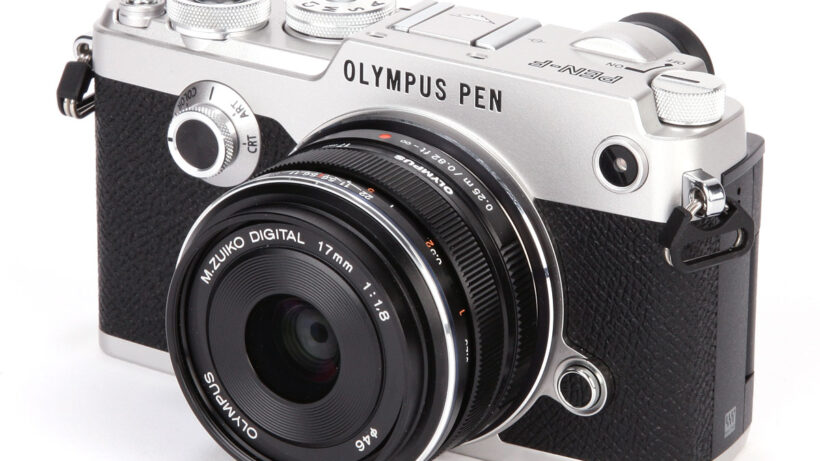

Pros

-
 - Stunning styling and design make it a joy to use<br />- Best image quality yet from a Four Thirds camera<br />- Easy to adjust image processing settings on a shot-by-shot basis
Cons

-
 - Viewfinder is smaller than similarly priced competitors<br />- Confusing menu makes some features difficult to access<br />- No weather sealing
Image Quality
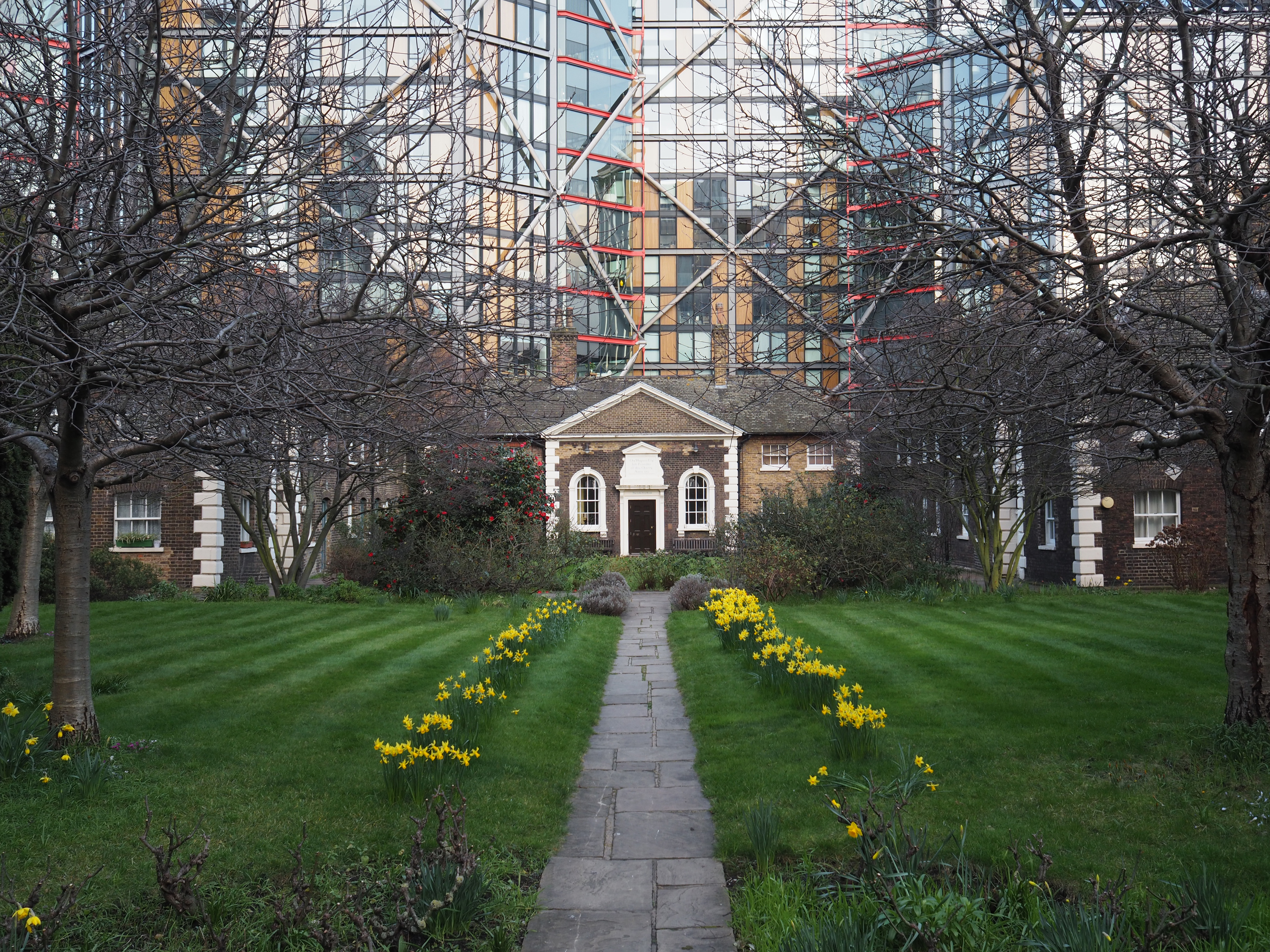

With its new 20-million-pixel sensor, the Pen-F promises improved image quality compared with older Olympus models. We don’t yet have access to any third-party raw conversion software that supports the camera, so have to base our analysis on Olympus’s own processing. The overall improvements look similar to those we saw from the Panasonic Lumix DMC-GX8, which we assume uses the same sensor. High ISO noise appears to be slightly improved, and there’s perhaps a bit more scope for pulling extra detail from shadow regions of the image before noise becomes a problem. Most importantly, however, there are no apparent disadvantages from the increased pixel count.
Dynamic Range
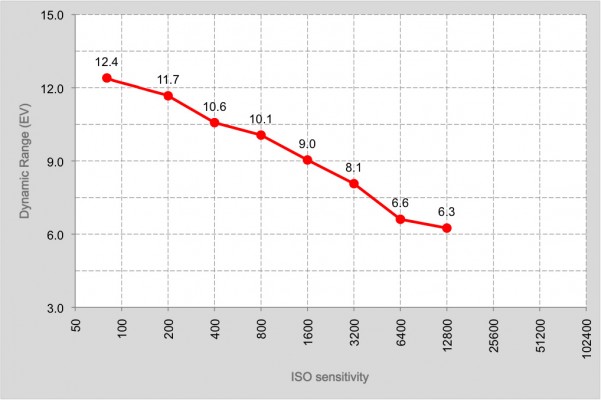
The Pen-F acquits itself pretty well in our Applied Imaging dynamic range tests, giving broadly similar results to the Panasonic GX8. Low ISO dynamic range is very good, being in the vicinity of 12 stops, but the numbers fall fairly quickly as the ISO is raised, to around 10EVat ISO 800. A reading of 8.1 EV at ISO 3200 is on the edge of acceptability, and sub-7 EV measurements at the top two settings reinforce that they’re best avoided whenever possible.
Resolution: standard 20MP mode
Looking at the crops below, multiply the numbers below the line by 200 to calculate the resolution in lines per picture height.
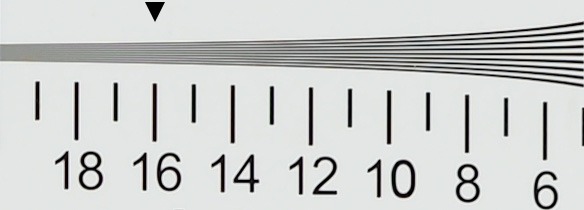
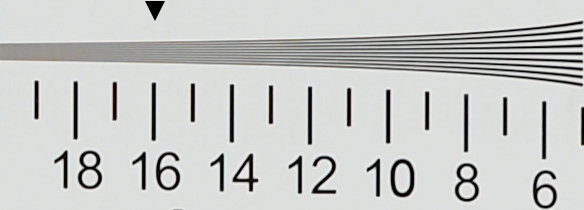
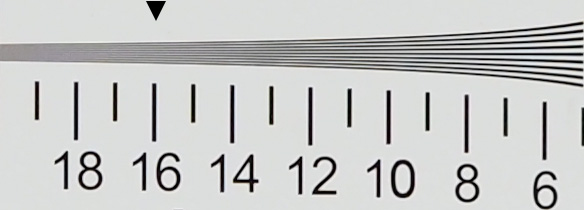
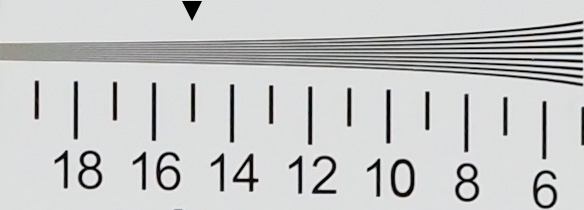
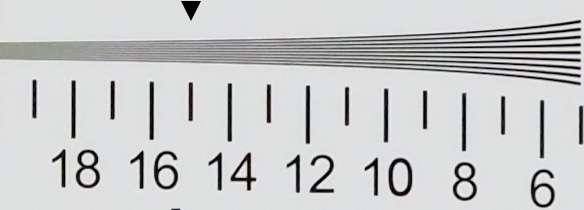
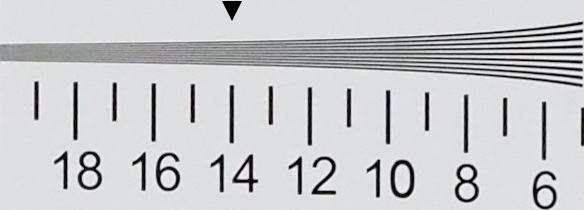
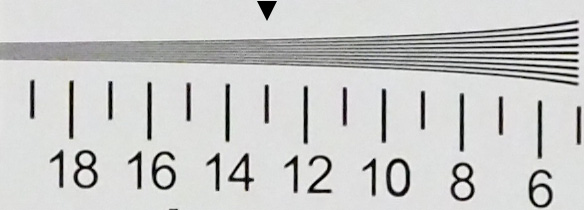
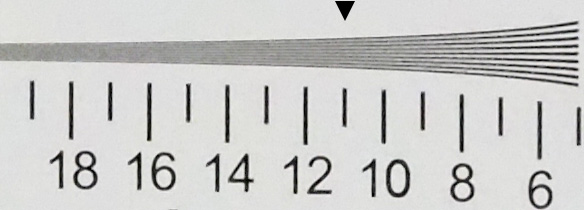
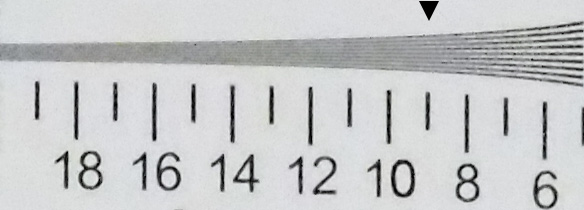
In JPEG mode the Pen-F resolves around 3200 l/ph in our tests, using the Olympus 60mm f/2.8 Macro at f/4. This isn’t radically different from the 16MP OM-D E-M5 II and lags a bit behind the Panasonic GX8, but I’d expect the gap to disappear in raw. Resolution initially drops only slowly as the sensitivity is raised, to about 3000 l/ph at ISO 1600. Beyond this it plummets more rapidly, to around 2500 l/ph at ISO 6400 and barely 1800 l/ph at ISO 25,600.
Resolution: 50MP High resolution composite mode
This time we’ve shot our resolution chart from double the distance compared to the shots above, so now with at the crops below, multiply the numbers below the line by 400 to calculate the resolution in lines per picture height.
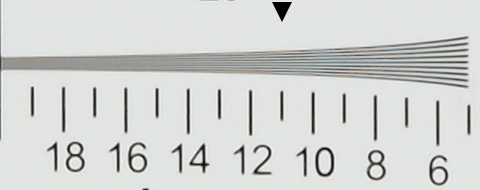
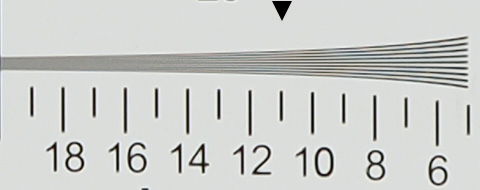
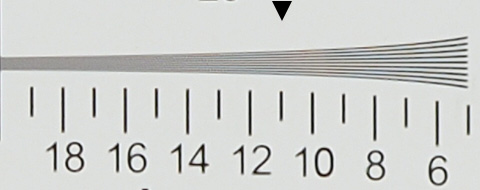
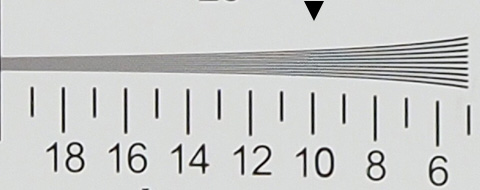
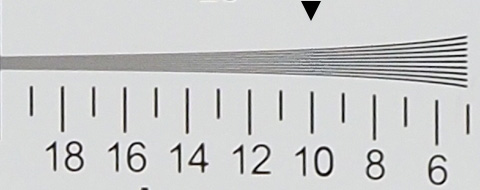
Switch to the high-resolution composite mode and around 4400 l/ph is achieved at ISO 80 (which is lower than we’d expect), dropping to 4000 l/ph at ISO 1600. We also see some blurring and unexpected colour artefacts. Overall, the results simply aren’t as good as we’d expect, given how well this mode works in the OM-D E-M5 II. It’s possible our review sample wasn’t working perfectly.