

Pros

-
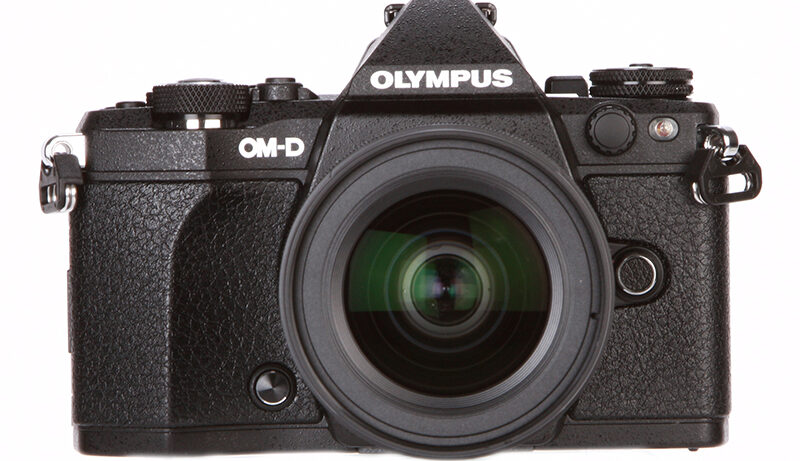
 Excellent operating speed; Great build quality including weather resistance; Full customisation of most controls Great JPEG image quality
Cons

-
 Raw image quality doesn't quite match competition; Menu interface somewhat challenging; A few design errors
Olympus OM-D E-M5 Mark II Review – Performance
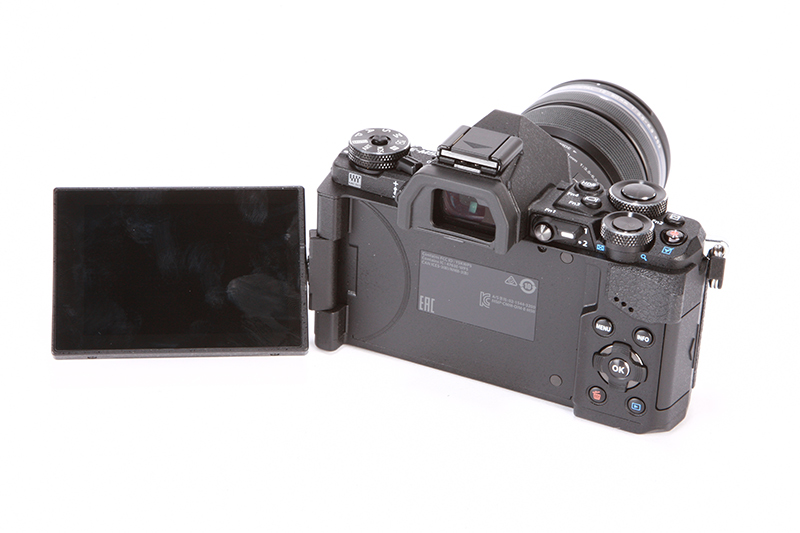

While the E-M5 Mark II is certainly not the fastest in class when it comes to focusing, it still operates at a level which is sure to satisfy most users. The reason why it’s not as impressive as, for example, the Sony A6000 or Samsung NX1, is no doubt in some part due to the absence of phase-detection pixels on the sensor itself.
That’s certainly not to say that the camera is a slouch, and in fact the Mark II delivers both fast and accurate autofocus in a range of conditions thanks to the 81-point contrast-detect AF system that covers the majority of the frame.
There are other shooting modes that help deliver impressive focusing performance, including an automatic face detection setting that activates upon a human subject entering the frame.
It’s also worth noting that while the Mark II doesn’t deliver the fastest continuous AF performance, it does still manage to shoot at 5fps when tracking a subject. If you want to take focusing in to your own hands, in manual focus setting both an image-stabilised magnified view and focus-peaking display are on hand for assistance.
LCD and Viewfinder
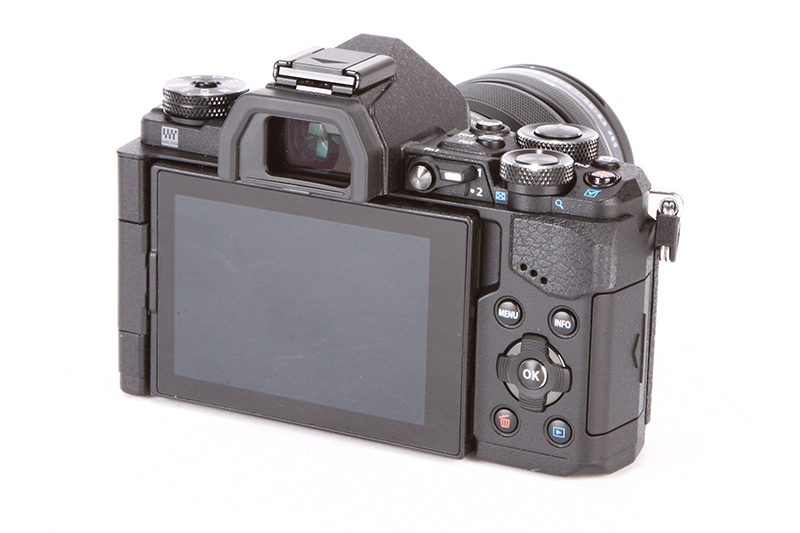
The model’s LCD and viewfinder are two areas in particular which have been improved upon for this latest generation of the E-M5. The viewfinder itself benefits hugely from a boost in resolution, making it now a match for any premium CSC on the market.
The image reproduction is in fact arguably as sharp and large as optical viewfinders found on full-frame DSLRs, with features such as the brightness adjustment to match ambient light conditions particularly welcome.
The almost-doubling of the LCD screen’s resolution is another welcome improvement, although arguably the move to full articulation is the most welcome change. While the Mark I featured a hinged LCD screen which could only rotate on a horizontal axis, that on the Mark II can now be pulled away from the camera body and rotated around a wider range of angles.
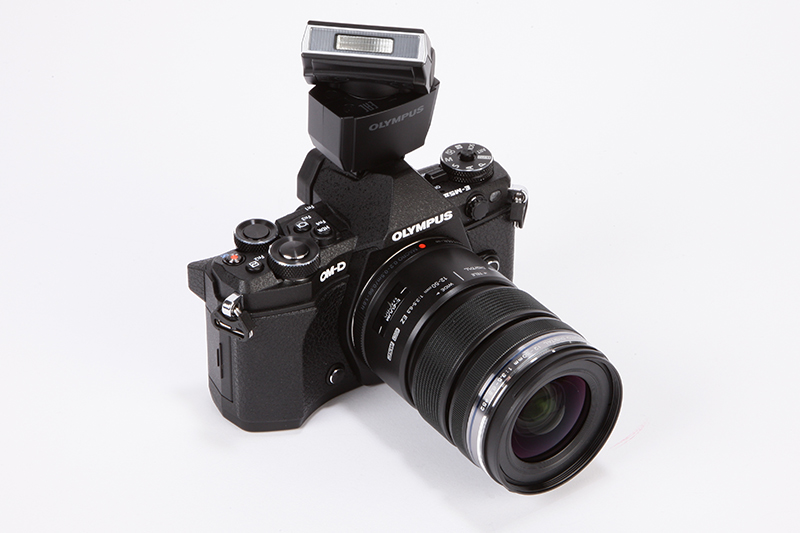
In terms of the new feature additions, the undoubted headline of these is the 40MP ‘High Res Shot’ image composite mode. This setting works in much the same way as a sweep panorama setting – ie. by capturing a series of images and combining them in one shot to create a much larger, single image.
This larger single image allows for the photographer to capture more of the scene at a higher resolution, and therefore then reproduce the image in large-scale formats.
Ghosting
As you might expect for a shooting setting which involves capturing multiple images, it’s imperative that you shoot with the camera fixed on a tripod and that you’re shooting static subjects as any movement in the frame or of the camera itself will result in ghosting during the second-long capture process.
There are a few other limitations to the camera settings, including not being able to shoot at an aperture smaller than f/8 so as to keep the subject in focus, not shooting longer than 8 seconds, and not at an ISO setting of more than 1600.
All told, the setting works well and the final images are comparable, although not more detailed, to those produced by a 36MP full-frame sensor.