

Pros

-
 Excellent operating speed; Great build quality including weather resistance; Full customisation of most controls Great JPEG image quality
Cons

-
 Raw image quality doesn't quite match competition; Menu interface somewhat challenging; A few design errors

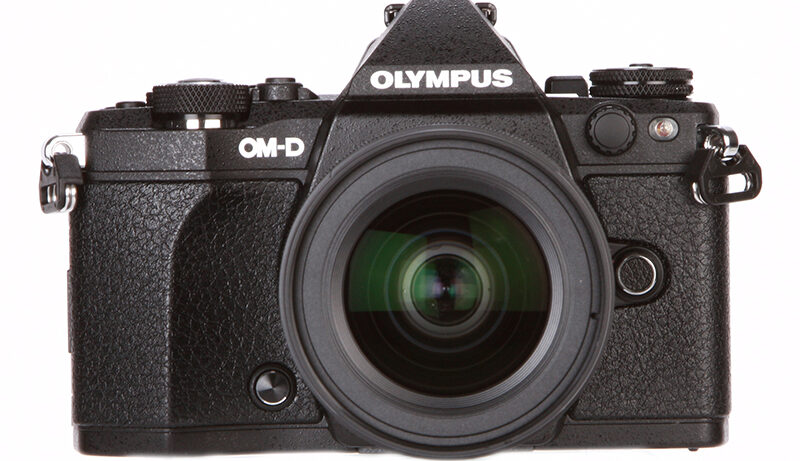
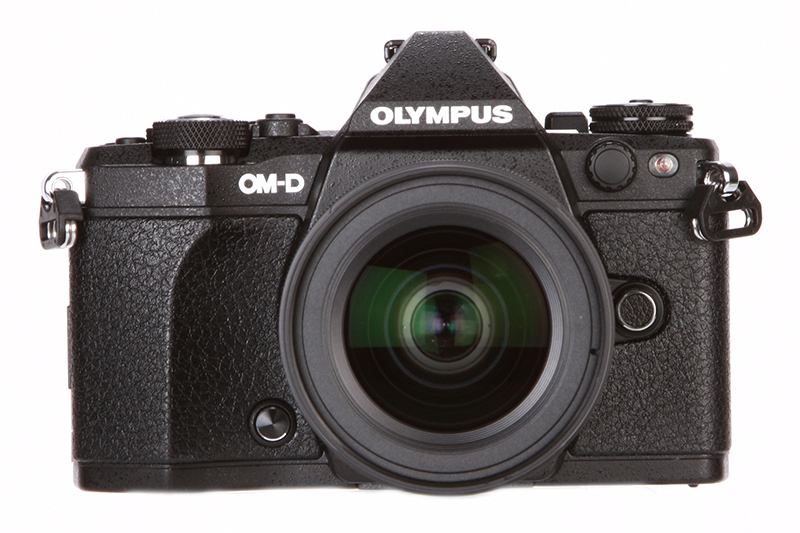
Olympus OM-D E-M5 Mark II Review – The Olympus E-M5 Mark II takes over from the popular E-M5 Mark I, and although it looks similar to its predecessor it features a wide range of core enhancements
It’s fairly safe to say that Olympus made a lasting impact in the CSC market when it launched the OM-D E-M5 three years ago.
Before that point the CSC market had mostly consisted of cameras targeted at the entry-level end of the market and those wanting to make the step up from a standard compact camera without the bulk of a DSLR.
However, the E-M5 arrived with a more advanced feature-set and retro stylings aimed at appealing to the more experienced photographer.
These advanced features included five-axis image stabilisation, a weatherproof body and a sensor more advanced in comparison to the rest of the CSC market.
The model proved hugely popular with consumers, and for both 2013 and 2014 was the most popular CSC of all on Flickr.
Since its launch, the E-M5 Mark I has been besieged by competition from Sony and Fujifilm with the premium CSC market more competitive than ever before.
No doubt in response to this is the new E-M5 Mark II – a camera which adds further advanced imaging functionality including a new 40MP ‘High Res Shot’ composite mode. The question is – will it regain its position of popularity amongst the CSC market?
Olympus OM-D E-M5 Mark II Review – Features
While there are a few completely new additions to the camera’s specification, in general the features already present on the original E-M5 have been largely improved.
One area where the camera does see new functionality added is with regards to the movie capture capabilities. Although the model is still lacking in 4K video capture, the general movie capturing specification feels a lot more comprehensive.
The E-M5 Mark II now features video capture at a range of frame rates right up to 60fps, while the bit rate is also boosted up to 77MBps, sound recording functionality is improved and unedited ‘clean’ HDMI footage can be outputted to an external recorder.
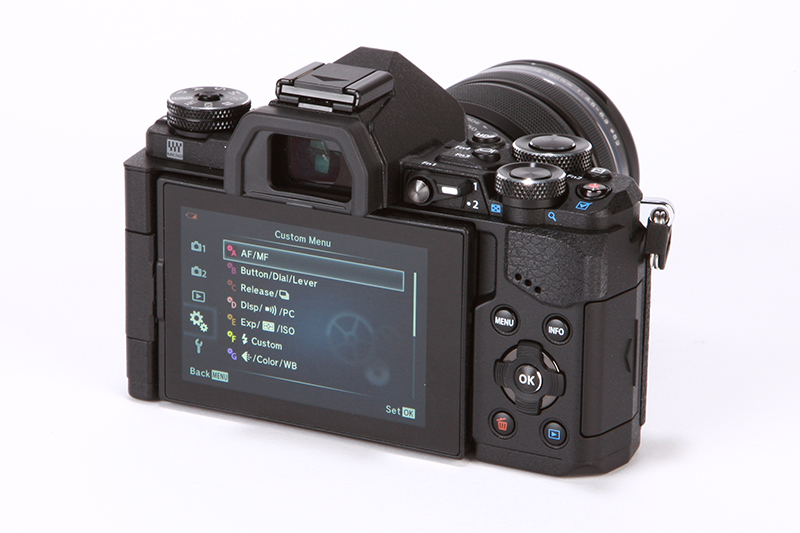
Another area to see a substantial improvement is the camera’s LCD screen and viewfinder. While the predecessor featured a hinged 610k-dot screen with fairly limited functionality, the Mark II now packs a 1,037k-dot screen complete with full articulation and also a more complete suite of touch functionality.
The model’s viewfinder also packs in a bump in resolution – now sitting at 2.36M dots – while the drop in lag to just 0.01 seconds should result in a viewing experience akin to that found on a DSLR.
Stabilisation system
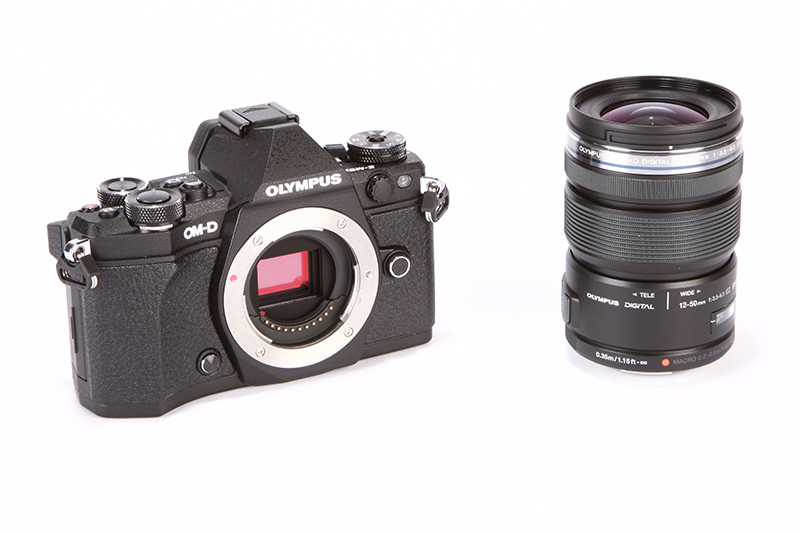
One of the eye-catching features carried on from the Mark I version of the E-M5 is the model’s five-axis image stabilisation system. This set-up performed excellently in the first iteration of the E-M5 offering excellent sharpness for video and still, as well as working with all lenses including manual focus optics on mount adapters.
The Mark II features a sensor with the same specification as its predecessor – namely a 16MP Four Thirds chip. However, the sensor itself has been redesigned and, combined with the new TruePic VII processor, is capable of a few eye-catching new tricks including the aforementioned 40MP composite stills.
The TruePic VII processor is capable of capturing images at up to 10fps, although this headline figure does drop down to 5fps with continuous AF enabled. The buffer, meanwhile, is capable of capturing some 16 Raw files in continuous shooting before the camera slows.
Wi-fi performance
Other elements of the specification worthy of note include the model’s built-in Wi-fi functionality for both the wireless transfer of images and the remote control of the camera from a compatible smartphone or tablet.
Also, while the E-M5 Mark II is lacking a built-in flash it does come with a small flash unit in the box. Although small, the flash unit itself is impressive – it’s splash-proof, features a tilted design for bouncing and has a guide number of 12.9m at ISO 200.
There are a host of other interesting shooting features, including the obligatory HDR shooting mode alongside Live Bulb, Live Time and Live Composite modes all designed to aid long exposure shooting by giving an on-screen display of how the image is developing.