
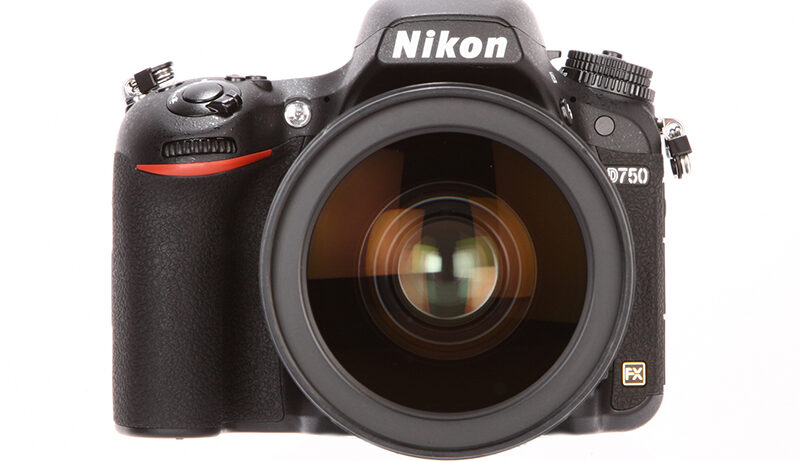


Pros

-
 High resolution sensor; Vari-angle LCD screen; Inclusion of Wi-fi as standard
Cons

-
 Maximum shutter speed of 1/4000 sec might be restrictive for some; Lack of GPS could be viewed as a negative<br />
Nikon D750 Review – Design
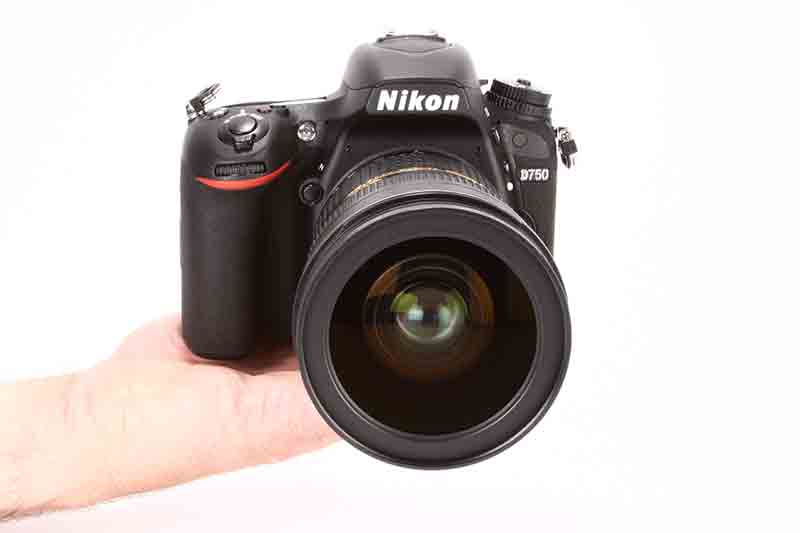

Nikon is keen to point out that the D750 features rugged build quality and will be able to stand up to a range of bumps and bruises associated with heavy use out in the field.
The body itself is of a monocoque design akin to the D5300 and D3300, with a mix of materials used including a mix of thermoplastic and lightweight carbon fibre. Although this combination is rugged enough, it’s assuring to see that magnesium alloy has been employed on both the top and the rear of the camera.
Although at around 840g the Nikon D750 is by no means light, thanks to the incorporation of the aforementioned monocoque body the D750 is actually smaller than its D610 stablemate, despite the incorporation of the tiltable LCD screen.
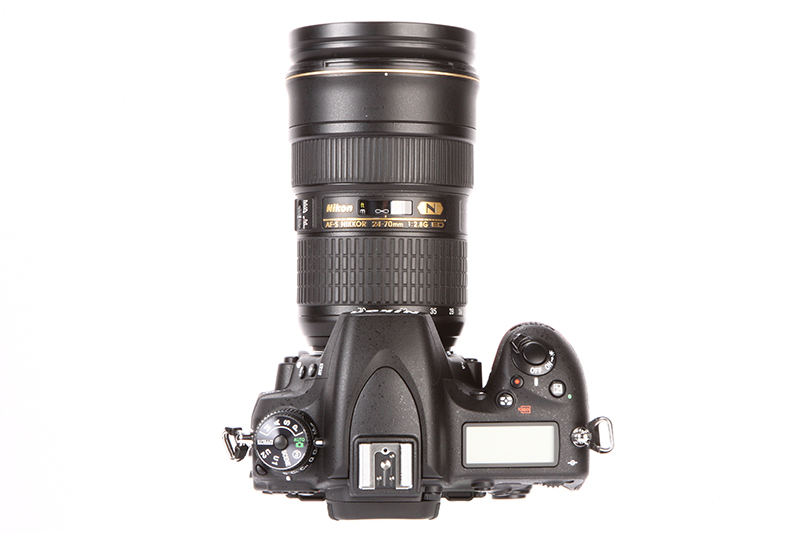
Despite being a touch smaller than the Nikon D610, the D750 still manages to feel well balanced in the hand thanks to a large and pronounced grip. The grip is so secure in fact that the D750 even feels well matched and solid in the hand against Nikon’s 70-200mm f/2.8 optic.
The Nikon D750’s control layout is more akin to enthusiast models than the manufacturer’s pro-level models. What this means in reality is that the D750 features a mode dial towards the left hand side of the top plate with a range of different camera control down the left hand side of the screen.
One slight disappointment is the lack of an AF-ON button, although when you consider that the D750 isn’t a professional level camera in the purist sense it’s not entirely surprising.