


Pros

-
 High resolution sensor; Vari-angle LCD screen; Inclusion of Wi-fi as standard
Cons

-
 Maximum shutter speed of 1/4000 sec might be restrictive for some; Lack of GPS could be viewed as a negative<br />

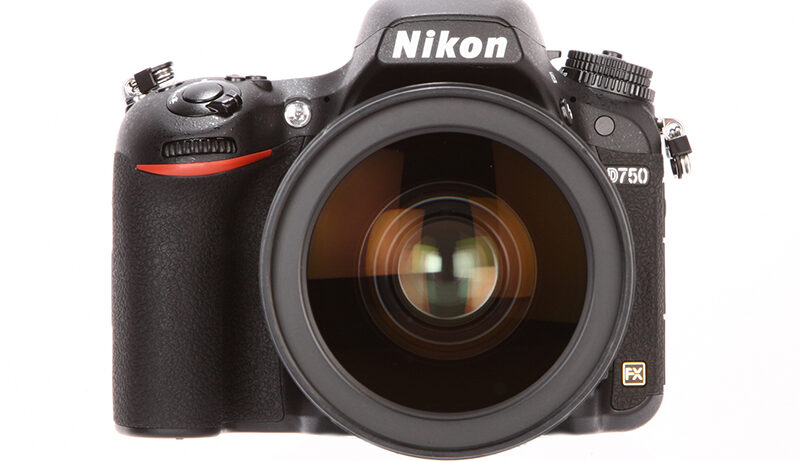
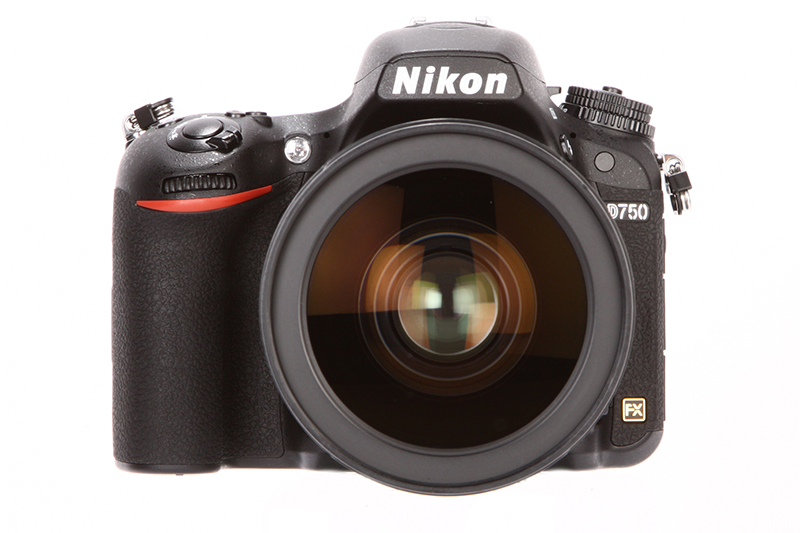
Nikon D750 Review – The Nikon D750 is the manufacturer’s latest full-frame DSLR, featuring an improved AF system, in-built Wi-fi and a vari-angle LCD screen
Nikon’s full-frame DSLR line-up is currently looking stronger than ever, with five models all offering something slightly different for those looking for the very best in image quality.
The Nikon D750 is the latest addition to the collection, aimed to sit between the D610 and the D810. Nikon states that the D750 is targeted towards the enthusiast photographer, catering for both the hobbyist and the aspiring professional alike.
The D750 features the same 24.3MP sensor found in the D610 but also inherits a host of features from the D810, while also adding a few of its own features including a redeveloped AF module and a vari-angle LCD screen.
All of these features combine in what could well be one of the most attractive enthusiast DSLRs on the market. Let’s dig a little deeper to see if that’s really the case.
Nikon D750 Review – Features
One of the most notable features on the Nikon D750, and one which marks it out from the rest of Nikon’s full-frame DSLR line-up, is with regards to its connectivity.
The D750 features full Wi-fi connectivity built in to the camera, and is the first full-frame Nikon DSLR to do so. In the past Nikon full-frame DSLRs had to enlist an extra Wi-fi adapter at both extra cost and extra bulk and as such many purchasers were often happy to go without.
However, now that the new model arrives with the functionality straight out of the box you can imagine it’ll become a lot more widely used feature
The Wi-fi connectivity allows for both wireless transfer of images between the camera and either smartphone or tablet, as well as the remote control of the camera’s shooting settings should you do desire.
In terms of the core imaging functionality, the Nikon D750 sports a full-frame sensor with a resolution of 24.3MP. Although this is the same resolution as the Nikon D610, Nikon makes it clear that it’s a redesigned chip and one which benefits from several developments.
One feature of the sensor that distinguishes it from the D810 is the presence of an optical low pass filter that will help prevent moire patterning, although it’s worth noting that it will do so at the expense of some finer detail reproduction.
The D750 features the Nikon’s latest Expeed 4 processor, a chip that allows for a continuous shooting speed of 6.5fps as well as claimed improved AWB accuracy and general JPEG processing.
Elsewhere, the Nikon D750 features a native ISO range of 100 to 12,800, extendable right up to 51,200, which is a stop higher than the extended top setting on the D610.
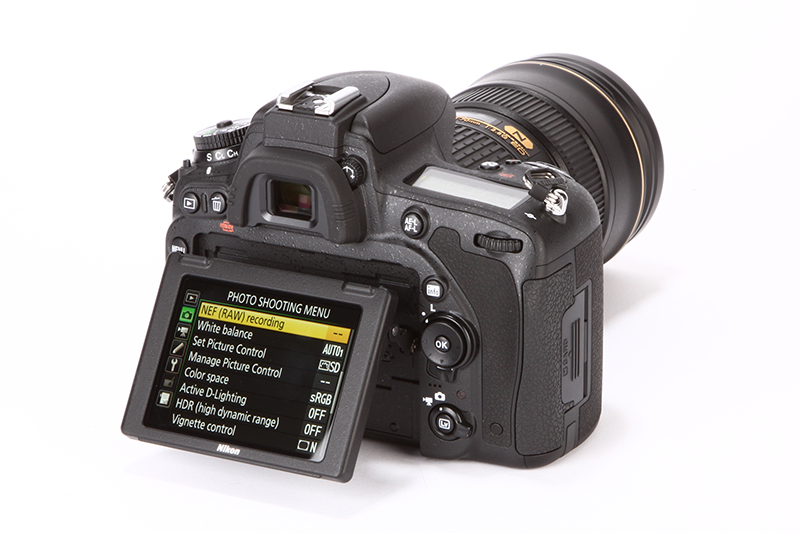
There are a range of other features the D750 has inherited from its full frame stablemates such as the D810. One such feature is the LCD screen – a 3.2in 1,299k-dot screen boasting RGBW technology.
What this RGBW technology means is that the screen features a fourth white pixel alongside the red, green and blue pixels conventionally found in an LCD screen and as such it should feature improve contrast and colour rendition.
One new feature with regards to the LCD screen, however, is its vari-angle functionality. The screen is hinged and can thus be pulled away from the body and faced either upwards or downwards, as is in fact the first full-frame Nikon DSLR to do so.
Although the vari-angle mechanism isn’t as complete as on some other DSLRs, being located as it is on solely a horizontal hinge, it is well suited towards videographers who might need to shoot from lower angles.
On the subject of video capture, the D750 is certainly well specified in that department. The model offers full 1920 x 1080 HD video capture at 60, 50, 30, 25 and 24fps.
The model also boasts a range of new video features first seen on the D810 – for example, the camera now features Zebra Striping technology which warns of burnt highlight detail, while a ‘Flat Picture Mode’ setting will allow for video to be captured with very little processing.