

Pros

-
 Solid image stabilisation performance; Presence of a control ring; Reduction in resolution of sensor; EVF upgrade
Cons

-
 Lack of touchscreen control; EVF could be physically larger; Mode dial a touch soft; Some performance issues

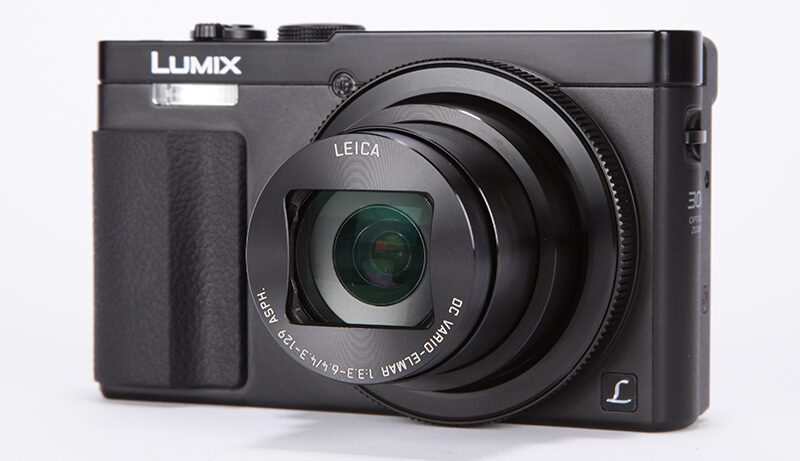
Panasonic Lumix TZ70 Review – The TZ70 is the latest in a long line of successful travel compacts, looking to build on the performance of its predecessor with several key upgrades
Want to know whether it’s worth upgrading to the TZ70, or whether you should save some cash and opt for the camera’s predecessor? Why not take a look at our Panasonic Lumix TZ70 vs Panasonic Lumix TZ60 head to head.
The ‘travel zoom compact’ market is one of the most popular around thanks to the combination of a long focal range and an advanced specification, all in a body which is both lightweight and portable.
The sector itself was arguably established by Panasonic itself back in 2006 with the TZ1, and since then the manufacturer has continues to hold its place at the top of the tree with a succession of popular models.
The TZ70 follows on from last year’s TZ60 – a camera which garnered wide acclaim thanks to the combination of a versatile lens and addition of and EVF.
The latest model doesn’t feature any headline specification changes, although it does boast a re-engineered sensor with a view towards improving image quality.
Is this change enough to warrant the upgrade, or hold Panasonic’s position atop the travel zoom tree?
Let’s take a closer look and find out.
Panasonic Lumix TZ70 Review – Features
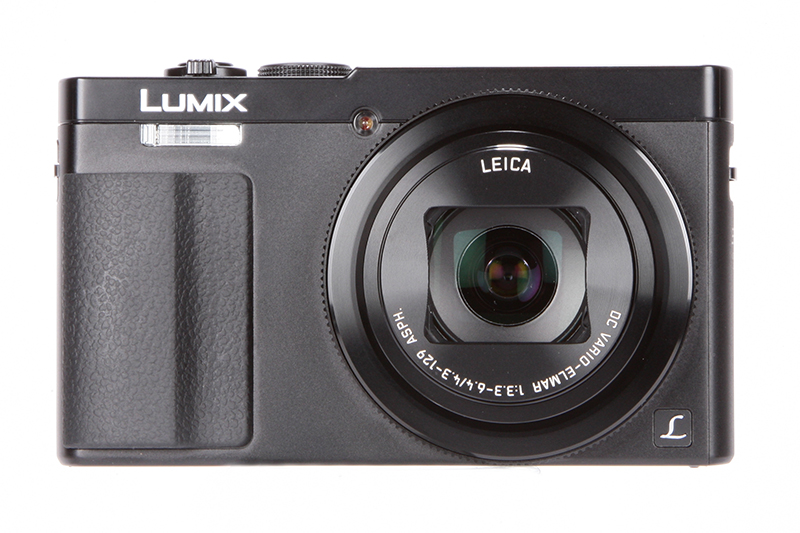
As mentioned, the headline change to the TZ70’s specification in comparison to its predecessor is concerns to the model’s sensor.
While the TZ60 featured an 18.1MP sensor, the TZ70 now boasts a resolution of 12.1MP. The actual physical size of the sensor remains the same as before – at 1/2.3in – and as a result the size of the pixels themselves will be larger.
As a result the sensor should handle noise better at higher ISO settings, as well as improve image quality on the whole.
The sensor features an ISO range of 100-6400, a bump in power compared to the TZ60. The model also delivers full HD video capture at a resolution of 1920 x 1080p, and conveniently for videographers this can be saved in either AVCHD or MP4 formats.
Video capture functionality is further boosted by the presence of a pair of slow motion capture mode, including the ability to capture 100fps at 720p, or even 200fps in the much lower quality VGA (640 x 480) mode.
Alongside the range of video capture modes sits a welcome timelapse mode, offering the ability to capture a changing scene over a period of time in full HD resolution.
Processing power
The sensor is paired with the Panasonic’s Venus Engine, an image processor which aids image capture and also delivers some impressive shooting stats. These include a continuous shooting speed of up to 10fps with fixed AF, or a slower rate of 6fps with AF tracking enabled (although this is only for a period of 6 frames).
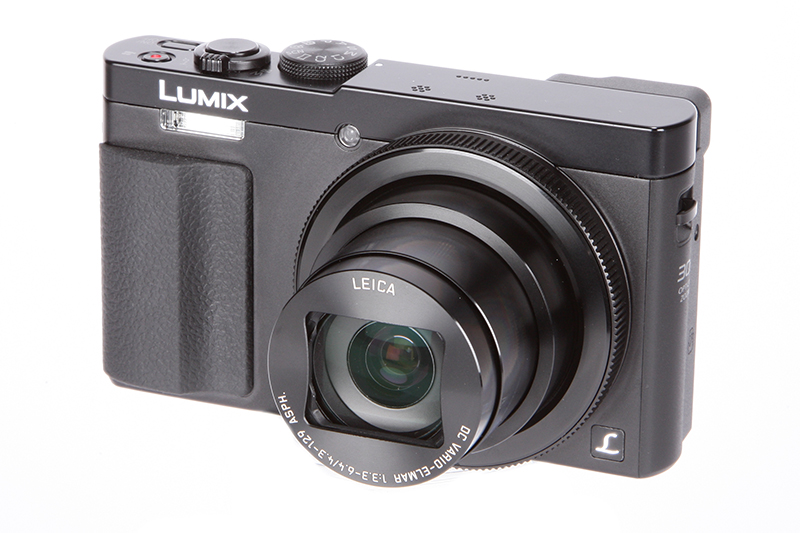
In terms of the camera’s optics, the TZ70 features a Leica Elmar lens covering a 30x optical zoom ranging from 24-720mm in 35mm equivalent terms. The lens is also supported by Panasonic’s 5-axis hybrid OIS stabilisation system and as such should ensure sharp images throughout the extensive focal range.
The TZ70 also features Wi-fi and NFC functionality for easy connectivity to either a smartphone or tablet, although the model does dispense with the previously-present GPS connectivity.
Another major improvement is with regards to the camera’s viewfinder. While the predecessor featured a 0.2in, 200K-dot viewfinder, the TZ70 now features a 1,166K-dot Live View finder of the same size.
The TZ70’s LCD screen, meanwhile, is also upgraded. While it’s not as significant as the EVF upgrade, the increase in resolution from 920k-dots to 1,040k-dots should certainly see some real-world improvement.