


Pros

-
 Neat compact lens
 -
Lightweight and easy to carry all day
-
Good picture quality at all apertures
-
Well corrected optically so doesn't rely too much on software
-
Good value for money
Cons

-
 Not great at closest focus distance
 -
A little over-corrected with nearby subjects

It’s no good having a small camera if the lenses that go on to it are massive. Big lenses was one of the factors that rather unbalanced full frame mirrorless cameras when they first became popular, which meant kits weren’t all that much smaller than the DSLR systems they were supposed to be better than. Things have moved along though, but there’s still no magic formula that will give us a good quality small lens with a very wide aperture. However, progress in optical design, mechanical design and a degree of in-camera correction is allowing very nice lenses for full frame models that are lightweight, reasonably small and which can offer apertures wide enough to both gather light and present us with pleasing out-of-focus areas.
This Lumix S 20mm f/2.5 is the latest in a line of fixed focal length lenses and zooms that Panasonic has produced to address just this issue. The first cameras and lenses in the Lumix S full frame series were exceptionally good but also exceptionally large and million miles from what Lumix users had been used to with the Micro Four Thirds G series. The challenge ever since has been to preserve the great quality those big lenses offered while making them a little more, well, Lumix-like. The Lumix S9 camera led the charge in this direction as its compact dimensions seems quite at odds with almost any Lumix S lens on offer at the time of its launch. Ever since we’ve seen a line of collapsible zooms, just plain small zooms and a collection of fast-ish aperture fixed focal length lenses of a size that hint at some family resemblance with the S9.
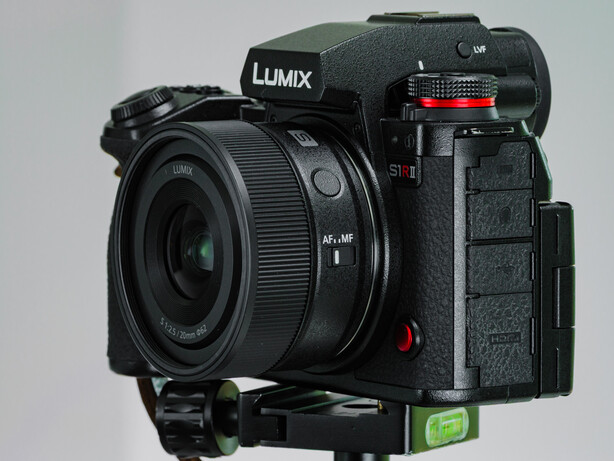
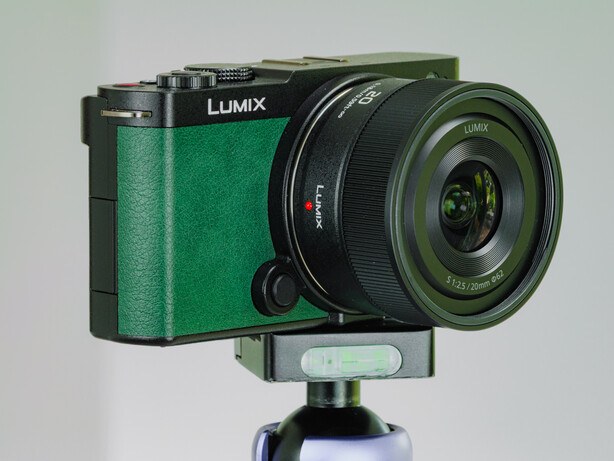
Not very long ago we saw a very nice Lumix S 40mm f/2 lens that Panasonic suggested should be used with the Lumix S9, and now we have a 20mm f/2.5 to keep it company.
Panasonic Lumix S 20mm f/2.5 Specification
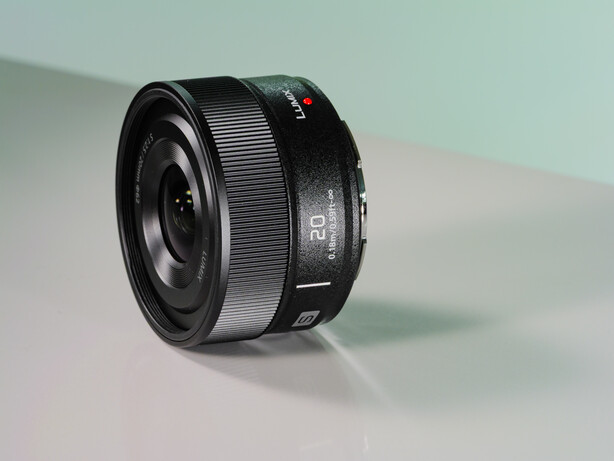
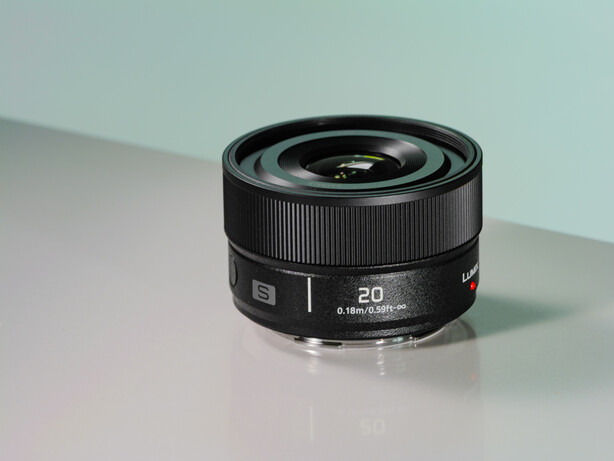
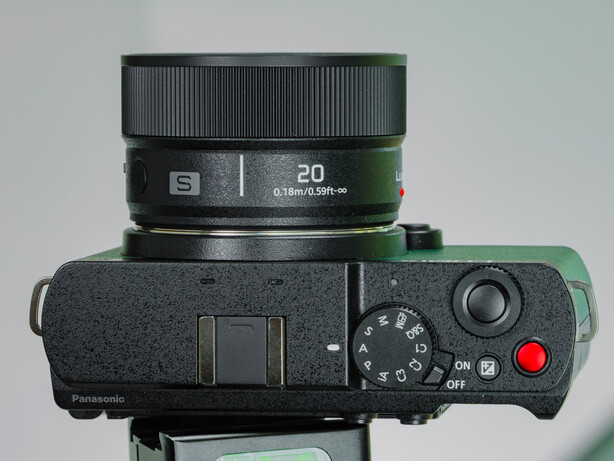
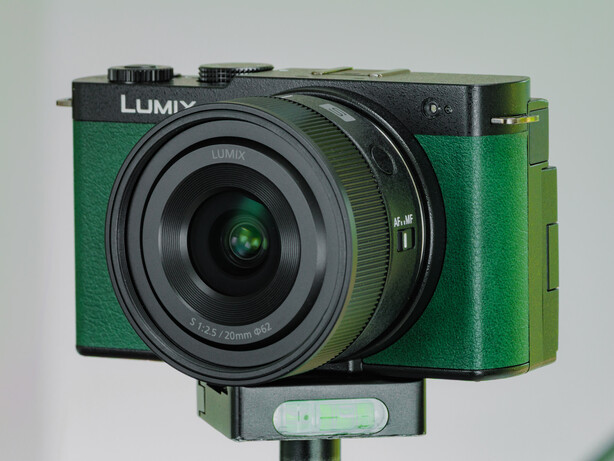
The Lumix S 20mm f/2.5 is a compact and lightweight AF lens designed for the Lumix S series of full frame cameras. While its dimensions and weight make it an obvious mate for the equally compact and flat-topped dimensions of the Lumix S9, we don’t have to do what Panasonic tells us – it works just as well, if not better, on all the Lumix S cameras. Even on that original beast, the Lumix S1R.
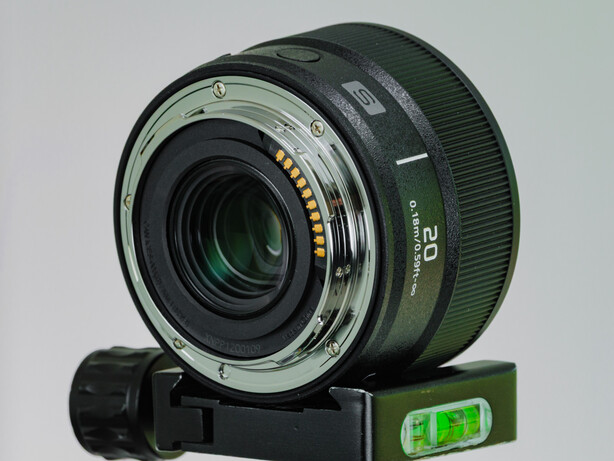
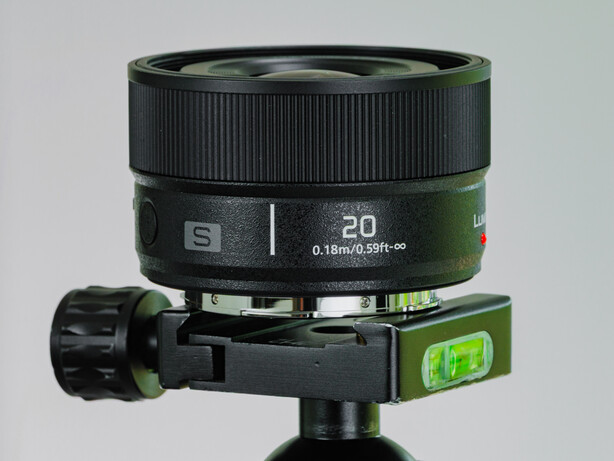
The lens weighs just 142g – the same as a women’s cricket ball, or a baseball and just 5g more than a standard D-Type battery. It measures 69.6mm in diameter and sticks out 40.9mm from the camera mount. Filter users will need a 62mm filter for the thread. Apertures run from the widest f/2.5 to the smallest f/22 using a 7-bladed iris, and we can expect a closest focus distance of 18cm.
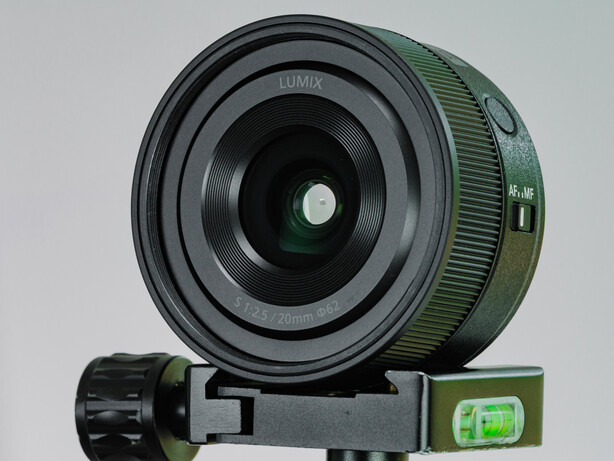
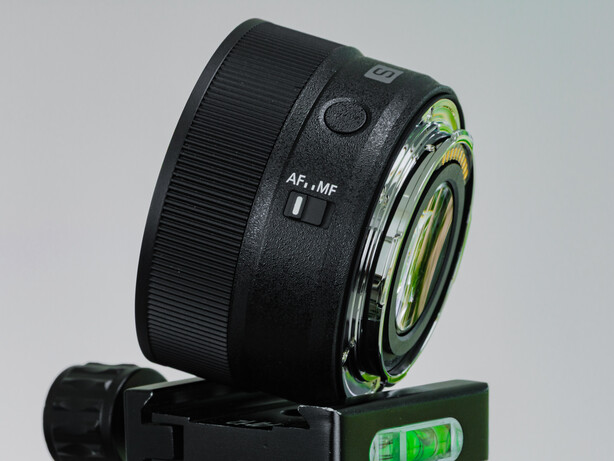
There’s no image stabilisation system in the lens, possibly to keep it small and light but also because stabilisation is often considered unnecessary in wide angle lenses – though it would still help with lower ISO settings in dim conditions. It is curvilinear distortion and chromatic aberrations that most small wide angle lenses have to worry about, so consequently Panasonic has used three aspherical elements in the optical train, along with 3 extra-low dispersion elements, in a design of 11 elements grouped into nine sets. It is remarkably difficult to ensure sharpness across the frame in a lens like this, while also avoiding barrelling and the division of wavelengths that creates coloured edges along high contrast edges.

In most other camera systems a 20mm lens is a 20mm lens, but with full frame, APS-C/S35 and pixel-pixel recording, 4:3 aspect ratios, sensor crops and Crop Zoom modes there is a high degree of focal-length-fluidity in the Lumix system, so this 20mm can behave as anything between a 20mm and a 60mm depending on how you shoot and what resolution you need.
Panasonic Lumix S 20mm f/2.5 Handling
There’s not a great deal to report on the handling of this lens as it is a pretty straightforward affair. We have a focus ring, as expected, that doubles as a zoom ring when Crop Zoom is enabled in the host camera, and which I suspect will remain untroubled by excessive rotating in the hands of most photographers – this just isn’t the kind of lens that will be manually focused very often. However, should you decide to turn it you will find the ring broad, well ribbed and pleasing to operate. The effects of its rotation can be customised in the Lumix menu to alter the direction of travel as well as the extent of travel each incremental movement induces.

Of more note perhaps is a custom button on the camera-left side of the barrel that can be used to activate an enormous range of features. By default this is set to stop and hold focus, but there are twenty options for what we’d like it to do, including having it operating as a traditional depth-of-field preview button.
The only other control on the lens is the AF/MF switch which switches the lens from autofocus to manual…for the time it takes for us to realise there are few good reasons to use manual focus in an AF camera in 2026.
Panasonic Lumix S 20mm f/2.5 Performance and Image Quality
It has become standard practice for lower cost, compact and lightweight lenses manufactured by camera companies to rely rather heavily on in-camera corrections to counteract distortion and vignetting. On the face of it these corrections are a great thing as they can take care of some complex issues, leaving the lens designers free to think about other things. Very often though the extreme corrections required by wide angle lenses leave corner details smeared and unattractive. There’s a fine balance to be made and not every lens-maker gets it right.
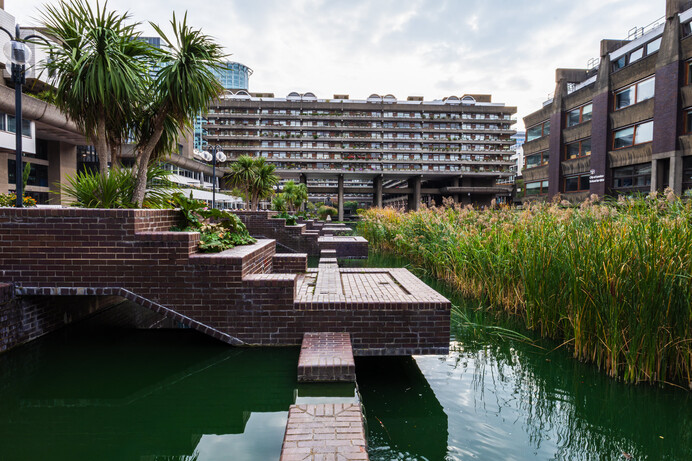
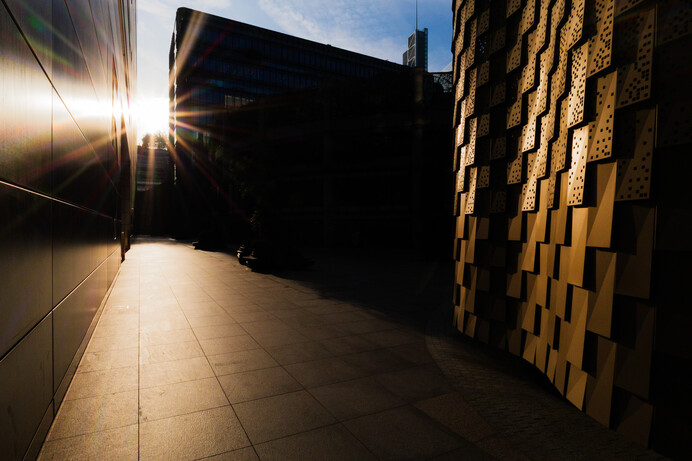
Fortunately Lumix seems to lean more heavily on optical correction in its lenses, and uses in-camera and software fixes only to finish off what the lens designer started, so we don’t have the distortion of detail that exists in some other wide lenses. Without these corrections applied there is some curvilinear distortion in the images from this lens, but it is easily fixed manually with the standard controls most image editing software provides. I found the degree of distortion created depends a great deal on the focus distance the lens it set to, with closer subjects needing much less correction than distant ones. It seems the profile used in Adobe Camera Raw doesn’t really take this into account, so close subjects suffer from noticeable and unattractive barrelling. Switching the profile correction off in the software delivers a much nicer, and more natural-looking, image when the focus is close, but it works well with distant scenes.



Being fond of a wide aperture I spent a lot of time at f/2.5 when shooting with this lens, but also having a healthy regard for sunstars and extreme depth-of-field I closed right down to f/22 on many occasions too. Most sensible folk will find f/11 enough for front-to-back sharpness in normal distance shooting, but those who dare to close the aperture all the way will find the cost in sharpness and detail resolution of very little consequence. I shoot a good deal with the Lumix S1R ll and its demanding 44-million-pixel sensor, and found the detail even with this resolution and aperture very good. Ultimately at f/11 you’ll find the detail and little more ‘biting’, but you’ll need 44MP to see the difference. Given that most Lumix S cameras have a resolution of 24MP 99% of Panasonic shooters will see no resolution differences between the widest and the smallest apertures – and even those with higher resolution cameras will have to look very closely. The only occasions I was a bit disappointed with the detail gathering was when shooting at the closest focus distance with the widest aperture. Close up like this we don’t get an image that is technically good at all, but some will find a creative use for the soft and glowing effects.
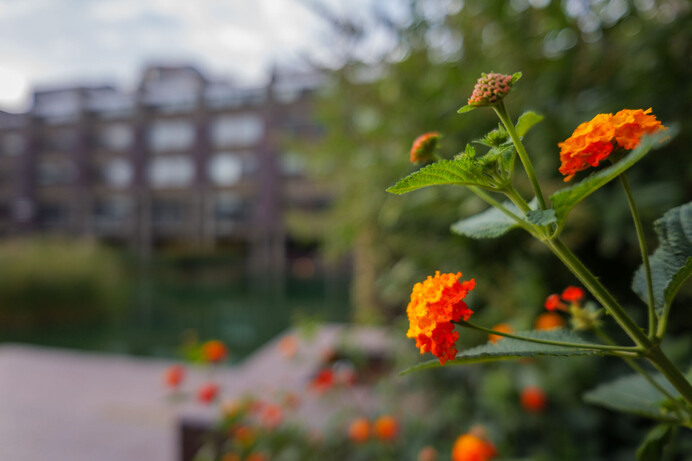

Pleasingly, chromatic aberrations are neatly side-stepped so we are very rarely troubled by coloured edges, and while out-of-focus highlights don’t get much of a look-in with a wide lens like this I was relieved they look more attractive than I had expected from the 7-bladed iris. High contrast out-of-focus edges, like those of a building against the sky, look a little basic and demand more attention than they should, but even with f/2.5 achieving much of an out-of-focus effect isn’t very easy – the depth-of-field is extensive.
I had no issues with the speed or reactions of the AF system in this lens. Panasonic hasn’t made public the frequency of the system, but it felt as snappy as I would expect of a Lumix lens.
Panasonic Lumix S 20mm f/2.5 Verdict
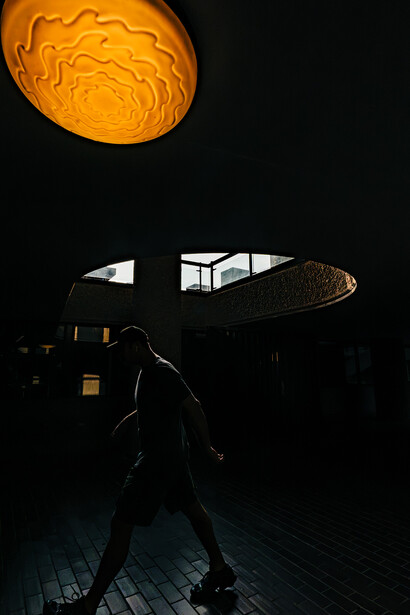
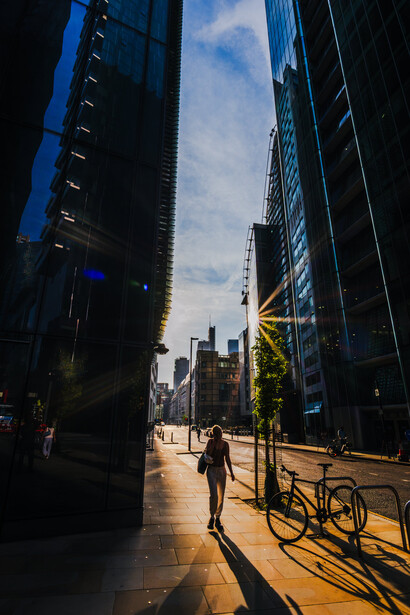
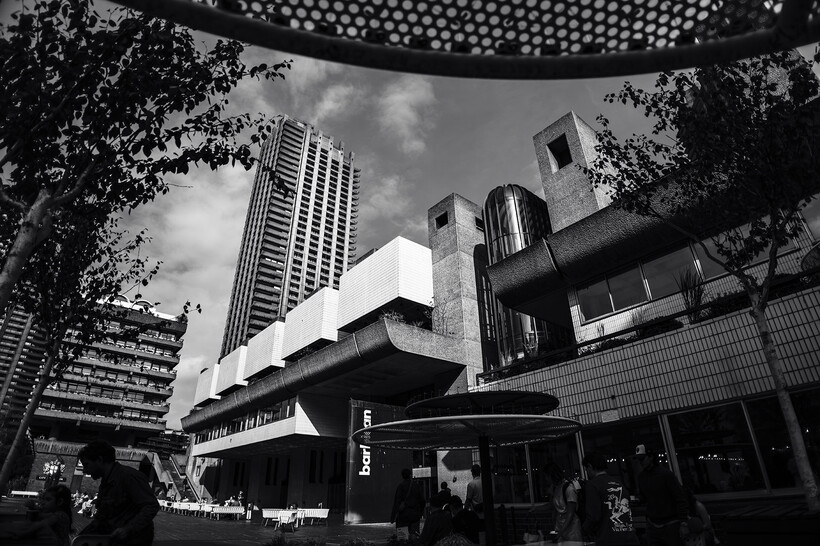
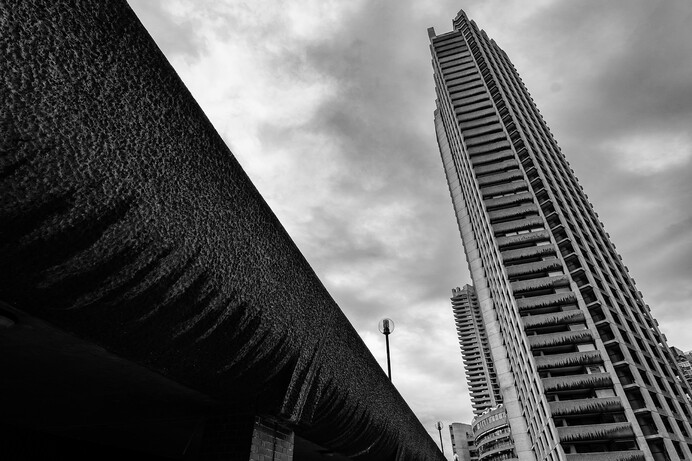
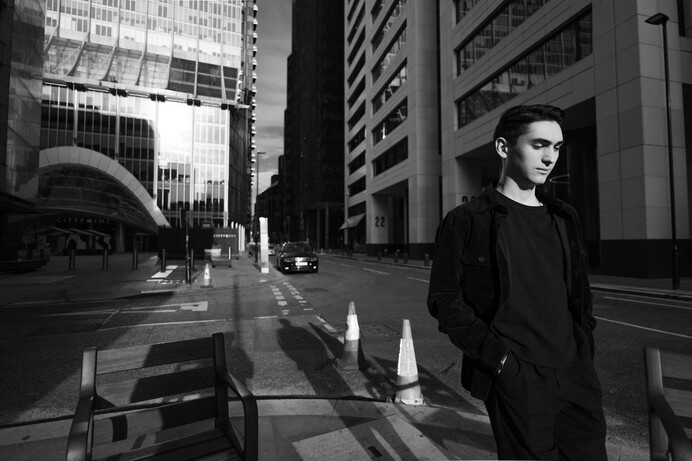
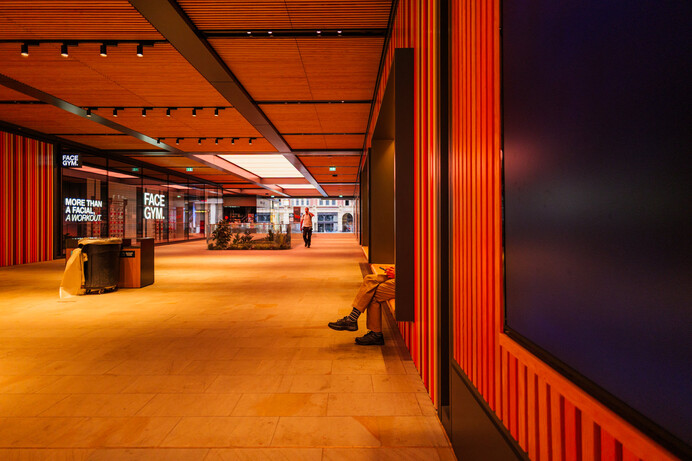
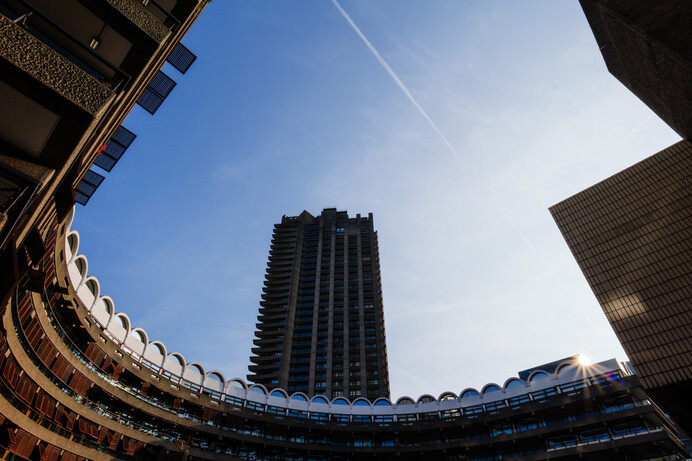
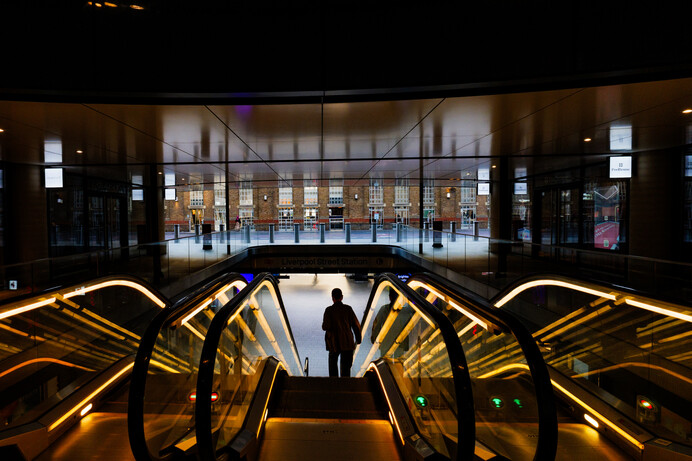
I had expected to like this lens before I used it, based on my experience of the recently released 40mm f/2 from the same series. It didn’t disappoint me and I found I’m very pleased with the images it has produced. The wide angle of view rather suited elements of my shooting style too, so I was able to use it for street and travel as well as the architecture I had anticipated.
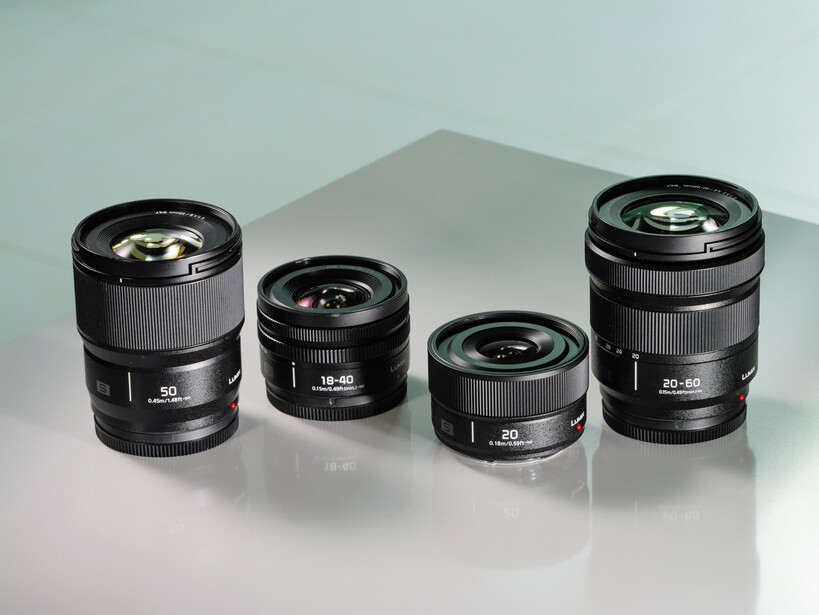
The things to like about it have its size and weight at the top of the list, but those things are no good if the lens doesn’t make acceptably nice pictures or if it lacks an exciting maximum aperture. There’s no denying I would have found the lens more thrilling had it a maximum aperture of f/1.4, but the size, weight and price would have counteracted a good deal of the attraction for many photographers. Panasonic has found a good balance here, and has created a lens that isn’t expensive and is small enough to help the S9 camera make sense. It handles very well, makes sharp images at all apertures, and offers a dynamic angle-of-view that encourages depth and drama. I rather like it.
Full Specs
 Panasonic Lumix S 20mm f/2.5 review
|
|
|---|---|
| UK RRP | £429 |
| USA RRP | $499 |
| EU RRP | €496 |
| Model | Lumix S 20mm f/2.5 |
| Focal length | 20mm |
| Max aperture | f/2.5 |
| Min aperture | f/22 |
| Diaphragm blades | 7 |
| Covering circle | Full Frame |
| Mount | Leica L |
| Angle of view (D) | 94 ° |
| Image stabilization | No |
| Lens elements | 11 in 9 groups |
| Special elements | 3 aspherical, 3 ED glass |
| Focus method | AF, MF |
| Min Focus | 0.18 m |
| Max magnification | 0.15 x |
| Filter size | 62mm |
| Environmental sealing | Dust and splash proof |
| Length x diameter | 40.9 x 69.4mm |
| Weight | 142 g |
| Included accessories | Front/back cap |