
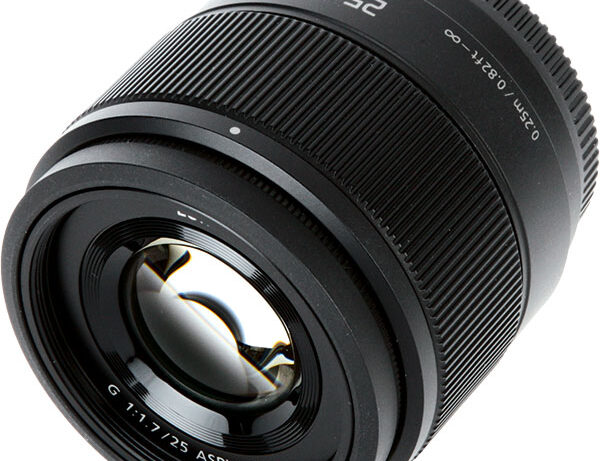

Panasonic Lumix G 25mm f/1.7 Asph – Resolution, Shading & Curvilinear Distortion
Resolution

These charts show that the 25mm is a very decent performer according to our Applied Imaging tests. It’s a little soft wide open due to residual spherical aberration, but improves quickly on stopping down. The corners are also impressively close to the centre in terms of sharpness. As tends to be the case for Micro Four Thirds, you’ll get the best results overall from f/2.8-5.6, but apertures smaller than f/11 should be avoided.
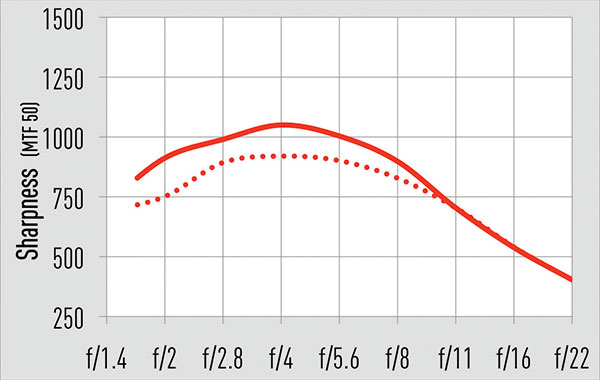
Dashed: 25mm corner
Shading
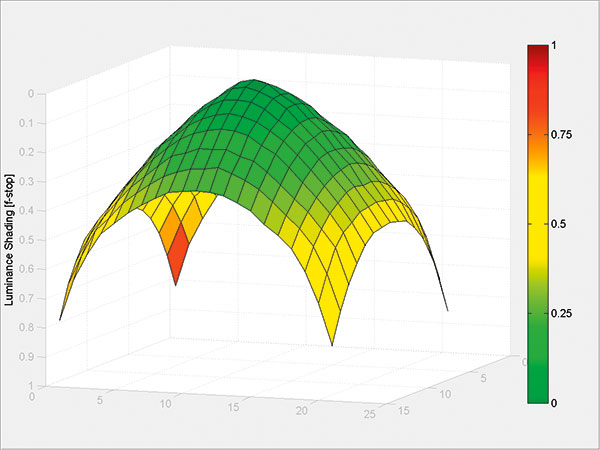
As is usual for Micro Four Thirds, shading is really rather low. When wide open at f/1.7 there’s less than a stop of light fall-off in the corners, which will rarely be noticeable in normal use. Stop down to f/2.8 and there’s barely any trace of vignetting.
Curvilinear Distortion
Analysis of the camera’s raw files reveals that Panasonic has adopted its usual approach of leaving a little more barrel distortion than would be usual if this were a DSLR lens, and correcting it in software. This is applied automatically during viewing and shooting, and by most raw conversion software. Most users will never notice it is happening and simply get distortion-free images.
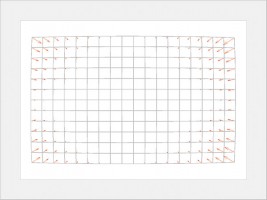
SMIA TV = -2.2%
SMIA TV = 0.0%