
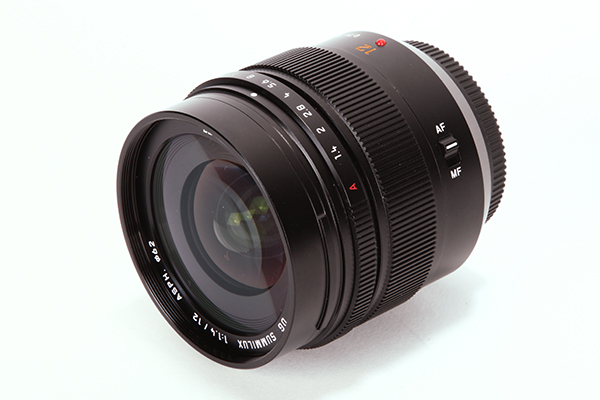

Panasonic Leica DG Summilux 12mm f/1.4 Asph review – Resolution, shading and curvilinear distortion
Resolution
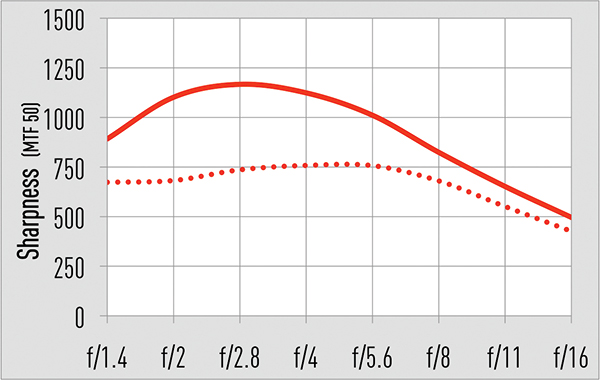
12mm corner: Dotted line

Sharpness is very impressive indeed, particularly in the centre of the frame. The very best results are obtained at f/2.8, with diffraction visibly softening fine detail at smaller apertures. The extreme corners aren’t quite so sharp, although in part this likely reflects the effects of curvature of field in our flat-field chart testing. The sharpest results overall are obtained at about f/2.8-f/4, while f/11 and f/16 should generally be avoided.
Shading
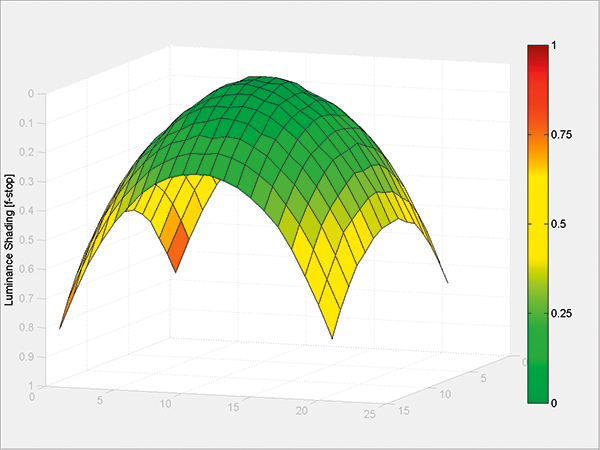
Some vignetting is visible wide open, but at less than a stop it’s not especially strong. The broad fall-off profile also means that it’s by no means visually objectionable. Stopping down to just f/2 sees vignetting drop to negligible levels.
Curvilinear distortion

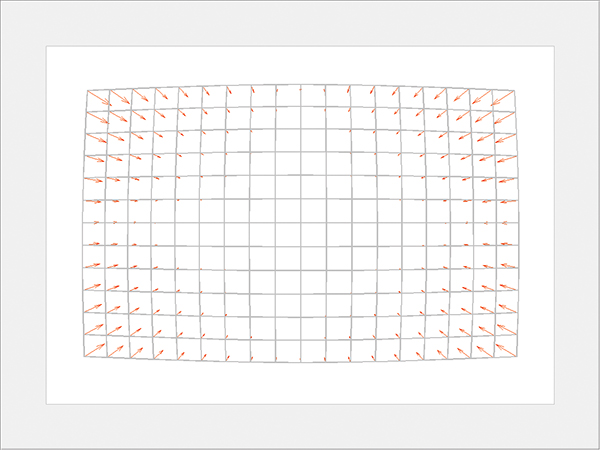
Users will see no trace of curvilinear distortion in normal operation. However, as usual for Micro Four Thirds, Panasonic employs software correction to correct distortion, with the relevant parameters embedded in the raw file and honoured by most mainstream raw converters. Uncorrected raw conversions reveal obvious barrel distortion.