
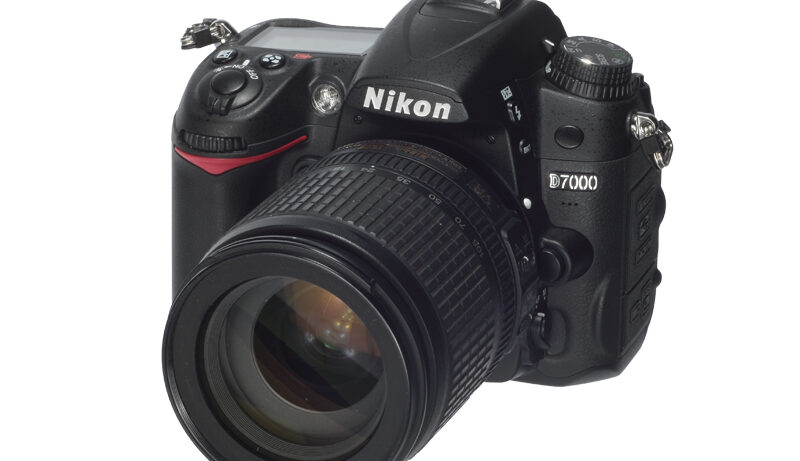


Pros

-
 Fantastic AF system, excellent picture quality, great battery life
Cons

-
 A little expensive, screen could be higher resolution, kit lens doesn’t show camera’s full potential
Image Quality
Nikon D7000 review – Image Quality
Nikon D7000 – Tone & Exposure

The brand new 2,016 RGB pixel sensor does a reasonable job of metering, though with the mid-shadow areas generally exposed for there were a number of instances when the camera drifted towards overexposure. This was present even in a number of scenes that wouldn’t usually fall victim to such circumstances, and so the availability of a +/-5 EV exposure compensation came in handy on a number of occasions.
As well as evaluative metering, a centre weighted and spot metering option are available and the size of the centre spot is size-adjustable through the menu system.
Nikon D7000 – RAW vs JPEG
Nikon’s View NX2 is included in the box to view and process Raw files.
The results between Raw & JPEG are fairly subtle, with the apparent detail in both mightily similar. The main difference is that the JPEG files seem to have a mid-tone ‘push’ that lifts the exposure slightly.
Nikon D7000 – Colour & White Balance
Colour is fairly typical of the way many Nikon DSLRs perform, with a lean towards a warmer red/yellow cast in the majority of situations. The Auto White Balance is consistent, though can struggle under artificial fluorescent light where images can appear excessively yellow. This is a particular issue for studio work, whereby it’s best to manually set the white balance or select from one of the fixed-temperature presets as applicable.
Nikon D7000 – ISO Sensitivity & Image Noise
With a high 16.2MP resolution, the general lack of image noise throughout the ISO range is an impressive feat to behold. There’s a great clarity to images from ISO 100-800 and, although colour and some luminance noise becomes noticeable hereafter, it’s not wildly disruptive to final quality. In fact, even images at ISO 3200 produce a grain-like quality that provides a good textured quality to prints. ISO 6400 is the top-end setting (at a push) for more critical use as colour noise reveals itself more in the shadow areas, and the Hi1 and Hi2 ISO 12,800-25,600 options should be strictly used for emergencies as softness through noise reduction can be problematic.
Nikon D7000 – Sharpness & Detail
The 16.2MP sensor is highly resolute and images are impressively detailed. The 18-105mm lens exhibits familiar issues as per other wide-mid zooms, such as barrel distortion, though the overall results are adequate. It’s when attaching a more advanced lens that yet more can be yielded from the sensor.
Only the higher ISO sensitivities slightly soften images, though this only becomes apparent from ISO 1600 where a subtle shift is noticeable, though the Hi1 and Hi2 settings are fairly detrimental to fine detail due to noise reduction.