
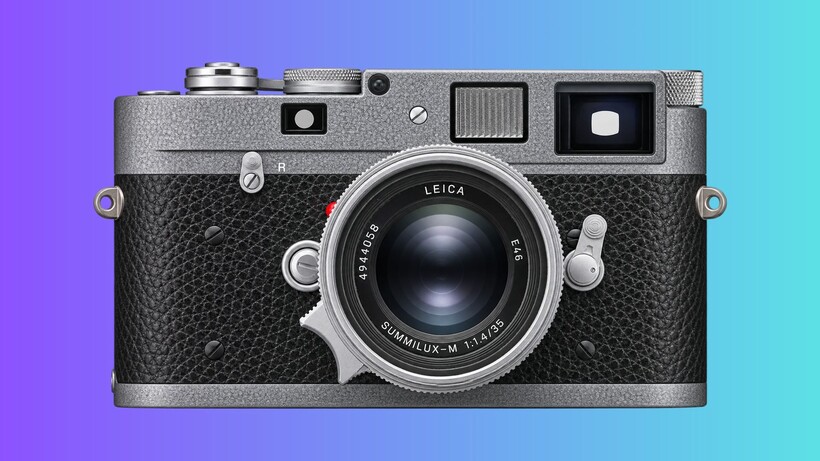


Leica has introduced two special editions of its M-series cameras, reviving a rare hammertone finish for both film and digital photographers. The new Leica M-A Hammertone and M11-P Hammertone take inspiration from some of the company’s most unusual historical models, combining textured metal surfaces with the familiar design of its rangefinder cameras. Both went on sale on 12 November, priced at £5,700 and £8,500 respectively in the UK.
The hammertone finish has a history stretching back to the 1930s, when it became associated with durable industrial equipment, particularly in Germany. Its distinctive appearance comes from metal pigments and additives that create subtle variations in the coating as it dries, producing a textured surface rather than a conventional smooth finish. Leica has adapted this process for the new cameras, with specialists at its Wetzlar factory applying the finish to solid brass top and base plates. The technique means that each camera has slightly different surface characteristics, adding a degree of individuality to an otherwise familiar design.
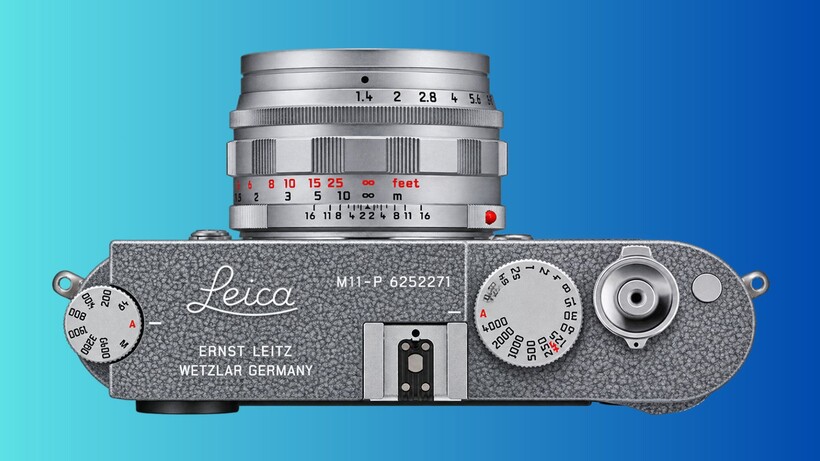
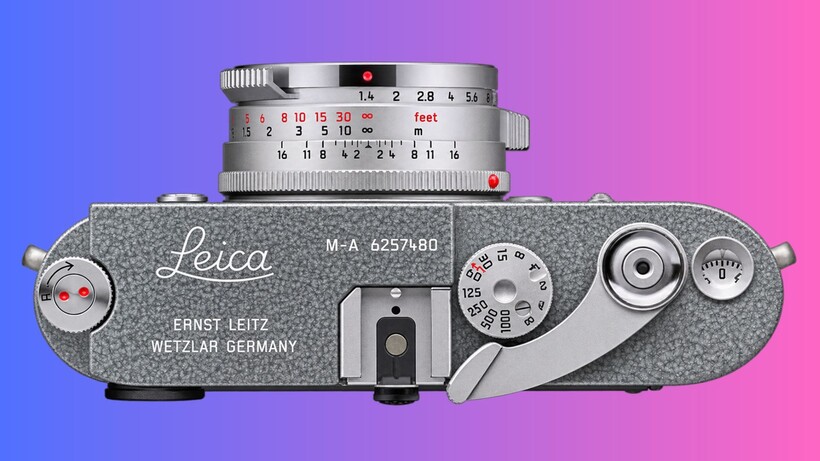
Both models pair their textured metalwork with black vulcanite-style leatherette, white engravings and traditional cross-knurled controls, while a polished silver shutter-release plate provides a subtle contrast. The digital M11-P also receives more rounded edges on its top and base plates, along with a silver-chrome screw on the front. These details draw on a relatively obscure part of Leica’s history, including the 1964 Leica MD Hammertone, of which only ten were produced, and later special editions such as the M9 Hammertone from 2011. Rather than introducing an entirely new design, Leica has brought these older styling elements into its current M range.
Underneath the new finish, both cameras retain the photographic capabilities of their standard counterparts. The M-A remains a fully mechanical 35mm film rangefinder, requiring photographers to control exposure manually without relying on electronic automation. It’s a deliberately traditional approach that continues to appeal to photographers who enjoy the slower, more considered process of shooting film, while the absence of electronic operation keeps the experience focused on the essentials of photography.
The M11-P, meanwhile, offers the same classic rangefinder handling in a digital body, using a 60MP full-frame BSI CMOS sensor with Leica’s Triple Resolution Technology. It also retains the standard camera’s Content Credentials system, which can attach verifiable information about an image’s origin and editing history, alongside wireless connectivity through the Leica FOTOS app. One small detail exclusive to this version is the included BP-SCL7 battery, which has been given a matching hammertone finish to complement the camera’s exterior.
Leica M-A Hammertone and M11-P Hammertone: Key specifications
| Specification | Leica M-A Hammertone | Leica M11-P Hammertone |
| Camera type | Mechanical 35mm film rangefinder | Digital full-frame rangefinder |
| Sensor / film | 35mm film | Full-frame BSI CMOS |
| Resolution | – | 60MP, 36MP or 18MP |
| Exposure operation | Fully manual | As standard M11-P |
| Internal storage | – | 256GB |
| Rear screen | – | Sapphire-crystal display |
| Connectivity | Bluetooth, Wi-Fi and cable | |
| Special feature | Fully mechanical operation | Leica Content Credentials |
The Leica M-A Hammertone and M11-P Hammertone are available worldwide through Leica Stores, the Leica online shop and authorised dealers. Additional BP-SCL7 batteries are priced at £160, although Leica has not announced a production limit for either camera.
Press release
New: Leica M-A Hammertone and Leica M11-P Hammertone
Two special editions bring a classic product design into the modern era of M photography
Wetzlar, 12th of November 2026 – Leica Camera AG is introducing two new product variants, the Leica M-A Hammertone and the Leica M11-P Hammertone, which bring a classic design, rarely used by Leica, into the modern era of M photography. The distinctive texture and aesthetic of both cameras come courtesy of their striking hammertone finish. Combined with the Leica M’s minimalist design language, the result is two exceptional camera models whose character is deeply rooted in the brand’s history.
Since the 1930s, the hammertone finish has symbolised the combination of durability and technical aesthetics. This distinctive texture is formed during the drying process when metal pigments and special additives create subtle variations in surface tension. In industrial design, particularly in Germany, this finish has come to symbolise functionality and reliability. On Leica cameras, however, it remained a rarity and is still particularly sought-after to this day. Historical references range from the Leica MD documentation camera for the Leitz Reprovit system to an exceptionally rare Leica MD, of which only ten were produced in 1964. Leica has reworked the process for the new special editions.
Achieving a uniform finish across this distinctive texture requires the meticulous care and craftsmanship of the experienced specialists making up the Leica Manufacture team at the company’s Wetzlar site. Both variants have a hammertone finish on the top plate and base plate. Crafted from solid brass with classic cross knurling on the control elements and a shiny silver shutter-release plate, they feature a black leatherette covering in a vulcanite style with white engravings, embodying a clear, minimalist design language. The Leica M11-P Hammertone also has newly rounded, classically styled edges on the top plate and base plate, as well as a new version of the screw on the front featuring a silver-chrome finish. Each camera is unique due to its distinct surface finish. The Leica M-A Hammertone is based on the standard model’s specifications and is aimed at photographers wanting to experience analogue photography in its purest form. As a completely mechanical M-Camera, it is entirely dedicated to manual operation: the aperture, ISO sensitivity of the film used and shutter speed are all controlled manually. The exterior is just as timeless as the precision-engineered mechanisms inside this analogue camera.
The Leica M11-P Hammertone brings this aesthetic into the Leica M-System’s digital realm. In terms of technical specifications, it corresponds to the standard Leica M11-P model. Its features include pioneering Leica Content Credentials technology, which provides images with verifiable proof of authorship, image attributes and editing steps; 256 GB of internal memory; a scratch-resistant, anti- reflective, sapphire-crystal screen; a BSI CMOS full-frame sensor with Triple Resolution Technology offering 60, 36 or 18 megapixels; and seamless connectivity with the Leica FOTOS App via Bluetooth, Wi-Fi or cable. The package also includes a BP-SCL7 battery with a hammertone finish.
With their distinctive finish, both variants draw inspiration from rare Leica special editions, including the 1964 Leica MD Hammertone, the 2003 MP LHSA, the 2011 Leica M9 Hammertone and the 2016 Leica M-A Vienna Edition. The new Leica M-A Hammertone and the new Leica M11-P Hammertone continue this lineage in their own unique way, thereby adding two exceptional, valuable variants to the Leica M portfolio.
The Leica M-A Hammertone and the Leica M11-P Hammertone will be available worldwide from the 12th of November 2026 in Leica Stores, on the Leica Online Store and from authorised dealers. The recommended retail price for the Leica M-A Hammertone is £5,700.00 / €6,700.00 including VAT.
The recommended retail price for the Leica M11-P Hammertone is £8,500.00 / €9,500.00 including VAT. Additional BP-SCL7 batteries will cost £160.00.