

Pros

-
 Handy and easy to use
-
Powerful enough
-
Great range of gobos
-
LS01 Optical Snoot adds lots of functionality
-
Good battery life
Cons

-
 Mounting threads need to be deeper
-
Unsophisticated colour modes
- Neewer FL20P £96.99*
- Neewer LS01 Snoot £50.99*
*Check for offers

There is great value in little lights. For a long time I assumed that bigger was better, but often find myself getting out the LED torch I use on bin-nights to add a splash or an accent in my still life photography. This LED torch lives in the boiler cupboard and is in handy reach when I’m shooting in the studio, but every time I use it I have to spend time in Photoshop removing its ghastly yellow/green tint. I’m constantly forgetting to replace it with something with a nicer quality of light, that has more than two brightness settings and which has a cleaner beam.
Designed to do exactly what I do with my torch but with more neutral colour the Neewer FL20 (FL for Flash Light) brings a host of gobos to the party for projecting shapes, as well as the ability to focus the beam of light and to switch between white, red, blue and yellow light while we’re doing it. I’m reviewing the flash light with its LS01 optional accessory. This is an optical focusing snoot that allows us more flexibility to shape the light and to add a whole pile more gobos into the path of the beam. It seemed silly to review the FL20P without the LS01 snoot as they are designed to be together.
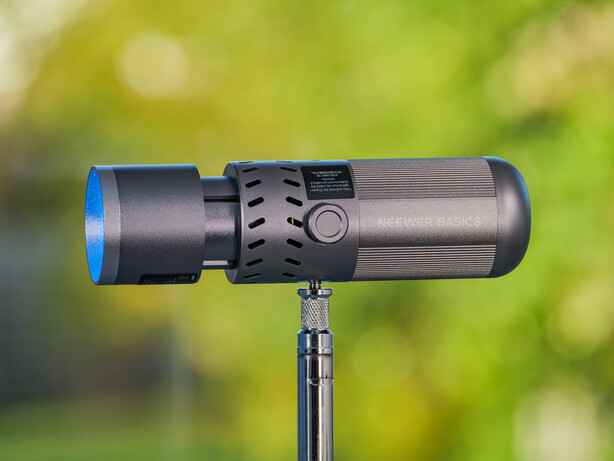
Neewer FL20 Features
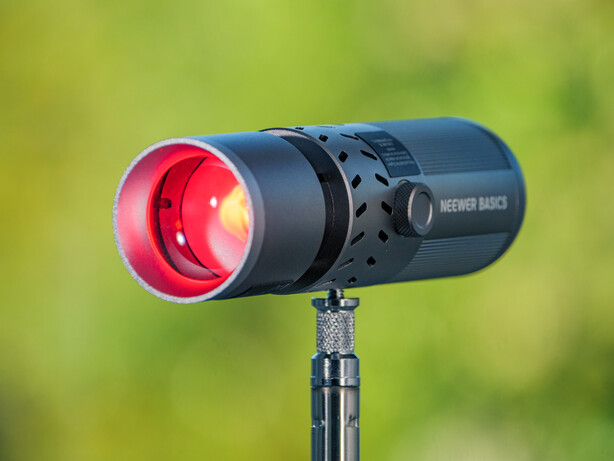
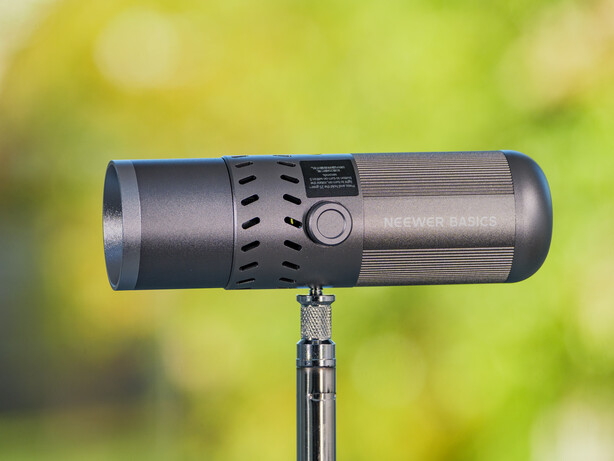
The Neewer FL20 is from the Neewer Basics range and comes in FL20 or FL20P versions, the difference being that the FL20P has a screw-in condenser lens on the front to channel the light into a more focused beam. It is the FL20P that is being reviewed here. I’m not certain what designates a Neewer product ‘Basics’ but in my experience it often means there is no app control and more limited features rather than that it isn’t made very well.
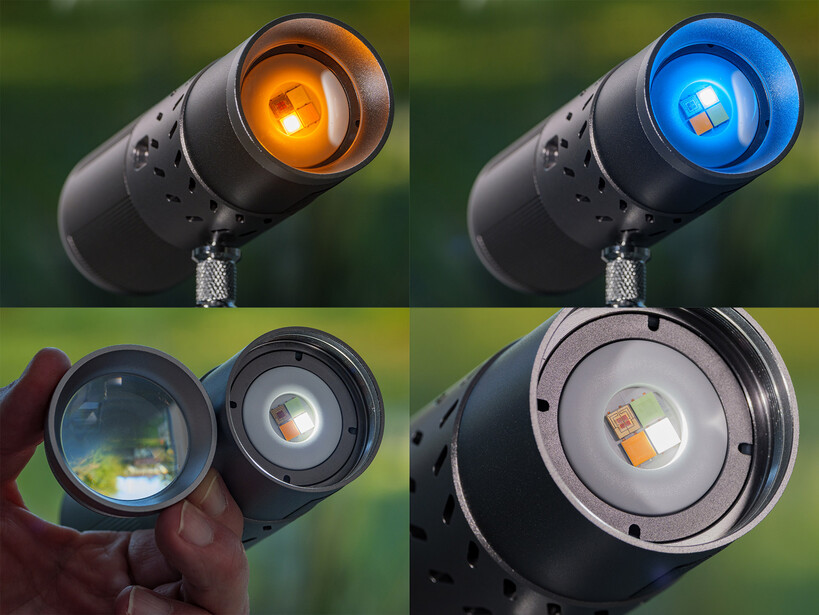
We have four colours to choose from – if you count white as a colour – and each is projected from one of four LEDs mounted at the forward end of the barrel. Neewer tells us that the light outputs 20W of power and that from half a metre we should expect 3000lux of light when the yellow LED is selected. If lux readings don’t mean much to you I have f/stop readings in the Performance section of this review.
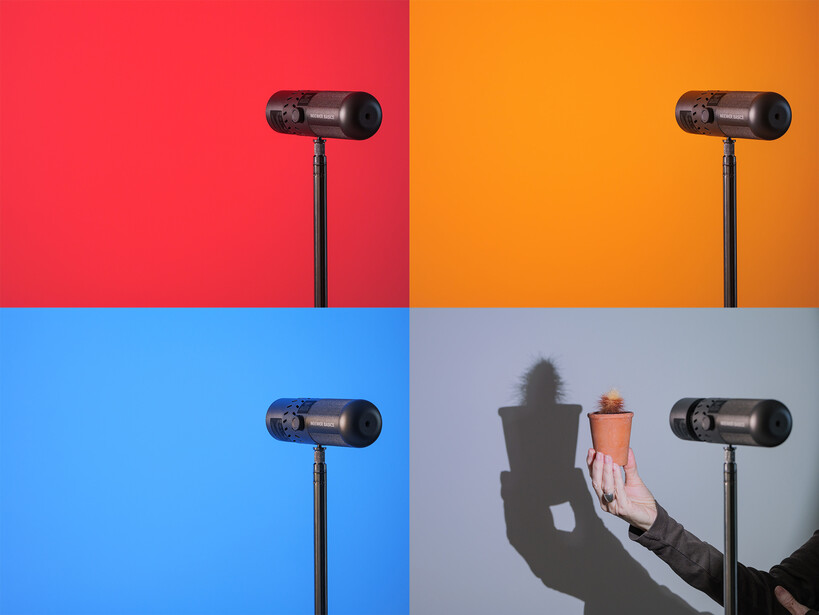
According to official figures, the 4500mAh built-in battery has the capacity to run the light at full power for up to 3 hours. We don’t have to use full power all the time of course, as the output can be controlled in 2% increments from 2% to 100%, and when running for a while at full power the FL20P can switch on its fan to keep itself cool. We recharge the battery via a USB-C port which can also be used to power the light while it is in use – very handy. From flat to fully charged is said to take 270min – 4.5 hours – so at full blast the light uses more power than it can take in, so it won’t run indefinitely when powered by USB.
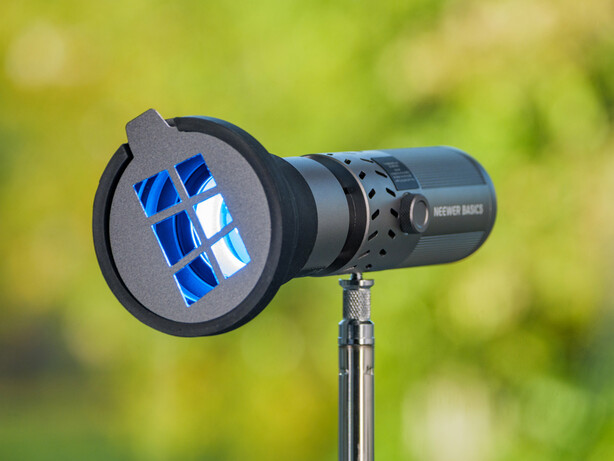
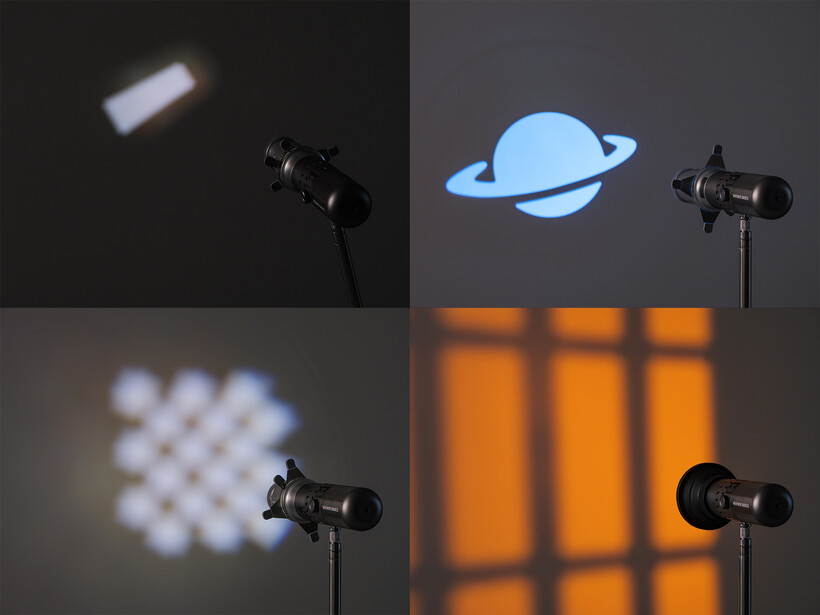
Accessories in the kit include a silicone snoot and twenty gobos to go in it which can create a massive range of shapes on the wall or on your subject, from window frames, to love hearts, dots and stripes.
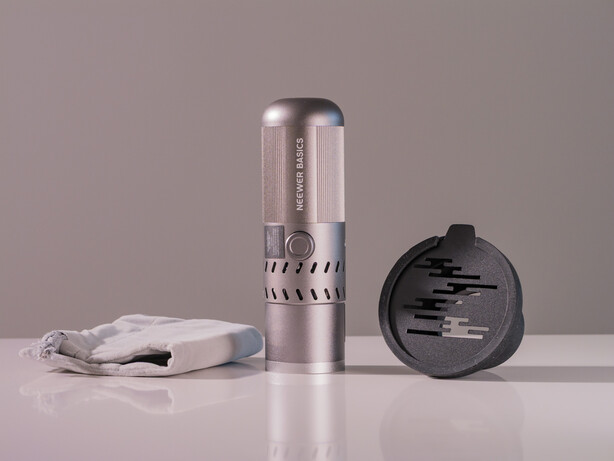
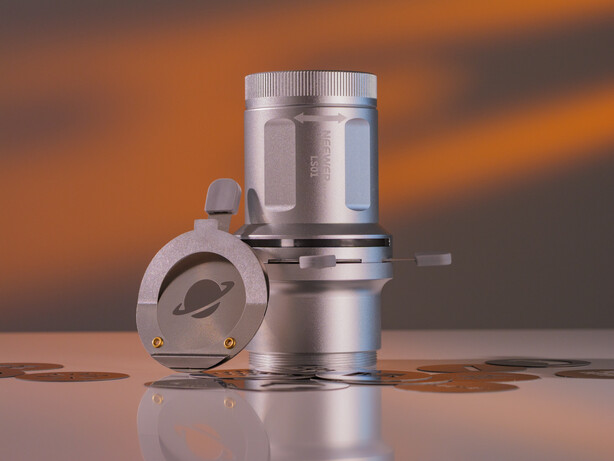
The beam of the light can be varied by pulling the front section of the housing forward to narrow what would have been a 68° angle to just 46°, while removing the condenser lens widens the bean to sometime more like 120°.
Neewer FL20 In use
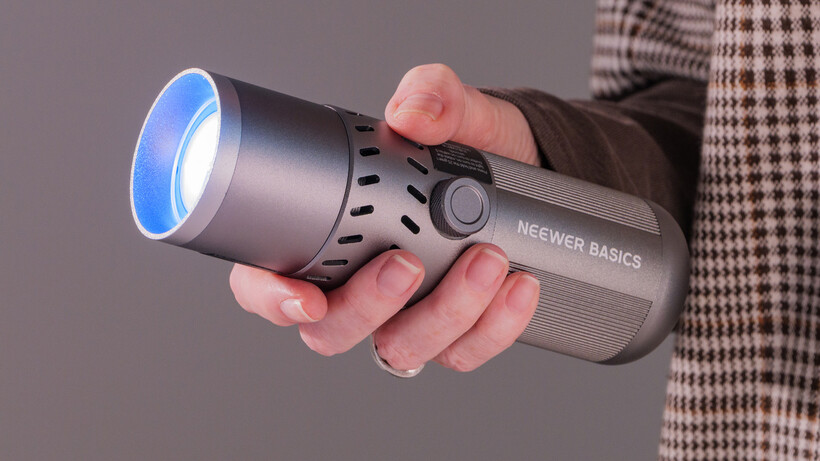
The Neewer FL20P feels very nice in the hand and has the type of solid build that lends confidence it will last a long time and that it will cope with regular and prolonged use. The controls on the body all come down to a single knob that is pushed in and held to switch the light on and off, and which is turned to confirm that we want the light on. We also adjust the brightness of the beam by turning the knob, and further presses cycle us through the different colour options. The knob has stops as it turns, and I counted 50 stops between full brightness and its dimmest setting – so each stop represents a 2% change. As there is no display it is quite hard to keep track of what brightness setting is in use at any one time, but I’m not sure how important that will be to most people.
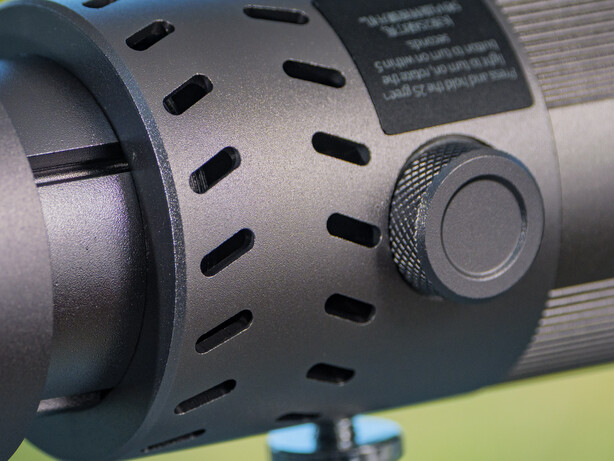
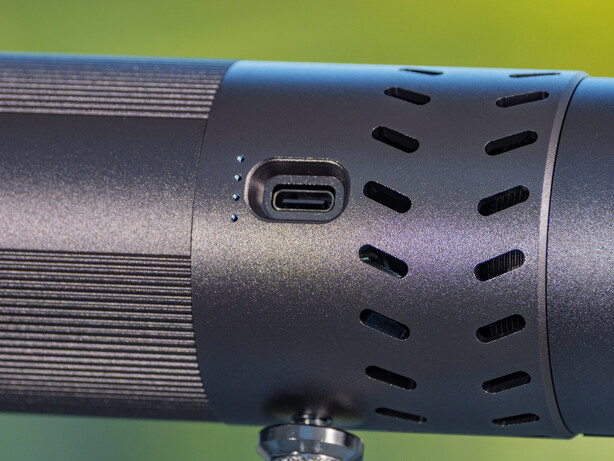
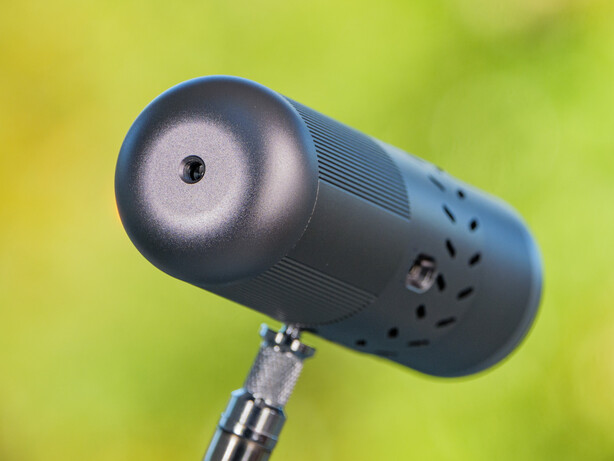
We have three mounting points to attach the light to a stand via a 1/4in thread, but you will notice the holes are a 1mm or so too shallow for us to use a standard tripod screw. This is a bit of a shame but adding a thin rubber washer around the screw of the tripod does the trick. When mounted to a light stand we don’t have this issue as the screw will screw in until it has a firm hold.
The silicone hood that fits over the lens to hold the supplied gobos slides on easily, but you will probably find it easier to insert the gobos before fitting the hood, as getting them into the slot inside the rim of the hood isn’t all that simple. The gobos themselves are thin and would not withstand industrial use, but they probably won’t need to.
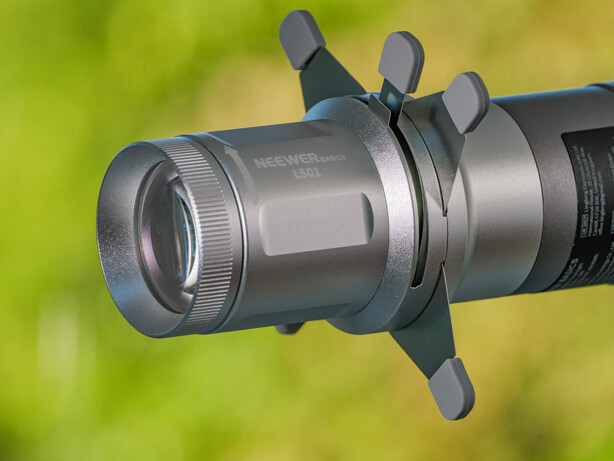
With the LS01 optical snoot attached the whole contraption becomes quite long but as the weight is centred around the middle of the barrel it doesn’t feel unbalanced. You may find the shutters that are used to control the beam inside the LS01 a little flimsy but that isn’t an unusual experience for this sort of thing. They don’t ever leave the barrel of the snoot, so they are well protected. The carriage for the metal gobos that go in the snoot is also quite flimsy, but again it will be fine with a reasonable amount of care and attention.
Neewer FL20 Performance
This is a 20W light, so we shouldn’t expect to illuminate a stadium with it. Neewer recommends one metre as the ideal working distance, but the perfect space between the light and the subject or background will vary with the effect we are trying to create. I found I could use it three metres away when creating dappling on a wall, and when used with the snoot we get all the power condensed into a narrower spot light.
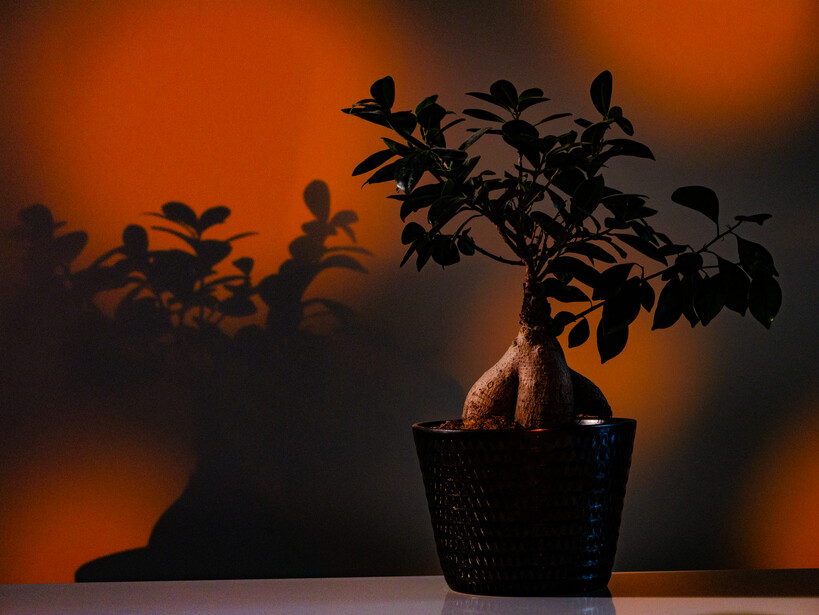
Despite the quoted figures suggesting Yellow to be the brighter of the LEDs I found Blue is by some margin, followed by White, then Yellow and Red last – as one would expect.
| LED Colour | Fixture | Reading @ ISO 400 and 1/60sec |
| White | Condenser | f/2.8 7/10th |
| White | Condenser zoomed | f/4 3/10th |
| Red | Condenser zoomed | f/2 2/10th |
| Yellow | Condenser zoomed | f/2.8 3/10th |
| Blue | Condenser zoomed | f/4 5/10th |
| White | Snoot zoomed | f/8 |
This FL20P and LS01 snoot work together really rather well, and I should think that anyone buying the FL20P would be inclined to get the snoot with it as it adds a great deal.
To the eye the white LED is pleasingly white instead of the shaded of pink/blue that we often get, but on closer inspection I found it a somewhat cool shade, but one that is comprised of a touch too much blue. That’s a good thing as it is easy to fix – if it needs fixing at all. My readings suggest the colour temperature is around 6700K.
The light does get warm in use when running at 100% and the fan does kick in when needed. It isn’t dramatically loud but if you have it right next to the mic when recording audio it will pick up. It comes on immediately at a very low noise, but becomes louder automatically when it needs to increase air flow. There is no way to switch the fan to silent mode as there is in come of the higher end lights – I guess an element of ‘Basics’ – but in most use cases I don’t think the sound will bother anyone.
As each colour comes from a single LED we don’t get the multiple shadow effect we often see with undiffused LED lights, but it does mean that the light is pretty hard and shadows have sharp edges. One of the benefits of the snoot is that the gobo effects can be focused and defocused, which will be useful to vary the impression created.
Neewer FL20 Verdict
I thought this Neewer FL20P would be a bit of fun. And it is. But it is also a light I would use as part of my everyday kit in the studio and when out and in need of a bit of fill. The colours are basic of course, and we don’t have the ability to combine them to create more complex hues or to adjust their saturation. That would be nice, but this is a low cost light that isn’t necessarily designed for colour-critical occasions. As exciting as it is to have the colours I think for most of the time I’d use this in the White mode, and bounce its snooted, focused beam into a reflector, use it to highlight a detail or to create a splash of light somewhere to make a scene more dynamic. We certainly get a lot of utility and enjoyment for our money.

Neewer FL20 Flash Light alternatives
Neewer makes a series of these photographer’s flash lights with different power ratings and some different features. The FL10 is a 10W light that has no internal fan, while the FL12C offers 12W and RGBW LEDs and can give us CCT, HSI and effects modes. The FL12 can also connect to the Neewer Studio app. You’ll get the greatest power from the FL30 which is much the same as the tested FL20P but with slightly more light but a shorter battery life.
Neewer FL flash light prices*
- FL10 £63.49
- FL20 £89.99
- FL20P £96.99
- FL12C £99.99
- FL30 £92.99
- LS01 Snoot £50.99
*Neewer products are constantly on offer, so check the website for special deals that change weekly
| Neewer FL20P Specification | |
|---|---|
| Max illuminance | 3000lux at 0.5m (2000K Yellow mode) |
| CRI/TLCI | 97+/96+ |
| Battery capacity | 4500mAh |
| Battery life | 180mins at full power |
| Charging time | 270mins via USB |
| Main materials | Aluminium Alloy, ABS |
| Weight | 543g |
| Dimensions | 175x52mm |