
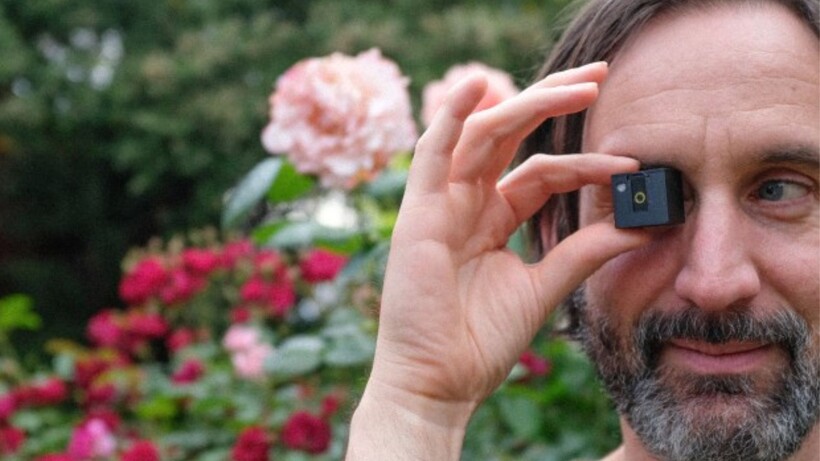


An Australian photographer has earned a Guinness World Record for creating the world’s smallest working film camera, measuring just 2.48 × 2.41 × 2.48cm. Called the Pocket Obscura, the miniature camera was designed and built by Melbourne-based photographer and art teacher Luke Fazekas, who spent almost a year developing a device small enough to claim the record while still being capable of producing recognisable photographs.
The camera takes its inspiration from the Kodak Brownie, the simple box camera that helped make photography accessible to a wider audience in the early 20th century. Fazekas has recreated that basic design on a much smaller scale, using a pinhole aperture instead of a conventional lens and a manually operated shutter to control exposure. Despite its tiny dimensions, the Pocket Obscura is a functional photographic camera rather than a decorative miniature.
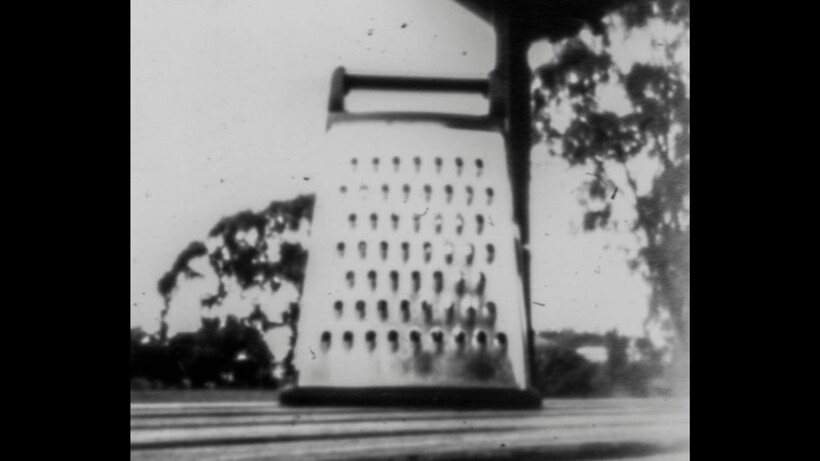
Getting it to work proved more difficult than simply reducing the size of an existing design. Speaking to PetaPixel, Fazekas explained that the project involved repeated rounds of designing, 3D printing, testing and refining. He experimented with different pinhole sizes, focal lengths and camera dimensions to find a combination that would produce usable images, with exposure presenting another challenge.
Unlike a conventional camera with an electronic shutter, the Pocket Obscura requires Fazekas to lift its shutter manually for a predetermined period, depending on the available light. The tiny aperture allows relatively little light to reach the film, making accurate exposure particularly important. Fazekas says he can now consistently produce recognisable photographs, although he is still working on improving their quality and achieving more reliable exposures.
The idea grew out of his interest in analogue photography and his experience making 3D-printed components and adapters for discontinued film cameras. After researching miniature cameras, he discovered that Guinness World Records did not have an existing record for the smallest working analogue camera. He contacted the organisation, received a measurement benchmark and decided to attempt the record himself.
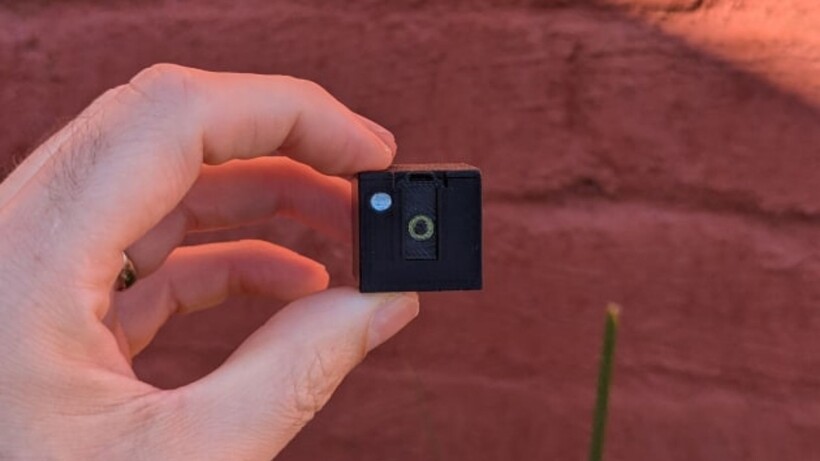
Securing official recognition also required more than demonstrating that the camera worked. According to Australian Photography, Fazekas had to arrange for a qualified metrologist to measure the finished camera to the nearest 0.01cm. The resulting dimensions were sufficient to establish the Guinness World Record.
Although the record has now been awarded, Fazekas doesn’t consider the project finished. With the camera’s size and functionality established, he wants to concentrate on refining the photographs it produces. His background in visual arts education has also given him another possible direction for the project, as he believes the camera could help students understand the relationship between photography, science, mathematics and design.
The Pocket Obscura is unlikely to replace anyone’s everyday film camera, but that’s hardly its purpose. By turning a century-old box-camera concept into a working device barely 2.5cm across, Fazekas has demonstrated how much of photography’s basic mechanics can be retained even when the equipment is reduced to an extraordinary size.