













Sigma FP2 – WDC’s Opinion

‘Because we’ve always done it that way’ is often quoted as a famously poor reason to continue any particular methodology or path in business. It is a reason too that should be avoided in the design of cameras and particularly to the way we take pictures. Making a concerted effort to do things differently does however go against the equally well regarded wisdom of not fixing things that ain’t broke. You’ll understand then how problematic a decision it can be when considering whether we should take the lessons of the past as examples of how we conduct ourselves now, or discard all that historical evidence for the sake of making revolutionary progress. Either path has its hazards. Doing the same as always can be seen as dull and risks falling behind the forward thinkers, while standing out for an unusual perspective lays us bare to the humiliation of spectacular failure born of ignorance of what everyone else has always known. On the one hand being radically different is fraught with danger while on the other untold glories await those who saw first that to which others were blind.
Sigma is a lens manufacturer I have the greatest respect for. Not only do I admire the quality of the lenses the company produces and the innovation it employs to elevate them ahead of the usual brands, but I appreciate the tirelessness of effort the company has had to employ to bring itself up from its existence as a secondary ‘cheap’ brand to one whose lenses people make their first choice rather than that which just suits a budget. What has got Sigma to where it is in optics I suspect will eventually get it to where it wants to be with cameras, but the path has been a rocky one and the big breakthrough has eluded the brand so far. What I like though is that Sigma isn’t trying to just make ‘just another’ camera – the models it has released have all had something interesting and/or surprising about them.
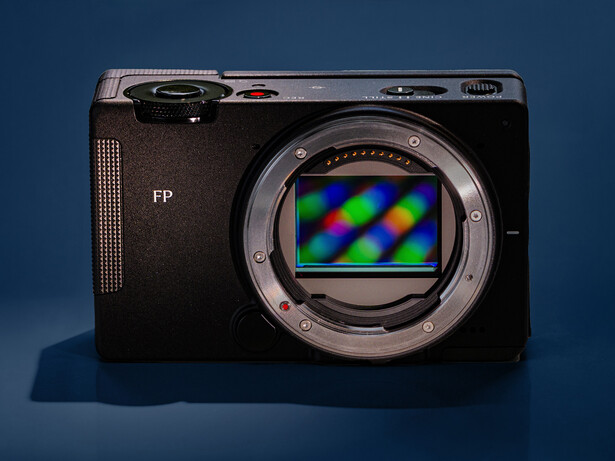
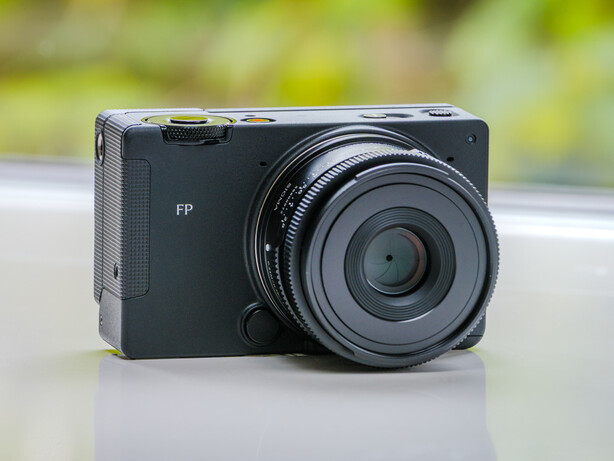
This Sigma FP2 is also interesting and surprising. The more obvious interesting bit is the physical design, while the most surprising bits relate to the remarkable filmmaking features for a camera doesn’t look much like a video camera.

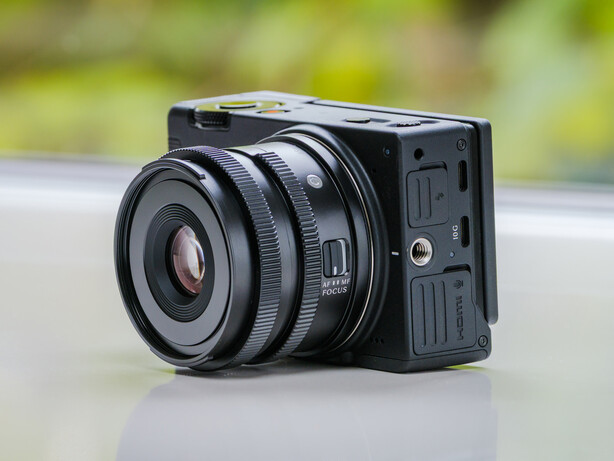
I have to say I really enjoyed shooting with the Sigma FP2 as a stills camera. It may not be the ideal model for all types of photography and those frequently shooting with long lenses might find it awkward, but for the street, travel and available-light portraiture that I love I found it rather good. The size makes it a neat camera to carry all day and to help us blend in with the crowd – a small camera helps me fit into small spaces. Coupled with the Sigma 45mm f/2.8 and 65mm f/2 Contemporary lenses I felt it made a very neat little package. I was pleased too with the menu system, though some items that should be together are spaced apart, but it is reasonably quick to navigate. I relied quite a lot on the Quick Settings button and found cooped in there most of what I needed to change quickly. As a fan of touch controls it was a bit disappointing that touching the screen when in menus does nothing more than leave a finger print. Touch functionality would really speed things up and improve this element of the camera’s handling – I never understand manufacturers that install touch capability and then limit it to shooting modes – depriving us of the chance to use them in the menus for which the function would be a great benefit.
I thought I wasn’t going to miss some form of image stabilisation when shooting stills, but on reviewing my images I noted that perhaps I have become too used to cameras that allow us to risk longer shutter speeds. When recording video though the loss of IS was a more significant issue, and what could have been a simple shoot needed a monopod (a tripod actually when I watched it back). I wasn’t able to just switch the camera on and shoot without some additional consideration for keeping the kit still. I appreciate that adding IS would make the camera bigger, but in 2026 that’s like designing out seats because they make a car heavier. When considered alongside the promise that comes with high end video options in this relatively light body, the lack of IS feels an illogical step – and the permanent size/weight inconvenience of having IS built-in is surely a price worth paying to avoid the temporary, but significant, size/weight inconvenience of carrying a gimbal every time you think you might press the red button. I love the look of the video footage, and love that there are so many options – including 3:2 anamorphic shooting in RAW – but adding a tripod, monopod or gimbal just makes a small camera big. The Sigma FP2 is a camera I want to able to use handheld because its size and weight together promise portability and quality on the fly. I did use the gyro data function, but just adds another layer of inconvenience to the post-processing workflow as it requires additional software or an editing software package that can make use of it.

One of the big surprises for me was the colour modes that can be applied to JPEGs and video footage, and which can be used in the in-camera RAW stills processing feature. The majority of in-camera RAW processing systems are pretty limited and forget to be creative, but that in the Sigma FP2 is really nice. I shouldn’t like the Teal and Orange setting but I do – principally because its effect can be turned down and further regulated by the use of the Fade control which lifts the blacks.
As you will find reported below, the autofocusing system is quick and decisive, with the face detection feature performing very well. I had trouble at first dissuading it from latching on to the closest person in the scene when I wanted to focus on someone through a crowd. The touch focus controls might allow me to move the green square to the person I wanted but the camera wasn’t inclined to put up with such nonsense and would find someone much closer when it came to actually taking the shot. Some rude words and a trip into the menu to deactivate human detection on these occasions solved the issue. Being a back-screen shooter most of the time I prefer to direct focus with a touch anyway as it avoids confusion and is often much quicker – it’s a shame we don’t have touch activated shutter in the FP2. It seems an obvious feature to include for a camera so suited to the street.

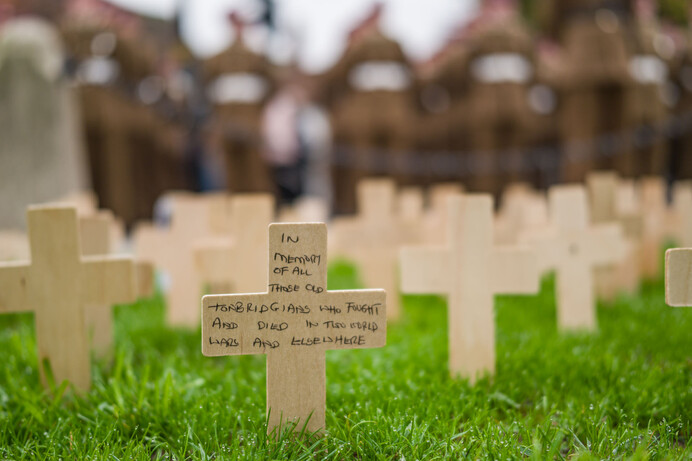
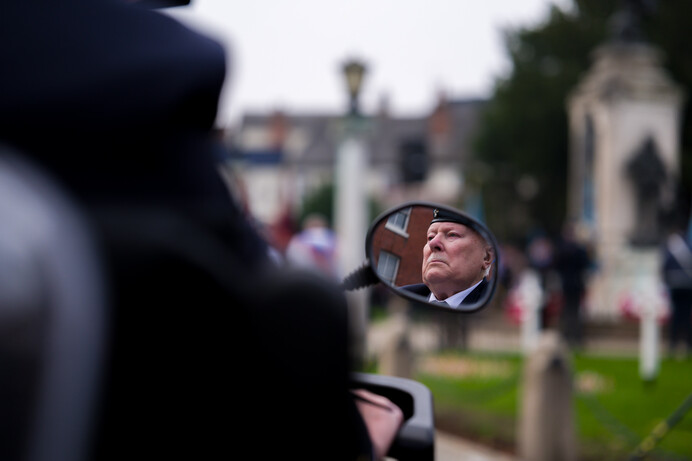
My only other annoyances were that the daylight white balance is for DNG files appears as 4900K in Abobe Camera Raw, so those who prefer not to use automated settings are destined produce cold and miserable pictures. Perhaps on a warm sunny day this will keep pictures from appearing too jolly, but shooting Remembrance Sunday in grey overcast conditions at such a low colour temperature made the occasion doubly cheerless. I found myself shifting the white balance to 5200K to more closely reflect the colours I’d seen on the day. This isn’t specifically an issue with the camera, more way ACR reads the data the camera supplies.
My other irritation is that on completion of a masterpiece when using the excellent in-camera raw processing feature, we are not taken back to where we left off scrolling through our images. Instead we are sent to the end of the file list, so we have to scroll back through the day’s images to find where we were. This must be very easy to fix. Oh, and did I mention that once I’d created my lovely new JPEG from the in-camera RAW processing I’d quite like to transmit it to my phone so I can show my friends? But in some sort of tribute to the 1980s this camera has neither WiFi nor Bluetooth to allow this to happen. So there will be no app either or wireless remote either.

I do value the size of the Sigma FP2, and I also like the way it works and the pictures it produces, but the things it deliberately lacks I also value. They will make the difference between a purchase and a pass for many photographers. And that’s not to mention the lack of a native EVF and a hotshoe for flash. I don’t care too much about viewfinders but I do like to be able to shoot with flash when I need to. As much as I like this camera it feels like Sigma is trying to encourage me to buy something else. The Lumix S9 is the obvious alternative, though that camera also lacks EVF and hotshoe, and while it’s video formats don’t include RAW shooting and it has a silly HDMI port it does offer very good image stabilisation.
Did I like shooting street with the Sigma FP2 and those little Contemporary lenses? Yes, I did. I loved it. And I love the way the video looks – even once cropped after the stabilisation process in Resolve. Whether the draw-backs outweigh the benefits isn’t a matter of fact, but one for each person to hold against what they shoot and the way they shoot it.
What Is The Sigma FP2?
- Price: £1899/€1832/$2199
- Optional EVF: £629
- Optional Hotshoe Adapter: £149
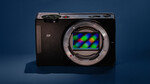
The Sigma FP2 is a modular full-frame mirrorless aimed squarely at hybrid shooters and video folk who want the smallest body they can get without binning serious image quality. It lives in an unique corner of the market that provides for cameras that work well both as compact travel cameras and stripped-back cinema rigs. The big upgrade over the original FP is a 24.5MP partially stacked full-frame sensor that is remarkably similar to that used in the Nikon Z6III and Panasonic S1 II. This brings far better read-out speeds than before and an ability to shoot 6K open-gate video up to 60fps, with 4K at 120fps for slow motion. Battery life climbs from underwhelming to merely ordinary (370 CIPA shots), and the 70GB of built-in storage means you’ll never be without somewhere to put your files. We also get 32-bit float audio via an optional add-on, full-size HDMI, and a Director’s Viewfinder mode that now simulates cinema cameras including the ARRI ALEXA 35.
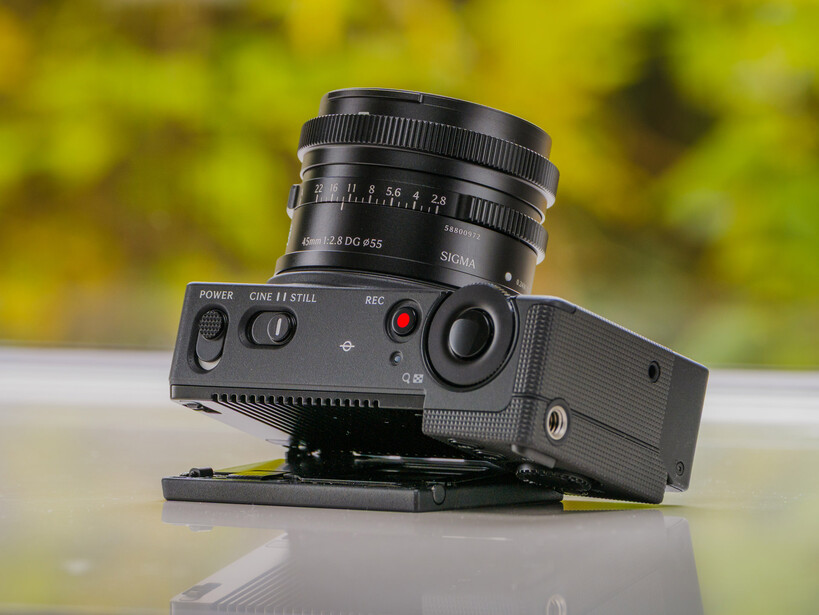
There are a number of challenging characteristics of the FP2 that will suit certain subjects brilliantly and others not at all. If you’re a video creator or an experimental hybrid shooter who actually enjoys an unconventional tool, the FP2 is designed for you.
Sigma FP2 Opinions From Around The Web
To say the Sigma FP2 divides opinions is something of an understatement, with some reviewers loving it and others finding it asks us to give up too much. This WDC report lays out what the main photo sites are saying about it
Pros

-
 Smallest full frame body going
-
Lovely image quality
-
Fast and reliable AF
-
Excellent video features including RAW
-
Full sized HDMI
Cons

-
 Lack of image stabilisation will be a problem for some
-
Viewfinder is an added extra
-
Hotshoe is an added extra
-
Price adds up when extras are needed
-
No WiFi or Bluetooth
Sigma FP2 Collective Verdict
It probably isn’t too much of a surprise that conclusions of reviews for the Sigma FP2 vary quite widely in their opinions of the camera. For some its short-comings are fatal, while others love it. Some reviewers have even left their tests without verdicts as perhaps the camera is too difficult to judge. A common theme though is of reviewers finding they liked it much more than they expected, even if they couldn’t all forgive all of the omissions. At the more positive end Amateur Photographer’s review says ‘I’ve enjoyed using it a lot more than I expected, and found it a likeable little camera that deserves serious consideration by a much wider range of photographers.’ and who goes on to tell us that it’s the best take on a compact full frame camera yet. DP Review sums things up rather neatly when it states ‘If you’re someone who looks at the FP2 and thinks “that would be perfect if they just added…” and then lists the features that would effectively turn it into a Sony a7C II, Panasonic S1II, Nikon Z6III or other mainstream camera, you’ve missed the point. You should probably look at those models instead.’ It turns out that it is the size of the camera that becomes that critical characteristic – if you are prepared to sacrifice some of the luxuries we have become used to for a tiny full frame camera this is what the options boil down to. If you love the idea of a tiny full frame camera but can’t live without a built-in EVF or hotshoe, IS, a mechanical shutter… then you’ll have to settle for loving something slightly larger.

As good as the Sigma FP2 is at being small, having great AF, excellent video codecs, nice picture quality and some cool colour modes the lack of in-body image stabilisation (IBIS) is still impossible to ignore says Amateur Photographer. The Phoblographer takes a slightly more extreme view, and while liking some elements of the camera the reviewer can’t get past what the camera doesn’t do. ‘I’m positive that any photographer who sends invoices to clients for capturing things and not being involved with a marketing campaign or being used as an active part of the attention economy will not care about this thing. I called the original Sigma FP the camera that nobody asked for, and I’m really thinking the same thing about the FP2‘.
Petapixel notes that ‘if you start adding on the extra attachments, you lose the compactness advantage‘ and the price of the whole kit becomes closer, and greater than, some of the cameras this model might be compared with, so the only way to really get the most from it is in its naked state. ‘I truly appreciate the work Sigma has done to make the FP2 more accessible and more enjoyable to use. It is a massive step in the right direction’ says Petapixel, but the feeling is that it isn’t as obvious a purchase as it could be.
Sigma FP2 Specifications
The Sigma FP2 is built around the same 24.5MP partially stacked full-frame CMOS sensor that’s used by the Nikon ZR and Panasonic Lumix S1 II – though Sigma has tuned it quite differently. Where Nikon runs a base ISO of 100, Sigma has shifted the FP2’s native sensitivity to ISO 320, a deliberate choice to push around five stops of highlight headroom above middle grey rather than the 3.3EV Nikon opts for on the Z6III. DPReview points out this trade-off, and says it explains why the FP2’s raw files have a character all their own. Files land as 14-bit lossless DNGs, which TechRadar reminds us are universally accepted in all software editing packages – which is very useful.
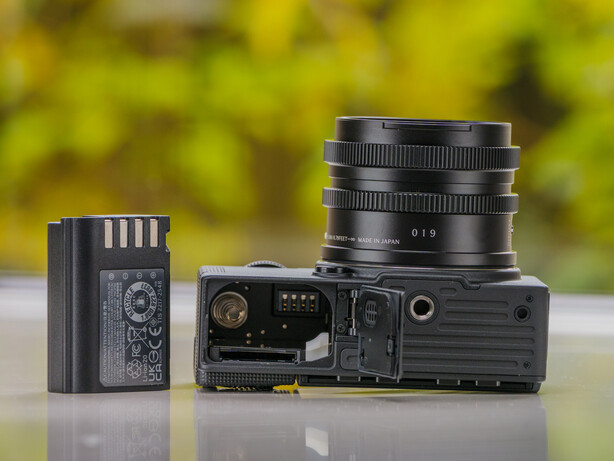
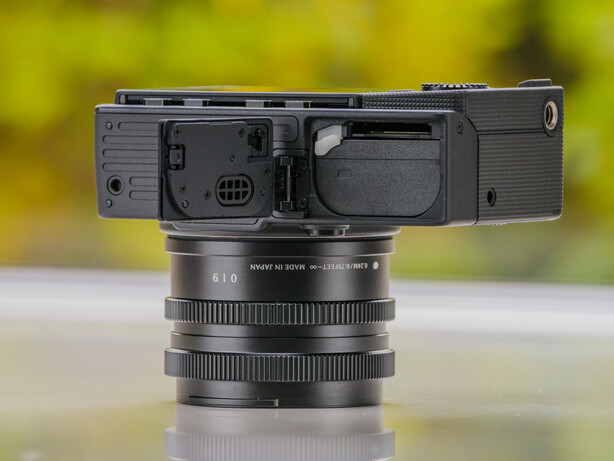
The camera shoots at 20fps on a purely electronic shutter (no mechanical option at all) and buffers 180 RAW frames before it needs a breather. There’s 70GB of built-in storage alongside a single UHS-II SD slot. PetaPixel says the CIPA rating of 370 shots is a meaningful step up from the original FP’s generally poor battery life, and the maximum flash sync speed of 1/50th is, as The Phoblographer bluntly puts it, a critical limitation for anyone who relies on flash. That the camera has no in-body image stabilisation is a surprise, and stings a little when a cheaper competitors, like the Lumix S9, offer comprehensive systems.
Sigma FP2 Video Specifications
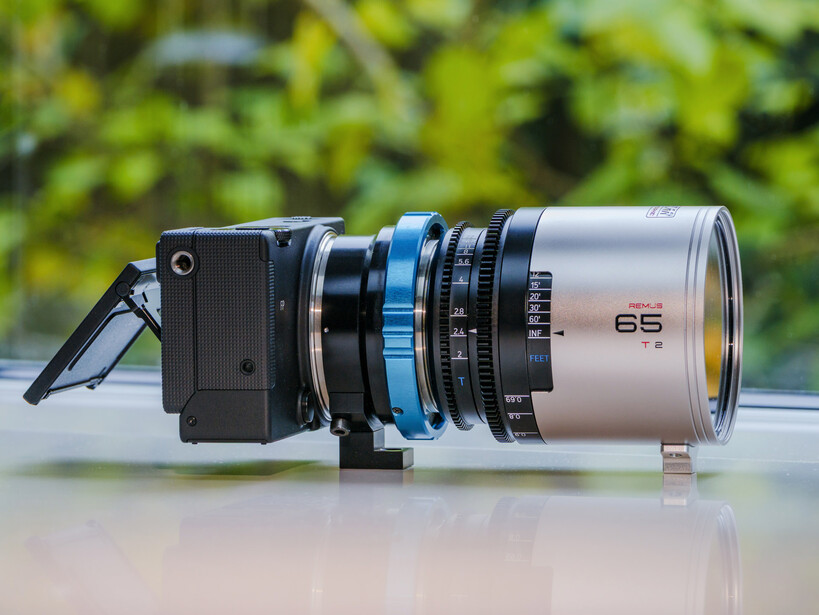
On the video side, the FP2’s headline act is 6K open-gate recording at up to 60fps at 10-bit with Leica’s L-Log, giving up to 14.1 stops of dynamic range when shooting 4K in that profile. ProRes RAW HQ at 12-bit is available up to 6K 29.97fps and 4K 59.94fps, but RAW capture needs an external SSD via the USB 3.2 port since neither the internal memory nor the SD card can keep up. At 4K the camera reaches 120fps in a DC crop mode, which is worth knowing before you plan a slow-motion shoot. PetaPixel found H.265 with L-Log had plenty of latitude for grading while being far less of a faff than connecting an external drive. The full-size HDMI 2.1 port is a welcome upgrade over the original FP, and PetaPixel reckons it’s far more rugged for constant monitor connections.
Audio tops out at 32-bit float at 96kHz, but that needs the optional HU-21 paired with Panasonic’s DMW-XLR2 adapter. Headphone monitoring is USB-only, and PetaPixel mentions the practical issue of a USB-to-3.5mm adapter occupying one of the two ports you might need for the EVF or that external SSD. The 70GB of internal storage offers a useful safety net or a decent option instead of a memory card, and the 2-hour continuous recording limit is more than most people will need.
Sigma FP2 Focusing System
PetaPixel‘s testing showed the FP2 can lock onto a subject’s eyes with real confidence, and “do a great job with tracking any inanimate object on the screen” too, which is impressive for a camera this small. The Phoblographer confirms the system is meaningfully improved over the original FP, which famously “couldn’t keep me in focus during a live Zoom broadcast with our readers”. The reviewer also noted the original struggled specifically with darker skin tones. The upgrade brings the FP2 up to par with the wider market, though The Phoblographer is clear that this is catch-up rather than a leap forward.

Where things get messier is video. PetaPixel found that when a subject walks directly toward or away from the camera, even at a relaxed pace, the FP2 can lose track and reacquire focus in a way that’s “jarring” on screen. PetaPixel reckons the Panasonic S1 II is slightly more reliable here, while The Phoblographer thinks the FP2 feels a touch faster than the Lumix S1IIE, however practically insignificant that margin is.
Subject detection now covers birds alongside humans and animals, and Sigma claims a 15% speed and accuracy bump over the original, via a hybrid phase-detection system. TechRadar hasn’t yet had the chance to test animal tracking at length, but generally found autofocus “snappy on people, and smooth and subtle enough for video,” which is encouraging.

The biggest practical headache is navigation. There’s no AF joystick. You’re entirely at the mercy of the touchscreen to reposition your focus point. PetaPixel warns you’ll “constantly find the AF point at the top right corner of your camera because of your thumb placement,” which is exactly the sort of daily annoyance that could become irritating.
Sigma FP2 Rear Screen And EVF
The FP2’s rear display is a 3.15-inch, 2.1-million-dot touchscreen that tilts 90 degrees upward and 45 degrees down, replacing the fixed panel of the original FP. That’s a welcome upgrade for anyone who’s ever contorted themselves to frame a low shot. TechRadar also spotted a pleasing hidden bonus: tilting the screen out reveals cooling vents underneath, presumably doing quiet thermal duty during those long high-resolution video takes. PetaPixel found the panel itself is sharp, noting “the detail is great,” but adds an important caveat about brightness: “It’s just barely bright enough to see on sunny days.” Worth bearing in mind if you shoot a lot outdoors.
The screen tilts, but it doesn’t flip forward, which The Phoblographer complains isn’t great for solo video creators: “If I were in-front of the camera and also had to run things behind the camera, that would be useless to me.” The Phoblographer also makes the broader point that the FP2 ships with no built-in EVF at all, calling it a disadvantage against decade-old rivals, and noting that a Sony a7R III still edges ahead in several respects including an EVF. TechRadar backs this up saying they kept raising the camera to their eye out of instinct before remembering nothing was there.
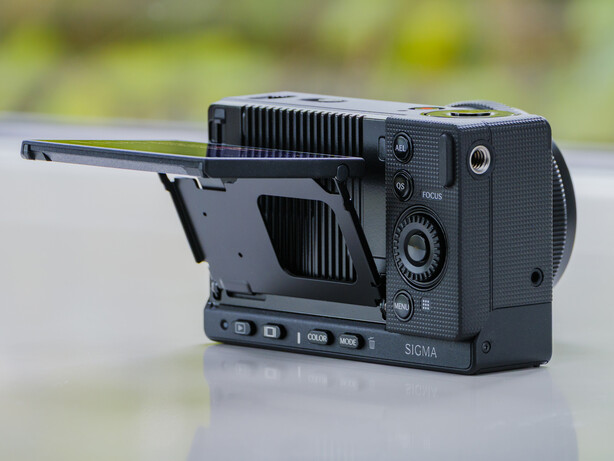
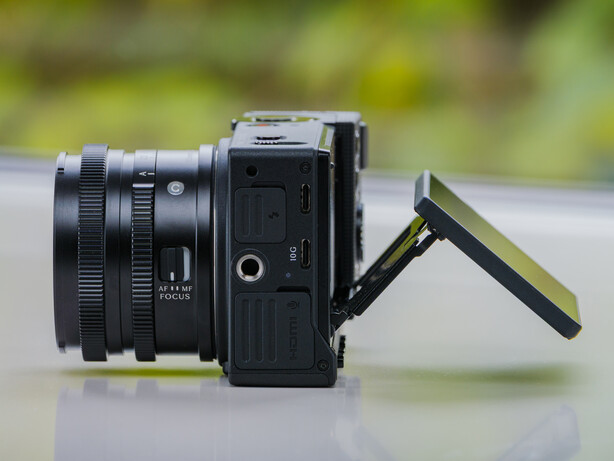
The optional £629 EVF-21 offers a very respectable 5.76 million dots and connects via one of the camera’s USB-C ports, but PetaPixel warns it’s “the opposite of an elegant solution,” mounting on the side rather than the top, turning the compact FP2 body into something bulky that won’t sit properly in most bags. It is also inconvenient that fitting the EVF blocks the hotshoe connection, and that fitting the hotshoe will mean you can’t use the EVF.
Sigma FP2 Build and Handling
The Sigma FP2 is a minimal box of a camera that is flat-fronted and gripless – a design philosophy that splits opinion amoung reviewers. TechRadar confirms “it’s flat-fronted, meaning there’s no sculpted hand grip for a secure hold,” yet after nearly two weeks of shooting the same reviewer actually warmed to it, finding real appeal once they’d reset their expectations. The Phoblographer agrees the FP2 “feels pretty good in your hands” despite its unconventional shape, but both publications call out the missing grip as a complaint photographers will voice early and often.
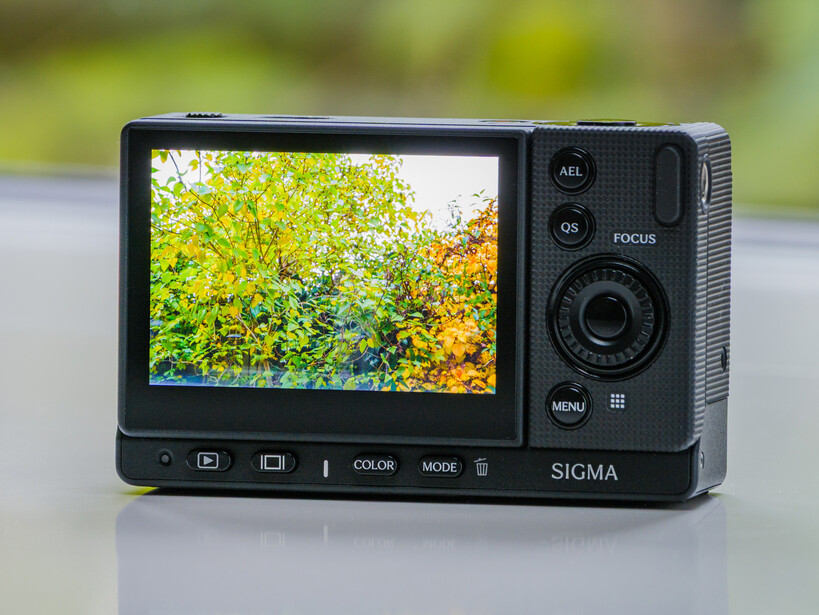
At just 470 grams loaded, PetaPixel notes the body is impressively light, but TechRadar points out a balance problem: the FP2 is so small that even compact prime lenses feel chunky strapped to the front. The included handgrip, PetaPixel warns, can actually pinch fingers against the body. Attaching a strap is similarly fiddly, requiring easily lost screw-in lugs rather than conventional eyelets, though TechRadar notes the two accessory screw mounts double as strap-loop anchors, which is a tidy bit of thinking.
On the control side, PetaPixel found the single front command dial and rotating D-pad an awkward pairing, with accidental AF mode changes triggered when turning the back dial. Navigating the menu is reportedly slow via D-pad alone, so PetaPixel recommends customising the command dials instead. The Phoblographer couldn’t directly assign ISO or autofocus to dedicated one-touch buttons, which frustrated fast shooting. And there’s just one SD card slot.
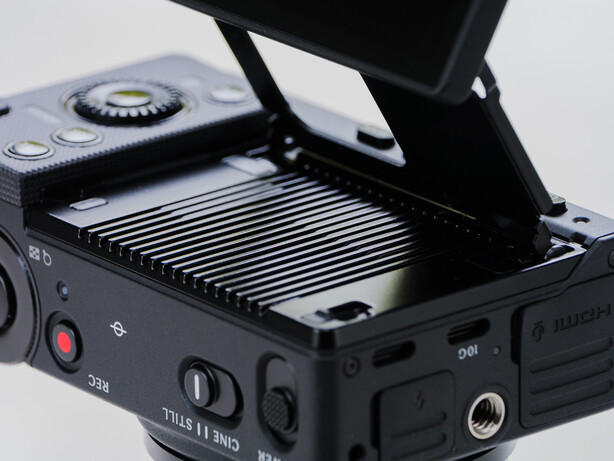
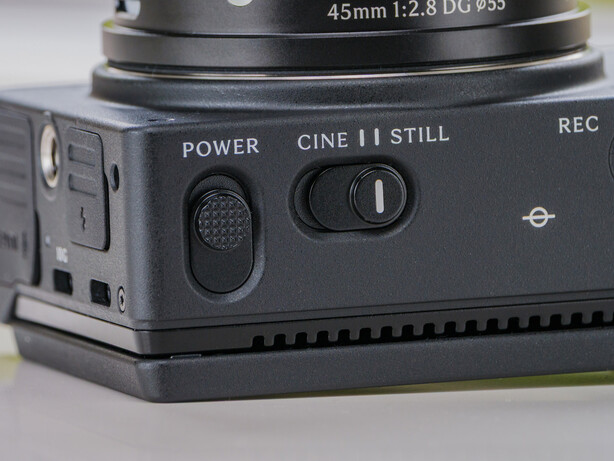
On the plus side, the FP2 now gains weather sealing the original FP lacked, notes The Phoblographer, though they point out Sigma doesn’t back the claim in their warranty policy. Treat it with appropriate caution. The Phoblographer also highlights that Sigma has sensibly ditched their previously proprietary obscure flash hot shoe, adopting the same standard used by Lumix and OM System. The £149 hot shoe itself, however, is a separate accessory that doesn’t ship in the box.
Sigma FP2 Performance
Burst shooting is one area where the FP2 makes a strong case for itself. PetaPixel and TechRadar both confirm a 20fps top speed using the electronic shutter, with the buffer holding somewhere between 180 and 200 RAW frames before things slow down (The Phoblographer puts it at the higher figure, TechRadar at 180). Either way, that’s a comfortable run for most real-world sequences. The 70GB of built-in high-speed internal storage, which TechRadar found “proved reliable during my test,” adds a welcome safety net alongside the SD card slot.
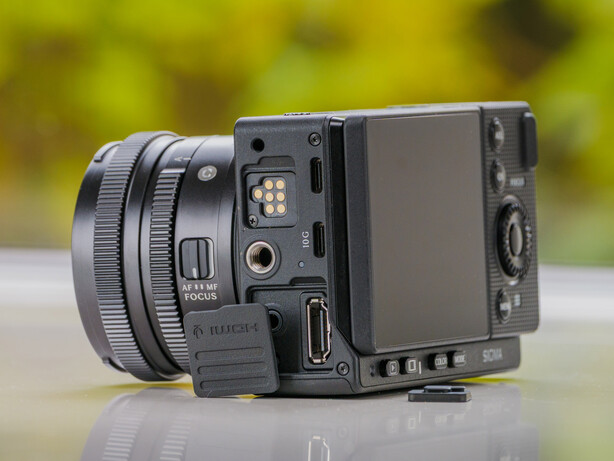
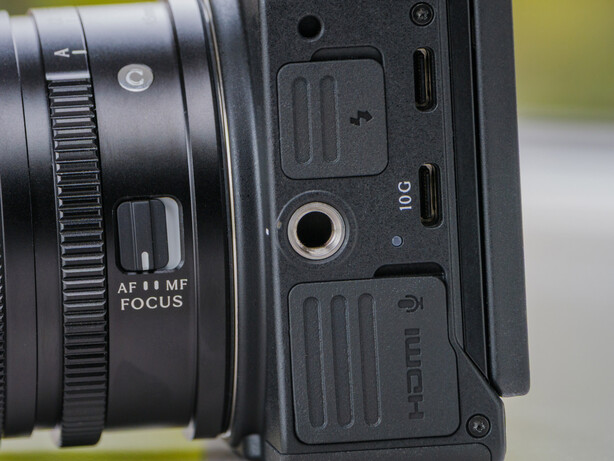
For video, the picture is more nuanced. PetaPixel‘s thermal testing found that when shooting 6K open-gate the FP2 “continually ran for an hour and a half, which is an impressive result” given there’s no active cooling. Drop to 4K 60p, though, and that figure falls to just 33 minutes before the camera shuts itself down. If slow-motion is an occasional treat rather than your default mode, you’ll probably be fine. If 60p is your bread and butter, plan accordingly.
Battery life is rated at around 370 stills or 130 minutes of continuous video, about 30% ahead of the original FP, according to The Phoblographer.


The stabilisation section of most reviews is pretty short, as there is no IBIS, which TechRadar says “makes handheld video recording much trickier.” The practical workarounds are recording gyro data for post-production stabilisation, or mounting the camera on a gimbal. Neither is as convenient as a stabilised sensor, so this will be a significant issue for a lot of videographers and photographers alike.
Sigma FP2 Image Quality
Plenty to talk about here, starting with Sigma’s unusual exposure philosophy. DPReview spotted that from ISO 320 upwards the FP2 is set “to capture around five stops of highlight information above middle grey,” compared to 3.3EV on the Nikon Z6III. That extra highlight headroom powers the camera’s Ultra HDR JPEG system, where a brightness map tells HDR-capable displays which areas to push into extra brilliance. DPReview found the results compelling for neon lights, chrome reflections and light glowing through foliage. There’s a real problem though with fair-skinned portraits, where skintones glow while freckles and facial features do not, which is “deeply unflattering.” There’s no way to switch the HDR function off globally, so you’ll be flattening images down in each image if that’s not your thing.


DPReview notes that because the Auto ISO system defaults to ISO 400, the FP2 uses two stops less exposure than the Z6III in bright light, limiting peak image quality. Drop below base ISO and highlight headroom shrinks steadily, reverting to the same 3.3EV of its peers by ISO 100. DPReview‘s tip: manually set ISO 100 in bright conditions if you’re not chasing HDR output. At most ISO settings noise performance closely matches the Z6III because the shared sensor “is essentially ISO invariant in its higher conversion gain mode,” so the different exposure strategies make no meaningful difference in practice.
For resolution, DPReview found detail broadly comparable to the Panasonic S9 and Z6III in studio testing, with the Nikon fractionally sharper – a difference the reviewer says is possibly down to lens differences. JPEG processing is a mild weak spot: both rivals deliver better-resolved fine detail in their JPEGs, and the Panasonic manages this without looking over-sharpened. The missing anti-aliasing filter also means the FP2 “exhibits a little more moiré in the smallest detail it can capture.” Fair trade-off, depending on what you point it at.

Colour is where the FP2 earns its personality points. The dedicated physical Color button gives access to 13 creative profiles, and PetaPixel‘s reviewer particularly warmed to the teal-and-orange and sunset-red looks, each adjustable for contrast, shadows, highlights, haze and overall opacity. The Phoblographer was so taken with them they reckon readers won’t “be able to tell what’s what” between their edited files and straight-out-of-camera output. TechRadar simply called the 6K open-gate video and colour presets “quick and versatile output,” which feels like an understatement given everything Sigma is doing in the background.
Sigma FP2 Price and Value
At $2,199 / £1,899 for the body alone, the Sigma FP2 sits in an interesting spot. It’s pricier than the Panasonic S9, but PetaPixel is “okay with this extra cost given that the camera is more capable as both a video and photo tool.” That body price though is “just the beginning for a camera that works best with optional accessories,” with the excellent EVF-21 electronic viewfinder adding another $500 / £640 to the bill when bought as a kit, and costing more still if picked up separately. Upgraders from the original FP should also note that the new accessories aren’t cross-compatible with the older camera. Another cost to factor in.



PetaPixel calls out a compounding problem: once you start bolting on extras, the size advantage shrinks and the total price creeps toward Panasonic S1 II territory, which the site reckons is “a far more elegant and capable package compared to a tricked-out FP2.” TechRadar echoes the broader concern, noting that “there are better value conventional alternatives” for most photographers.
The Phoblographer goes furthest, pointing out that a decade-old Sony a7R III still beats the FP2 for still shooters across megapixels, lens choice, flash support, weather resistance, and EVF. The FP2 earns its price if compactness and feel are really your priorities. For everyone else, the value case gets harder to make.
Sigma FP2 Frequently Asked Questions
How good is the autofocus?
It depends on what you are shooting. PetaPixel found the FP2 reliably locks onto eyes and tracks inanimate objects with what they described as Sony-like performance, and TechRadar called autofocus on people snappy and smooth enough for video. The Phoblographer noted it is a step up from the original FP, which famously struggled with darker skin tones, but concluded the improvement only brings it level with cameras launched in recent years rather than setting a new bar. Where it falls short is in video: PetaPixel found the camera would sometimes lose track and reacquire focus in a jarring way when a subject walked directly toward or away from the lens, and rated the Panasonic S1 II slightly better in that specific scenario.

Is the Sigma FP2 good for video and filmmaking?
It has genuine filmmaking credentials, particularly for someone who wants a compact body with serious output options. TechRadar and PetaPixel both highlight the 6K open gate recording up to 30p, 4K at 60p full-width with minimal rolling shutter, and a wide range of formats stretching to ProRes RAW HQ via an external SSD. PetaPixel recorded 6K open gate for an hour and a half before the camera overheated, which they called impressive, though 4K at 60p caused a shutdown after just 33 minutes. The single biggest practical obstacle is the complete absence of in-body image stabilisation: TechRadar included sample footage to illustrate how difficult handheld shooting is without it, and notes that gyro-data post-processing or a gimbal are the main workarounds.
Who is the Sigma FP2 best suited for?
The FP2 makes the most sense for video-focused creators or hybrid shooters who genuinely prize a pocketable full-frame body above all else. TechRadar, after almost two weeks with the camera in Lisbon, concluded it will appeal to certain users who value size and feel, while warning that conventional alternatives offer better value for most people. The Phoblographer was more direct, arguing that any photographer who already owns a modern interchangeable-lens camera from a traditional manufacturer has everything the FP2 offers, and gave it two out of five stars for still photography use. Street photographers, documentary filmmakers, and cinema professionals who want a compact B-camera with serious colour tools are the clearest fit.
Is the Sigma FP2 worth the price compared to its competitors?
At £1899/$2,199 body-only, the FP2 sits above the Panasonic S9 in price yet lacks that camera’s in-body image stabilisation, as PetaPixel pointed out. The more uncomfortable comparison is with accessories added: PetaPixel noted that once you attach the optional EVF and other extras, the total cost approaches the Panasonic S1 II, which they described as a far more elegant and capable package. TechRadar echoed this, flagging that the optional EVF alone adds $500 or more and that accessories from the original FP are not compatible. If the compact body is your primary reason for buying, TechRadar still found it worthwhile; if it is not, the value case becomes difficult to make.
What are the biggest practical frustrations of using the FP2 day to day?

Several reviewers found the same issues independently. There is no built-in EVF, no grip, no headphone jack, and no autofocus joystick, meaning you must use the touchscreen to move the AF point, which PetaPixel found results in constantly discovering the focus point has drifted to the top-right corner from accidental thumb contact. The Phoblographer could not assign ISO or autofocus to a one-touch button, calling both omissions frustrating. PetaPixel also flagged that the included handgrip can pinch fingers, that strap attachment requires easily lost screw-in lugs, and that the hot shoe extension and EVF cannot be used at the same time since both occupy the same port. The HDR shooting mode, meanwhile, cannot be switched off and DPReview found it produces unflattering results with light-skinned portraits, requiring images to be manually flattened to standard output on a case-by-case basis.
For more information see the Sigma website.
Full Specs
 Unconventional Or Just Impractical? Sigma FP2 – |
|
|---|---|
| UK RRP | £1899 |
| USA RRP | $2199 |
| EU RRP | €1832 |
| Model | FP2 |
| Body type | Rangefinder-style mirrorless |
| Lens mount | Leica L |
| Sensor size | Full frame (35.7 x 23.8 mm) |
| Sensor type | Partially stacked CMOS |
| Effective pixels | 24.5 MP |
| Max resolution | 6016×4012 pixels |
| Aspect ratio | 3:2 |
| Image stabilization | No |
| File format | JPEG, RAW |
| Colour space | RGB, sRGB |
| Aspect ratio options | 3:2, 16:9, 1:1, 21:1, 4:3, 6×7, A Size |
| Minimum Standard ISO | 100 |
| Maximum Standard ISO | 102400 |
| Autofocus method | Phase Detect, Contrast Detect |
| AF modes | Single, Continuous, Tracking, Face/eye detection, Touch AF |
| Number of focus points | 1215 |
| Frame coverage | 100 % |
| Articulated LCD | Flip up and out |
| Screen size | 3.15 inches |
| Screen resolution | 2100000 dots |
| Touch screen | Yes |
| Screen type | TFT LCD |
| Live view | Yes |
| Viewfinder type | None |
| Elect shutter speeds | 30-1/25600sec |
| Max flash sync | 1/50sec |
| Exposure modes | Program, Shutter priority, Manual, Aperture priority |
| External flash | Via optional hotshoe |
| Flash modes | TTL Auto, Slow Sync., Wireless control, Rear Sync. |
| Drive modes | Single, Continuous, Bracketing |
| Max fps (electronic shutter) | 20 fps |
| Self-timer | Yes |
| Metering modes | Multi, Spot |
| Exposure compensation | +/-5EV in 1/3 stops |
| AE Bracketing | +/-3EV in 1/3 stops, 3 or 5 shots |
| Storage types | UHS-II SD, 70GB internal memory |
| Shooting to SSD | Yes |
| USB | Port 1: USB 2.0 Type-C (UAC, Cable Release, EVF, Charging / Power Delivery) Port 2: USB 3.2 Type-C (Mass Storage, UVC, UAC, Cable Release, Charging / Power Delivery) |
| HDMI | Full-size |
| Microphone port | 3.5mm |
| Headphone port | Via USB |
| Bluetooth | No |
| WiFi | NO |
| Battery | Li-ion Battery Pack BP-91 |
| Supplied battery capacity | 2200 mAh |
| Battery Life (CIPA) | 370 shots per charge |
| External power | Via USB-C |
| Size | 112.8 mm × 69.9 mm × 41.8 mm |
| Weight | 460 g |
Videography Features
| Format | Apple ProRes RAW HQ, Apple ProRes RAW (12bit) / MOV: H.264, H.265, L-Log |
|---|---|
| Image area | Full frame |
| Open Gate | Yes |
| Open Gate spec | 6K 59.94p |
| Log Recording | Yes |
| Log Recording format | L-Log |
| Min Log ISO | 320 |
| Proxy Recording | Yes |
| Aspect ratio options | 3:2, 16:9, 17:9, 4:3 |
| Anamorphic desqueeze | 1.25x, 1.3x, 1.33x, 1.5x, 1.6x, 1.65x, 1.8x, 2x |
| Waveform display | Yes |
| False Colour | Yes |
| Max 4K | 59.94p full frame, 119.88p with crops |
| Max FHD | 119.88p |
| Max ProRes | 6K 29.97p/4K 59.94p |
| Max clip length | 2 hours |
| Clean HDMI feed | Yes |
| Timecode | Yes |
| Slow motion | Yes |
| Format | LPCM |
| Max Bit depth | up to 32 bit |
| Frequency | 96kHz |
| 4-channel | Yes |