
Sigma 20mm f/1.4 DG HSM | A Review – Test Results
Resolution

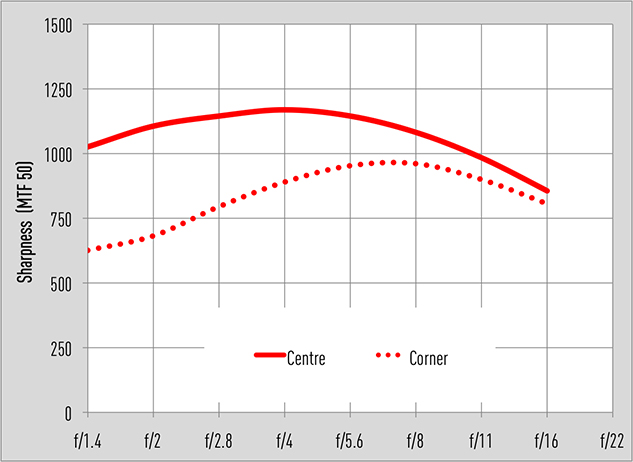
The lens resolves a similar level of sharpness in the centre at f/1.4 as it does when it’s stopped down between f/8 and f/11. Our Applied Imaging test results show the lens is at its sharpest in the centre around f/4, but to record the finest level of edge-to-edge sharpness across the frame you’ll want to shoot between f/5.6 and f/8. Users can still achieve great results at f/11, but diffraction does start to soften images slightly when you push to its f/16 minimum.
Shading
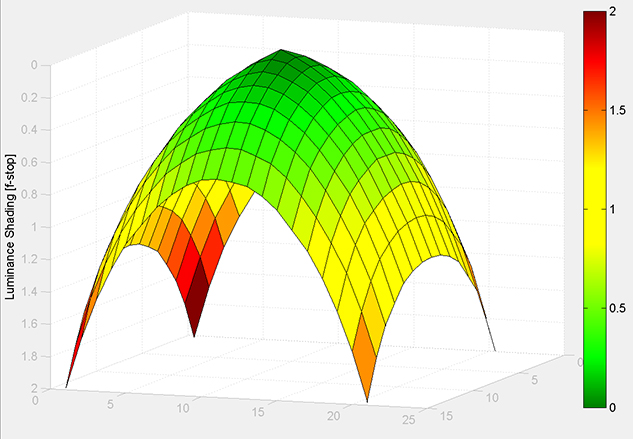
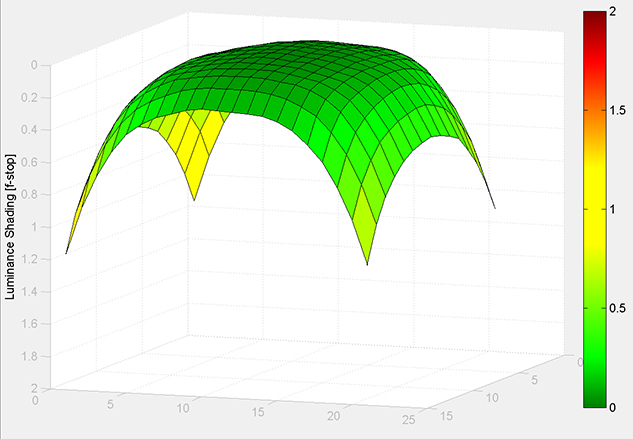
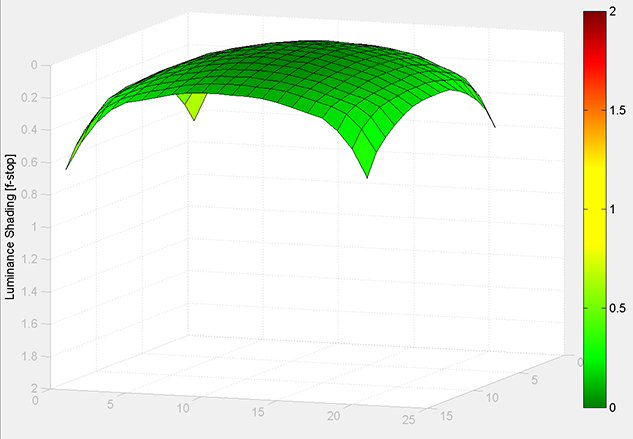
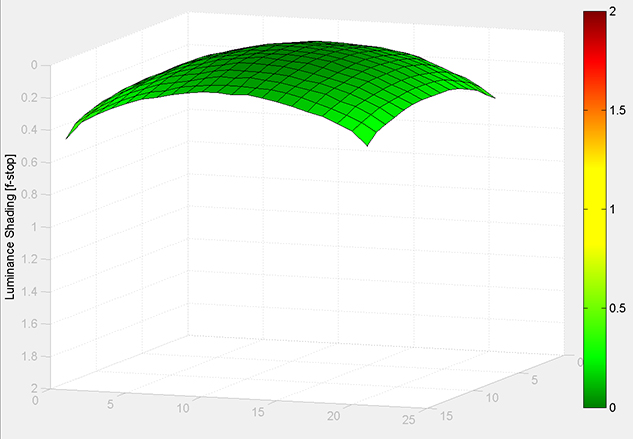
Use the lens at its maximum aperture and images will exhibit obvious vignetting. This can help to draw a viewer’s eye to the centre of an image, but is not to everyone’s taste. Edges are approximately 2EV darker than the centre at f/1.4, but this lessens to 0.6EV darker than the centre at f/2.8. Vignetting can’t be traced when the lens is closed down to f/4.
Curvilinear distortion
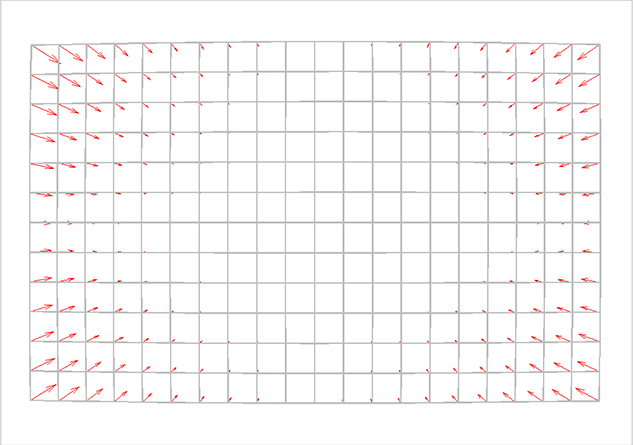
Barrel distortion can be seen in our test results, with straight lines bowing out slightly towards the corners. If you do want to remove this, it should be a relatively quick fix when Adobe releases a lens profile for Lightroom, Photoshop and Camera Raw. We’re expecting this to be available very soon.