If you thought bridge cameras were a thing of the past you may need to run your calculations again. This Sony RX10V is something else. Pricey to say the least, but still something else
Sony RX10V – WDC Opinion
I have, frankly, been amazed by how much I’ve enjoyed using this Sony RX10 V bridge camera. Not a huge fan of zooms in the first place, or 1in sensors for that matter, on paper this really did seem like my absolute nightmare camera. The convenience of having an all-in-one and all those focal lengths at my finger tips is admittedly appealing, but I’d rather have just one fast standard lens if it meant better quality and more powerful control of depth of field. So I trod carefully at first and didn’t shoot anything too important, but even on the small screen of my dinky Macbook Neo I could see straight away that this bridge model wasn’t nearly as bad as I’d expected.
I suspected though that things would come undone when I got to view the images on the big screen on my desk, but actually being able to view them large and enlarged has only made me respect the camera’s image quality more. No, the pictures don’t have the quality of a full frame sensor, nor the dynamic range we might like to have, and that f/2.4-4 maximum aperture doesn’t really allow us a shallow depth of field in the same way. However, all that said, if you are able to accept those constraints, which aren’t too difficult to deal with, this is a camera that will make you very happy.
I was concerned that images would be full of noise and destroyed by over-aggressive noise reduction attempting to pretend there was no noise in the first place, but Sony has kept the noise down to a remarkably low level and allows what does exist to form an actually quite pleasant grain pattern that lets detail in the subject exist. Adobe’s Denoise is able to deal with this admirably, leaving behind an image clean and free from interference.
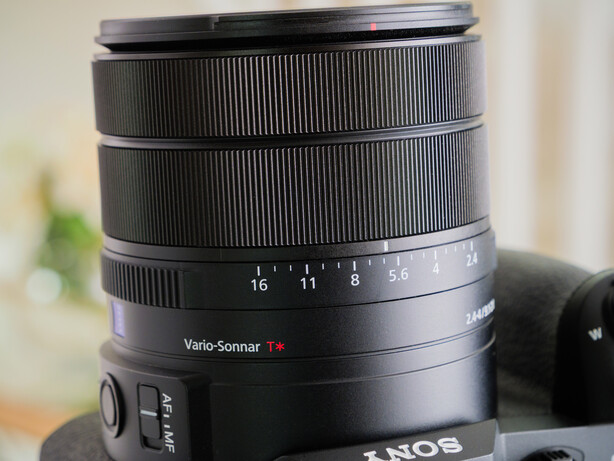
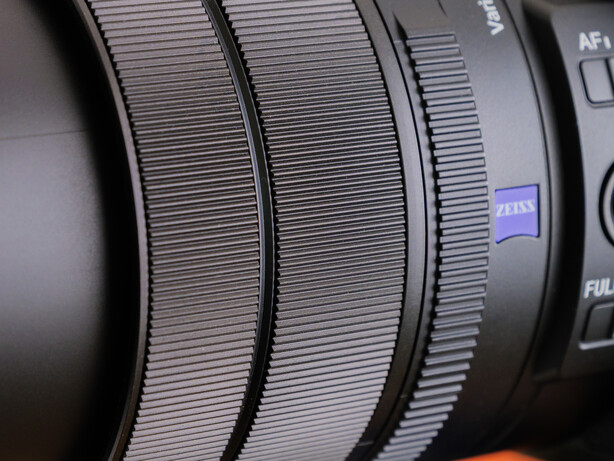
My bigger issues were with handling aspects of the camera. The zoom, focus ring and aperture ring are close together and don’t have an individual character to the touch, and I never really got used to which one was which. I loved the zoom controls though and how easy it is to make very small adjustments via the ring and the big jumps via the rocker switch. And the aperture ring operates very nicely too. I just wish it was easier to tell one from the other. It also took me a very long time to work out how to remove the large display icons from the main screen during shooting, and once I’d discovered you can swipe them away it took me a long time, some rude words and about twenty touch-shutter trigger-ations to work out how to get them back again. Now I know so it won’t happen in the future, but at the time the menu held few clues to how I could amend the situation.
Advertisement
Not only are the lens rings too close together but the two thumb dials on the top plate are also so close it takes a moment to check which we are about to turn. They turn nicely though, and with time I’d become more used to them I suppose, but things would be more efficient if one of them were on the front of the camera instead.
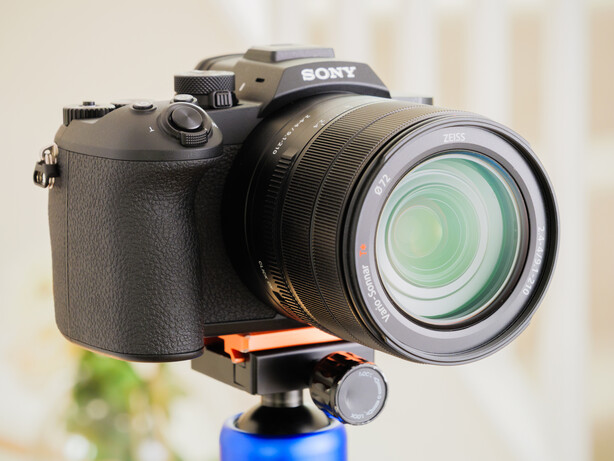
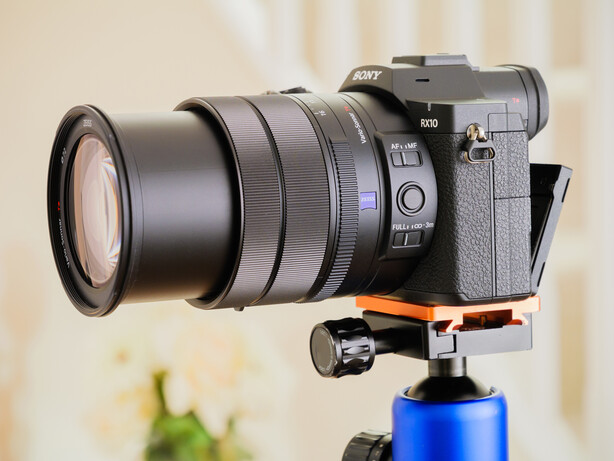
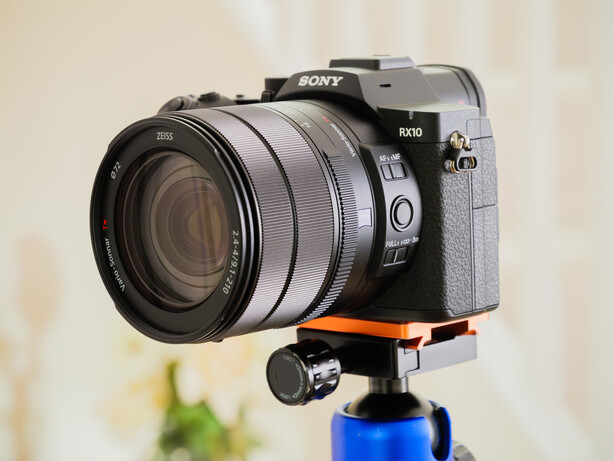
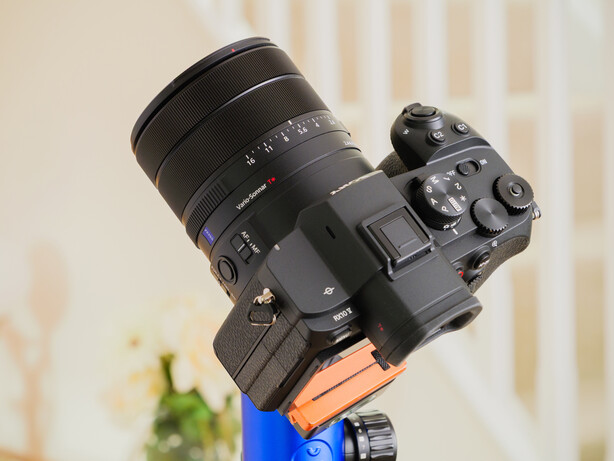
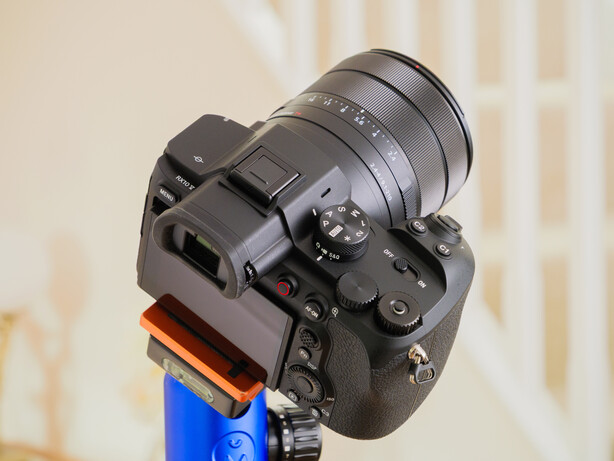
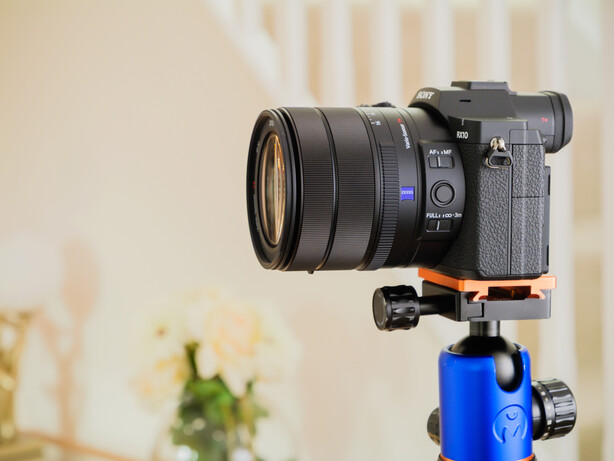
The Sony RX10V has a slightly bulbous design that focusing on practicalities rather than elegence
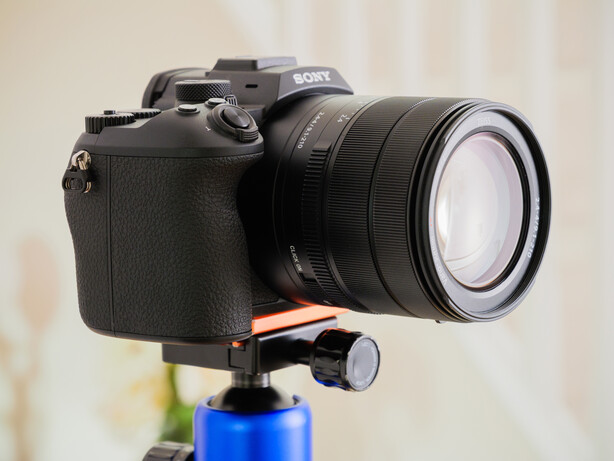
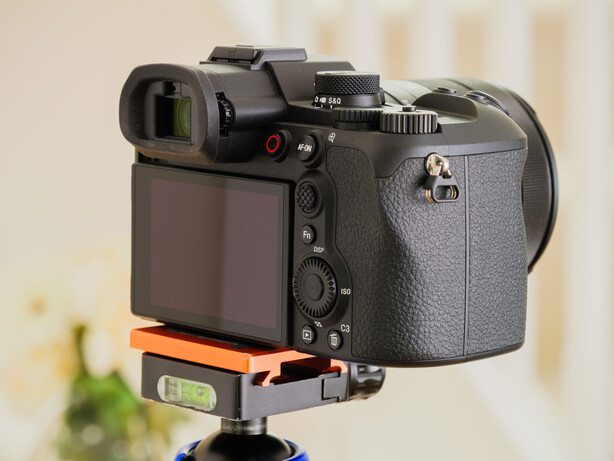
You can see here that the hand grip on the right is really quite substantial, making it comfortable to hold all day
Although I didn’t use a lot of flash during this test, I do get very excited when I can synchronise flash with high shutter speeds, so was pleased to be able to use the leaf-shutter at 1/2000sec even if that restricted me to an aperture of f/8 or smaller. Wider apertures can be used at 1/1000sec. I’m not sure why this is the case, but I’m happy enough with the compromise if it means this very cool feature is available at all. We don’t have enough access to leaf shutters these days. The battery life I found is excellent, the optical image stabilisation very good especially considering the focal lengths available, and image resolution, while not exceptional, is much better than I expected. Sony needs to shift its Daylight white balance setting from 5100K to something closer to 5500K though, and then look at the hue of its yellows – but that’s not specific to this camera.
If anyone asks you, I am a big fan of surprises, so I’m pretty delighted with the way the Sony RX10 V has turned out. It is so much better than I expected and is ideal for those who don’t want to carry a whole lot of kit but who still want access to an enormous range of focal lengths. Of course there are compromises, but none that would prevent me from using this camera again. Frankly though it really should be bloody good considering the price Sony is asking.
With a zoom that gives us focal lengths equivalent to 24-600mm this lens really can deal with almost any subject. This is shot at the 24mm end. Picture by Damien Demolder
This is the same scene but with the zoom set to 600mm, showing the front of the train crossing the bridge in the shot on the left. Remarkable! Picture by Damien Demolder
What is the Sony RX10 V?
Price: £2200/€2499/$2,300
Advertisement
The Sony RX10 V is an enthusiast bridge camera with a fixed 24-600mm equivalent superzoom, aimed at wildlife shooters, travellers, and anyone who wants one body to do everything and who wants to avoid carrying around a bag full of lenses. After nine years of watching the bridge camera evolve and then largely die out, Sony has finally replaced the RX10 IV it launched in 2017. As one might expect after such a long time, the changes in this new model are significant.
The lens in the ‘off’ position
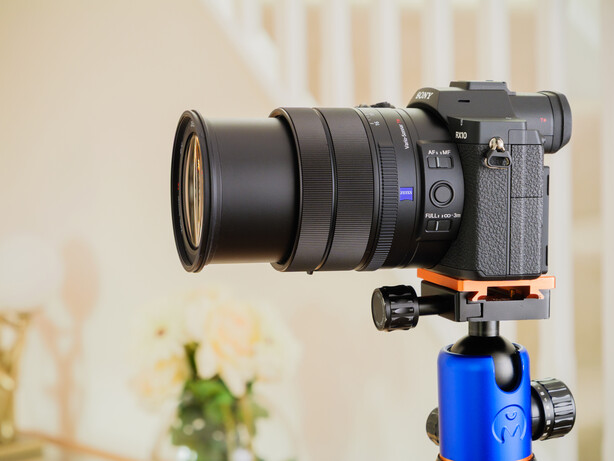
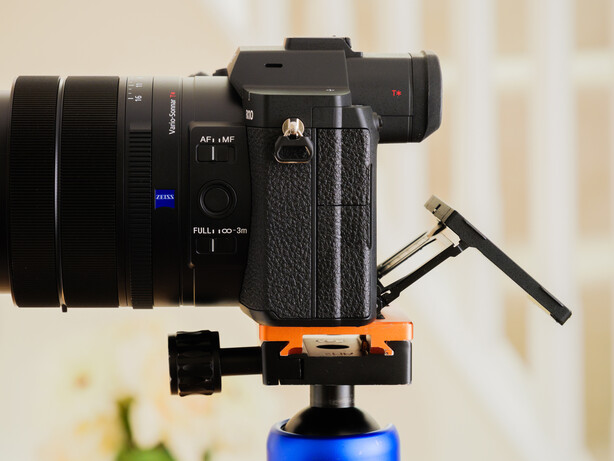
The camera on and set to 24mm
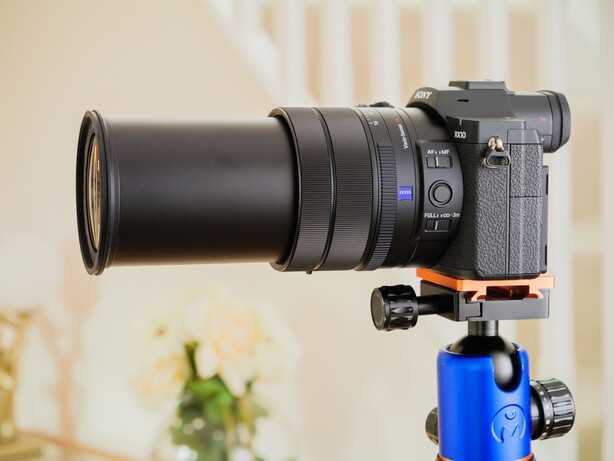
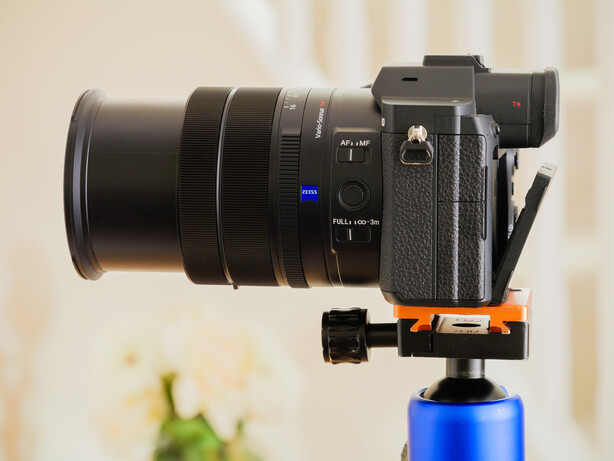
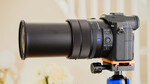
Zoomed all the way out to 600mm
This RX10 V brings a completely rebuilt autofocus system with full subject recognition, a serious video jump to 4K at up to 120fps in 10-bit, and a switch to the NP-FZ100 battery from the a7 series, which more than doubles the stamina of the old model. Add S-Cinetone, S-Log3, LUT support for videographers, and the ability to sync an external flash at up to 1/2000 sec courtesy of the built-in leaf shutter, and things begin to sound like a completely different camera. At £2200/$2,300 it might seem that Sony is pushing its luck, but if you want one fixed-lens camera that can shoot hummingbirds at 600mm and close-up insects on the same walk, nothing else really touches it.
Who is the SonyRX10 V best suited to?
It is built for photographers who need an enormous focal range — 24 to 600mm equivalent — in a single, weather-sealed body, and who prioritise convenience and reach over outright image quality. Amateur Photographer and Digital Camera World both rate it the best bridge camera they have ever used for wildlife, travel, sports, and aviation. TechRadar notes that anyone primarily shooting wildlife and willing to carry more weight would get higher image quality from a Sony mirrorless body with a dedicated long telephoto. PetaPixel is more pointed, arguing that at $2,300 the camera does not consistently meet the performance expectations that price sets, particularly in low light and with unpredictable subjects. It suits an enthusiast who will genuinely exploit the full zoom range across many subjects in a single outing — the moment you only need part of what it does, the value calculation shifts.
Shot as the sun was rising. Sony RX10V 50mm focal length, f/7.1 and 1/160sec at ISO 100
Sony RX10 V Opinions From Around The Web
Averaged Score: 9.3/10
Advertisement
Pros
Incredible zoom range
Well controlled noise for 1in sensor
Really very nice to use
Good optical image stabilisation makes 600mm more than useable
Surprisingly advanced video options
Cons
It costs a lot of money
Some will find it bulky
The AF doesn't always find what you want it to
A vari-angle screen would have been nice
Sony RX10 V Collective Verdict
Reviewers broadly agree the Sony RX10 V is the best bridge camera you can buy right now, with Amateur Photographer going as far as awarding it a perfect score and calling it a giant leap whose autofocus rivals Sony’s own mirrorless line-up. TechRadar and Digital Camera World echo that enthusiasm, singling out the improved processor, battery life, viewfinder and ergonomics as significant steps forward after nearly a decade.
The harshest criticism comes from PetaPixel, which argues that at $2,300 a camera should excel rather than simply impress, and finds the overall result a bit too “pretty good” for the money. DPReview lands in the middle, acknowledging the technological leap while pointing out lingering quirks around shutter mode switching and occasional struggles with fast action. An aggregated score of 9.3 out of 10 reflects a camera that earns its spot at the top of its class. That said, buyers eyeing mirrorless flexibility for similar money will want to think hard before committing.
With its built-in do-it-all lens the Sony RX10 V makes an ideal travel camera. Picture by Damien Demolder
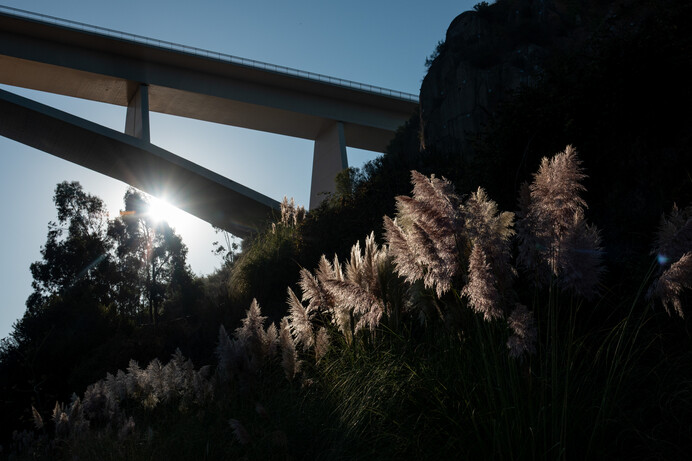
The more limited dynamic range shows here where the colour has shifted in the highlights. Picture by Damien Demolder
Sony RX10 V Specifications
The Sony RX10 V might use a small sensor, but Sony has worked pretty hard to make sure it isn’t as noisy as we might expect – even in long exposures like this 25 second shot. I’ve applied moderate denoise, but there is plenty of resolution in the finer details of the buildings. 88mm f/7.1 and 25 seconds at ISO 64. Picture by Damien Demolder
At the heart of the RX10 V is a one-inch 20.1-megapixel Type 1 stacked Exmor RS CMOS sensor measuring 13.2 x 8.8mm. As Amateur Photographer puts it, that’s roughly half the area of Four Thirds and a quarter of APS-C. Context matters here, because the f/2.4-4 maximum aperture sounds nicely bright until you factor in the 2.7x crop, which Amateur Photographer calculates translates to roughly f/6.5-11 in full-frame depth-of-field terms. The aperture also drops off fairly abruptly, hitting f/4 from 100mm equivalent onwards. What the sensor does brilliantly is feed a burst engine capable of 10fps on the mechanical shutter or 30fps electronically, with buffer depths of 145 frames in lossless compressed RAW plus JPEG at 10fps. The addition of lossless compressed RAW and HEIF formats, both missing on the RX10 IV, is a welcome bump. But there are catches: DPReview notes the mechanical shutter tops out at 1/2000 sec at f/8, which gets limiting quickly in bright light, and switching to electronic shutter to duck that ceiling forces you into lossy compressed RAW with no automatic fallback. ISO tops out at 12,800, and the NP-FZ100 battery is a really big deal, with CIPA figures of 630 shots via LCD versus the old FW50’s much stingier allowance.
Advertisement
Sony RX10 V Video Specifications
For video the Sony RX10 V is a more serious tool than one might expect of a bridge camera. It shoots 4K oversampled from 5.2K at up to 60p using the full sensor width, or pushes to 4K 120p with an approximate 1.38x crop – all in 10-bit. TechRadar points out the RX10 IV was capped at 4K 30p, so this is a big generational jump. Shooting in FHD resolution stretches frame rates to 240p for slow-motion, but as TechRadar notes, that level of slow-mo stays firmly in Full HD territory and doesn’t extend to 4K.
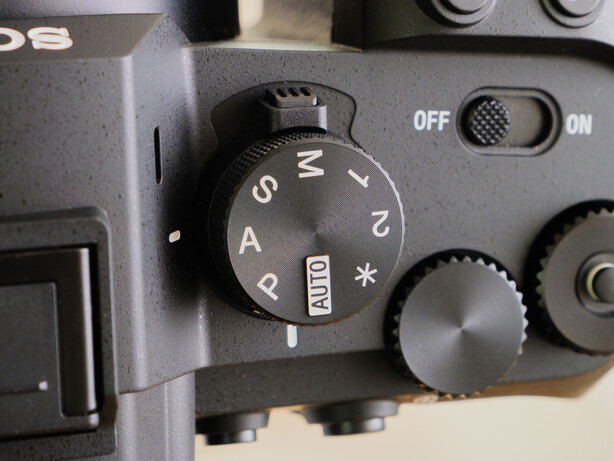
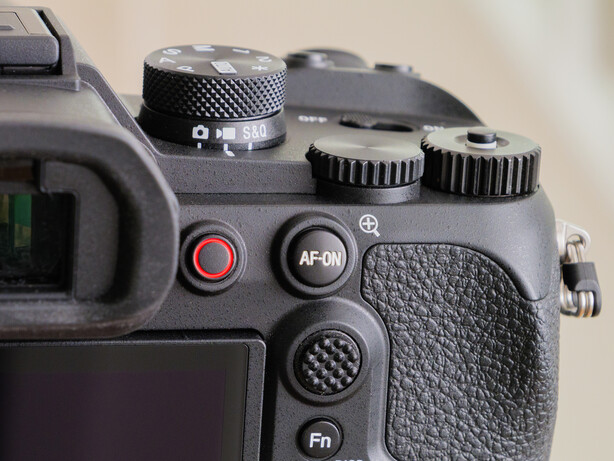
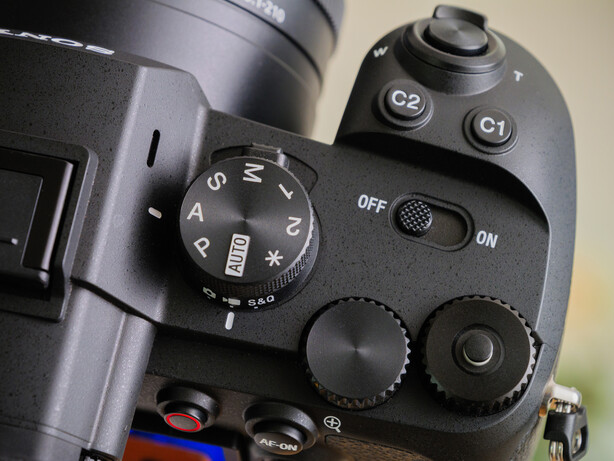
The RX10 V has a control beneath the mode dial that’s used to switch between video and stills shooting
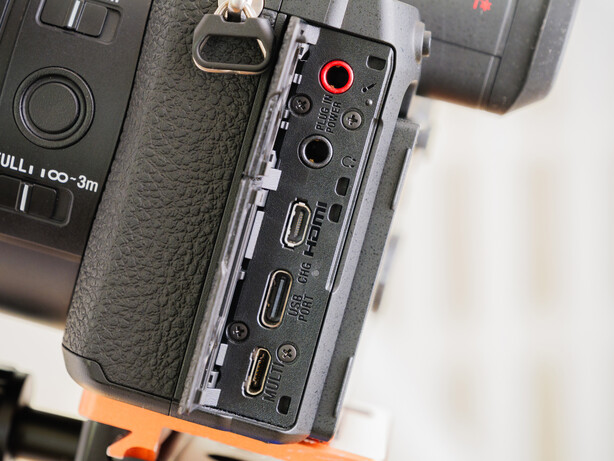
These are the nicest port covers I’ve come across. Open them for the Micro HDMI, USB, Mic and Headphone ports
The UHS-II SD slot handles the 600Mbps data rate required for 4K 60p All-I capture, which DPReview confirms is just enough headroom for the most demanding modes. Colour science gets the full Sony treatment: S-Log3, S-Cinetone, and support for up to 16 up-loadable LUTs for previewing or baking a grade directly into your footage. Audio is covered by a 3.5mm mic input alongside a headphone jack for monitoring, with four-channel audio a possibility via a compatible multi-interface hot shoe accessory for wireless mic kits etc. It’s a shame to go back to micro-HDMI as it just isn’t as strong as the full sized connection, but it may be unlikely that this camera will be used with an external monitor very often. There’s no IBIS, which Digital Camera World calls out, but that reviewer was actually surprised by how well the optical stabilisation plus electronic SteadyShot held up, reporting usable handheld footage even at the 600mm end. PetaPixel called it the best bridge camera for video by some distance, which feels about right given the spec sheet and the limited competition.
Sony RX10 V Focusing system
The RX10 V comes with a much-upgraded AF system, jumping from 315 points on the RX10 IV to 575, covering roughly 71% of the frame. Real-Time Recognition AF brings dedicated detection modes for humans, animals, birds, insects, cars, trains, planes, and cats, all driven by the new Bionz XR processor. That’s a momentous leap in practice: DPReview found that “faster processing and subject recognition algorithms mean the RX10 V can recognize and track subjects very reliably,” with those capabilities carrying over into video too.
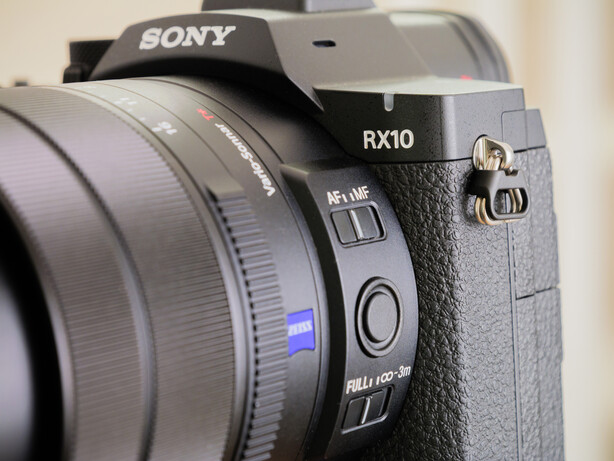
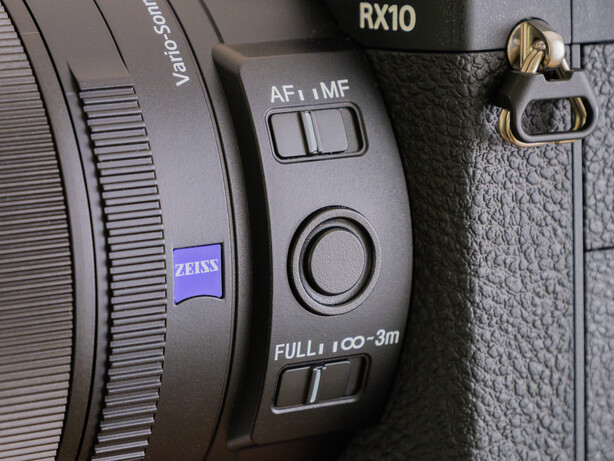
The focus mode switch on the lens. By default the button is set to focus lock, but it can be customised
The C2 and C1 buttons by the shutter button are set to switch the AF area (C2) and to turn subject recognition on/off (C1)
For static subjects, Amateur Photographer called the AF “pretty much flawless. It’s fast, quiet and accurate,” with the only niggle being that focus points can’t reach the very edge of the frame. With moving subjects the picture gets more interesting. Amateur Photographer shot over 4,000 frames of fast-moving aircraft and wildlife, mostly at 10fps, and “the overwhelming majority were in perfectly acceptable focus, including those of a Eurofighter Typhoon incoming at 600 miles per hour.” That reviewer bluntly calls it the best AF he’s seen in a bridge camera, “really not far off Sony’s latest mirrorless models such as the A7 V.”
I was surprised face detection found this lady between the railings. Picture by Damien Demolder
I tested face detection in heavily backlit scenes too, and it showed it works well. Picture by Damien Demolder
The camera took longer to find this lad, first looking to focus on the boat. Picture by Damien Demolder
Insect detection was particularly patchy, sometimes picking out a bug in a cluttered scene brilliantly, other times ignoring a large, unobscured insect dead centre in the frame. DPReview recorded a memorable failure in aircraft detection mode, where the camera “didn’t find the planes in the following picture, instead focusing on the Space Needle.” Birds divided opinion: TechRadar was impressed by how sticky tracking was even with small birds in the wide AF area, while Amateur Photographer and Digital Camera World found initial acquisition harder. People detection, at least, is a strength: PetaPixel and Digital Camera World both found face and eye tracking close to faultless.
I found bird detection pretty good, with the camera picking out this warbler easily. Picture by Damien Demolder
I’ve cropped the picture on the left so you can see the detail captured at 600mm. Picture by Damien Demolder
One structural catch worth calling out: DPReview points out that the zoom rocker stops working during bursts, only the manual ring keeps functioning, and the camera can’t hold focus while zooming at all. That’s a real ceiling on what you can ask of it in chaotic fast-action moments.
Sony RX10 V Rear screen and EVF
The rear screen has had a modest but much needed refresh: it’s now a 3-inch, 1.62M-dot panel in a 3:2 aspect ratio, replacing the old 4:3, 800x600px display. Digital Camera World notes it’s “sharp and bright enough to see outdoors in harsh sunlight,” which is exactly what you want from a camera this size. Amateur Photographer confirms it gains a lot more touch functionality over the RX10 IV, and TechRadar adds that being able to switch the display to a vertical format is a real quality-of-life improvement.
Advertisement
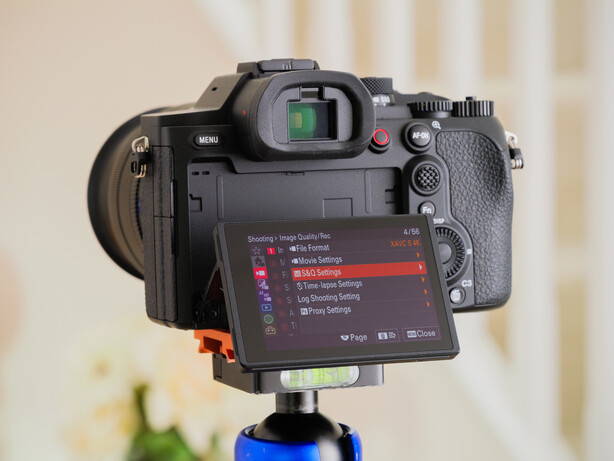
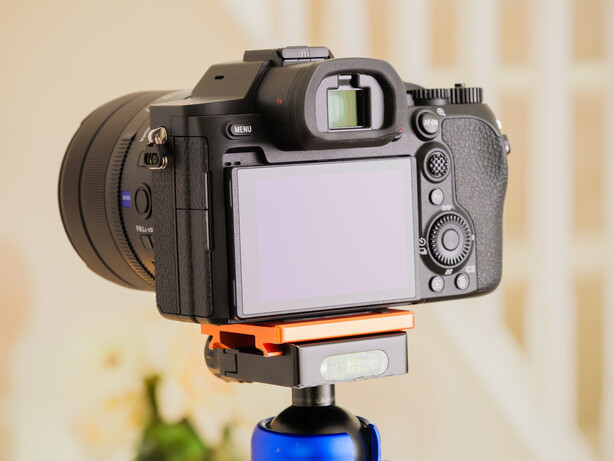
The screen of the RX10 V comes out from the body and can flip up at a whole range of angles. It needs to come away from the body so we can see passed the EVF housing
And it can also flip downward should you hold the camera above your head. The one thing it doesn’t do is flip out to the side for vertical shooting
The articulation, though, remains a sore point across the board. DPReview, Amateur Photographer, Digital Camera World, and PetaPixel all point out the same limitation: the screen tilts up and down, and that’s your lot. No side-flip. No full articulation. Digital Camera World points out it “does not flip out to the side like some of Sony’s more creator-focused Alpha bodies,” and PetaPixel calls it a missed opportunity, if a fairly minor one. Portrait-orientation shooters will find it particularly unhelpful.
The EVF story is much brighter. TechRadar calls it “a major upgrade,” and the numbers back that up: it’s grown from a 0.39-inch, 2.36M-dot unit to a 0.5-inch, 3.686M-dot panel with selectable 60fps or 120fps refresh rates, as Digital Camera World confirms. Amateur Photographer notes the roughly 0.78x magnification matches what Sony fitted to the A7 V, which is impressive company for a fixed-lens superzoom. DPReview adds a useful practical detail: resolution holds steady even in continuous autofocus, so you won’t get that unsettling soft-image half-press effect. The EVF also now supports a simultaneous electronic level and live histogram display, according to Amateur Photographer. One physical quirk: Digital Camera World noticed the housing sticks out enough that you could grip the camera by it, though they didn’t consider it a dealbreaker.
The high resolution and clear viewfinder makes it easier to shoot high speed bursts with continuous AF. Picture by Damien Demolder
Sony RX10 V Build and Handling
The RX10 V is a big camera. At 1111g and 136.4 x 94.5 x 151.3mm Amateur Photographer notes it’s comparable in bulk to an SLR-style mirrorless body with a small standard zoom attached. The payoff is a grip large enough that the reviewer “was happy to carry it around one-handed for hours, which has rarely been the case with Sony cameras.” TechRadar confirms the grip is a real step up, noting it’s a new shape with better ergonomics that also happens to swallow the larger NP-FZ100 battery.
The redesign pulls the control layout much closer to Sony’s Alpha series, with the mode dial moving to the right of the viewfinder alongside dual command wheels. PetaPixel, Amateur Photographer and Digital Camera World all agree the result feels convincingly a7-like, though Digital Camera World concedes it “still does not quite have the full cool appeal of Sony’s latest mirrorless bodies.” The compromise is that the top info screen is gone – TechRadar‘s reviewer plainly states they personally preferred the old setup, finding the repositioned mode dial a step backward in usability.
Advertisement
The right side of the camera has nice thumb rest behind the large finger grip
The buttons on the rear of the camera are nicely arranged and easy to reach when needed
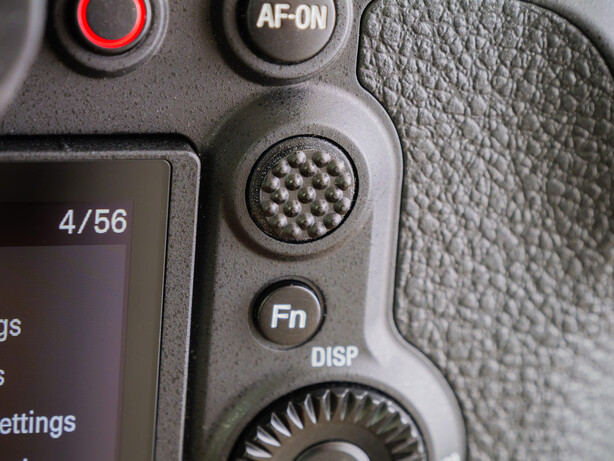
The joystick and dedicated AF-ON button are near-universally celebrated additions, replacing the awkward rear dial navigation of the RX10 IV. TechRadar used the joystick constantly during wildlife shooting and couldn’t imagine managing without it. Amateur Photographer points out a real regression, though: the RX10 IV’s rotary selector covering AF-S, AF-C and DMF has been swapped for a plain AF/MF switch, with no button assigned by default to cycle AF modes. DPReview also notes there’s no front dial at all, with both command dials falling to the thumb on the rear shoulder. There’s also a fiddly rear-plate dial that, mercifully, isn’t used in photo mode by default.
At full 600mm zoom the lens extends a long way, making the camera noticeably front-heavy, Digital Camera World warns. Both zoom controls are present, and Amateur Photographer found the two-stage rocker and zoom ring complemented each other well for rapid range shifts and fine compositional tuning. PetaPixel though calls the powered ring really slow and TechRadar points to the zoom as a lingering sluggishness carried over from the IV.
The new rocker switch on the back is very useful for moving AF points quickly around the frame
I found the zoom, focus and aperture rings a little too similar to the touch, so it can be hard to know which you are turning
On practicalities: the card slot is now UHS-II, quick enough for 4K/60 All-I capture at 600Mbps per DPReview. The USB-C port runs at 10Gbps, though the retained USB Micro-B Multi socket can no longer charge the camera, and is now reduced to accessory-terminal duty only. Side ports including mic, headphone and USB-C sit behind rigid protective doors. The camera also carries dust and moisture resistant construction, which Amateur Photographer correctly points out isn’t standard practice among bridge cameras.
The touchscreen interface deserves its own mention. DPReview finds the default touch-button overlay “strangely dated,” and recommends disabling it via Touch Operation / Touch Panel Settings rather than the display options, which makes the whole thing feel properly Alpha-series. PetaPixel agrees the menu system is now easy and consistent with recent Sony cameras. One peculiar interface quirk called out uniquely by DPReview: a large “FULL” icon appears on screen not to warn of a full card, but simply to confirm the focus range limiter isn’t engaged. Baffling and constantly disconcerting, to put it mildly.
Shot at ISO 3200 in very low light, there is quite a bit of noise in this image – especially where I’ve lifted the shadow areas to reveal the foreground. Picture by Damien Demolder
But a pass through Adobe’s Denoise, which I then reduced to 25%, soon got rid of the worst of it leaving a clean and detailed picture. Picture by Damien Demolder
Burst shooting is similarly impressive on paper, and it holds up under testing. Amateur Photographer confirmed the camera hits both its 30fps electronic-shutter and 10fps mechanical-shutter targets, with buffer depths that are properly generous: 400 frames of compressed raw plus JPEG at 10fps, or 150 at 30fps using a fast UHS-II card. TechRadar notes there’s no viewfinder blackout even at 30fps with continuous autofocus active, which makes the camera feel noticeably snappier than its predecessor. In practice, TechRadar‘s reviewer defaulted to 10fps and kept 30fps on a custom button for when things got frantic, a sensible workflow tip worth borrowing.
There are some omissions and points worth noting though. PetaPixel points out that Sony’s other Bionz XR cameras include Pre-Capture, which buffers frames before the shutter is fully pressed, and “the RX10 V would really benefit from this feature, and it’s a genuine shame it isn’t here.” The mechanical shutter also limits aperture to f/8 at speeds beyond 1/1000s, which PetaPixel warns brings diffraction into play on a small sensor. Amateur Photographer recommends defaulting to the electronic shutter for fast work, noting minimal rolling shutter distortion even on propeller blades, a finding PetaPixel corroborates. One wrinkle: lossless compressed raw isn’t available with the electronic shutter, though Amateur Photographer considers this rarely a practical problem.
Shot with the lens set to 100mm I was easily able to handhold this at 1/25sec. ISO 3200, with no additional noise reduction. Picture by Damien Demolder
Stabilisation impressed both Amateur Photographer, who pulled sharp frames at half a second around 35mm equivalent, and Digital Camera World, whose shots were “sharp and shake-free” at 600mm. Auto white balance, however, can produce slight colour casts, and the camera occasionally clips bright highlights, though Amateur Photographer adds it’s not excessive. Finally, power-on time is worth calling out: Amateur Photographer found it takes nearly five seconds to start when zoomed to 600mm, and “this happened to me on several occasions” when a subject appeared unexpectedly.
Advertisement
Sony RX10 V Image quality
At base ISO in good light, the RX10 V delivers genuinely pleasing results. DPReview confirms raw image quality is essentially identical to the RX10 IV, which it calls a positive baseline, and Digital Camera World was impressed by the resolving power at the telephoto end, noting that “fine feather detail was clearly visible, and in macro-style shots, I could see the tiny hairs on a bee”. Impressive stuff from a 20MP 1-inch sensor at 600mm equivalent.
When you keep to the lower ISO settings, the middle apertures and the mid focal lengths image quality really is very good. 170mm f/5.6 and 1/1000sec at ISO 160. Picture by Damien Demolder
Is the RX10 V worth the price compared to its competitors?
At $2,300 it is, as Amateur Photographer notes, the most expensive bridge camera ever made — a price all four publications flag as a genuine sticking point. DPReview points out that when adjusted for inflation the increase over the RX10 IV’s $1,700 launch price is actually in line with the US consumer price index, and that the RX10 V is cheaper relative to Sony’s current flagship mirrorless than the Mark IV was to its contemporary. Amateur Photographer argues that no interchangeable-lens setup covering the same 24-600mm range comes close in combined weight and price. Digital Camera World‘s reviewer, on the other hand, says they would personally choose a Sony APS-C body with a superzoom lens at a similar total cost, and TechRadar acknowledges that a mirrorless camera with a quality 400-800mm lens is a higher-quality wildlife setup even if bulkier. The camera earns its price most clearly for buyers who genuinely need the full zoom range every day; for anyone who does not, the alternatives become harder to ignore.
Even without using high drive shooting the RX10 V is quick enough to capture fleeting moments. Picture by Damien Demolder
I found the battery life allowed me to keep the camera on all the time, so it was always ready to shoot. Picture by Damien Demolder
In most cases the dynamic range of uncompressed raw files allowed smooth tonality in the finished image. Picture by Damien Demolder
Further reading – other great reviews of the Sony RX10 V













 Incredible zoom range
 It costs a lot of money















 Sony RX10 V review