
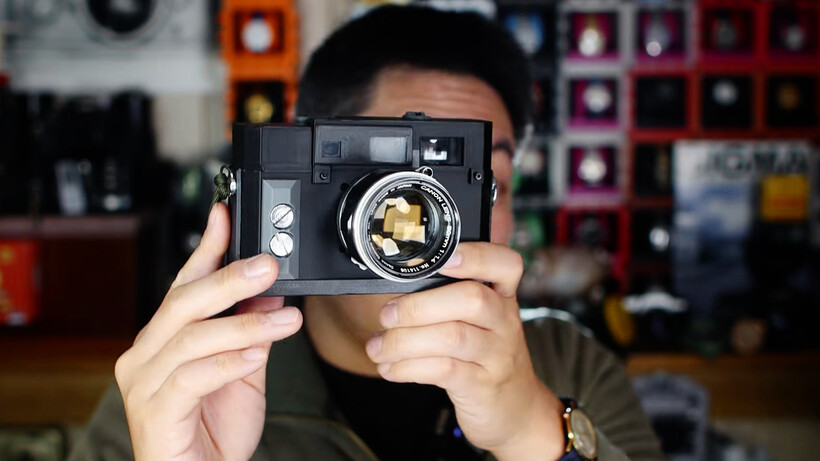


Digital rangefinder cameras are hardly the most affordable way into photography, particularly if you’re looking at models from Leica. But photographer and YouTube creator Mr. 50mm has taken a different approach, building his own digital rangefinder using parts from two very different Canon cameras. His latest creation, named the C7M, combines the mechanical rangefinder system of a 1960s Canon 7 with the 18MP APS-C sensor and electronics of the original Canon EOS M.
It’s the creator’s second attempt at bringing old-fashioned rangefinder photography into the digital world. Earlier this year, he built the RGM-79 using a Soviet-era FED 5 rangefinder and a Panasonic GF3 Micro Four Thirds camera. That project used a 12.1MP sensor, whereas the new C7M moves to Canon’s larger APS-C format, offering a more substantial foundation for a camera designed around classic rangefinder lenses.
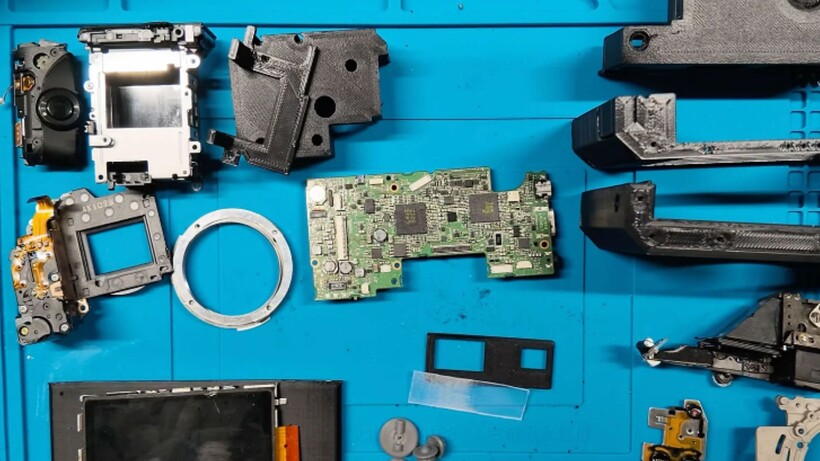
The choice of donor cameras is particularly interesting. Canon introduced the EOS M in 2012 as its first mirrorless interchangeable-lens camera, while the Canon 7 dates back to 1961, when film rangefinders were still an important part of the company’s camera business. Bringing the two together means combining photographic technology developed more than half a century apart.
A classic rangefinder with modern digital internals
One of the biggest improvements over the earlier RGM-79 project is the viewfinder. Mr. 50mm says the Canon 7 offers a noticeably brighter viewing experience than the FED 5, along with selectable projected frame lines and parallax correction. These features make it easier to compose photographs using the optical viewfinder, particularly when switching between lenses or focusing on subjects at different distances.
The Canon 7 also uses the Leica M39 screw mount, opening up a substantial selection of vintage rangefinder lenses. That makes it a practical starting point for the conversion, although getting the lens mount, optical rangefinder and digital sensor properly aligned presents considerable mechanical challenges. Unlike a conventional mirrorless camera, where focusing is confirmed directly through the imaging sensor, a coupled rangefinder relies on a separate optical and mechanical system that must be accurately calibrated.
Mr. 50mm also found the Canon 7’s relatively simple controls helpful. With fewer original camera functions to accommodate, he could concentrate on fitting the rangefinder assembly and lens mount around the EOS M’s digital components. However, the project still required extensive modifications to the donor camera, rather than simply transferring its electronics into a different body.
The camera works, but there’s still some fine-tuning to do
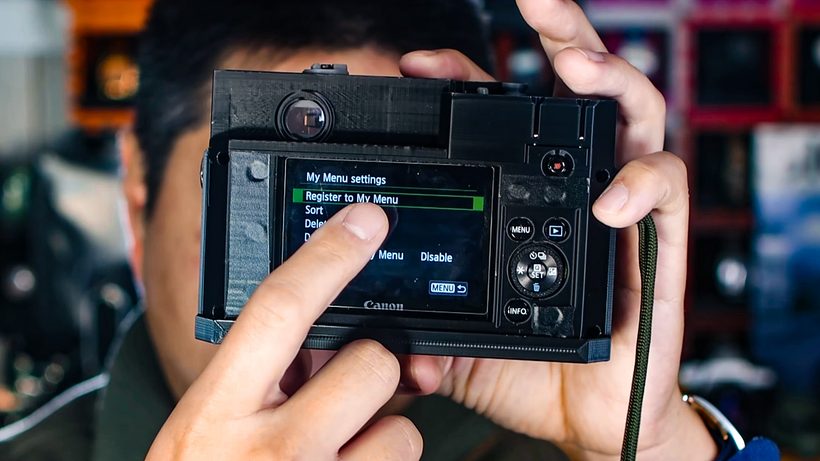
Despite the complexity, Mr. 50mm says the C7M took only a couple of weeks to put together and is now largely complete. The project even survived an accidental drop during construction, although there are still some issues to resolve before the camera can be considered finished.
The main outstanding problem concerns rangefinder calibration, with the optical and digital components not yet aligning as precisely as intended. The creator believes he may need to remove additional material from parts of the EOS M assembly, but there’s a limit to how much can be trimmed without compromising the camera’s construction.
He hasn’t published a full build tutorial yet, although he intends to document the process once these remaining problems have been resolved. For now, the project is an interesting demonstration of what can be achieved with donor cameras, custom components and a good understanding of how rangefinder systems work.
There’s also a potentially attractive cost advantage. Used Canon EOS M bodies can be found for around $260, according to the original report, while Canon 7 rangefinders are available on the second-hand market. Add access to a 3D printer and the necessary fabrication tools, and the components could cost considerably less than a modern Leica digital rangefinder, although that comparison doesn’t account for the time, specialist skills or potential failures involved in building one.
The C7M isn’t a finished commercial product, and it’s certainly not a straightforward weekend modification for most photographers. Nevertheless, it’s an inventive way to give older camera equipment a new purpose while retaining the distinctive experience of optical rangefinder focusing. Mr. 50mm is documenting the project on his YouTube channel, where he plans to share a more detailed guide once the design is finalised.