
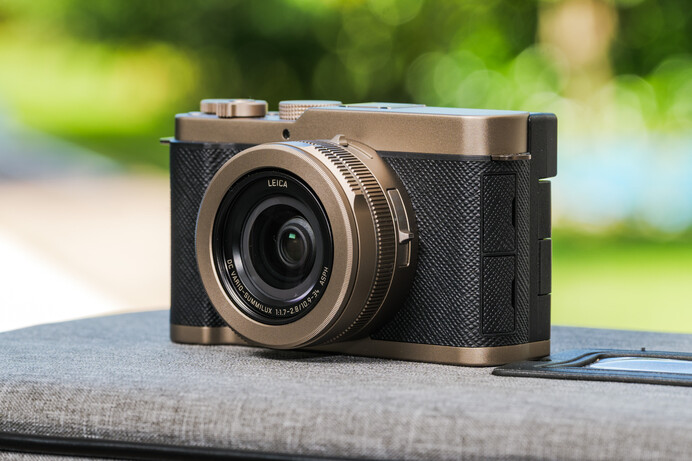


Everyone loves a premium compact camera and everyone has an opinion on what it should be, so if Panasonic thought its Lumix DC-L10 M43 upgrade wouldn’t be subject to in-depth and emotional scrutiny it was very much mistaken
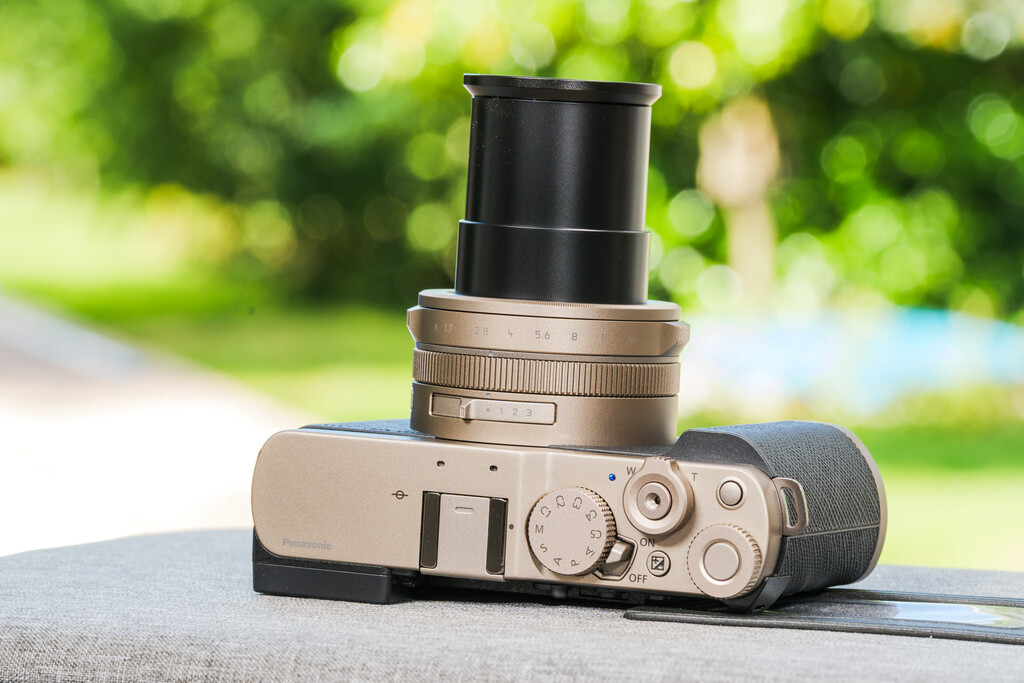
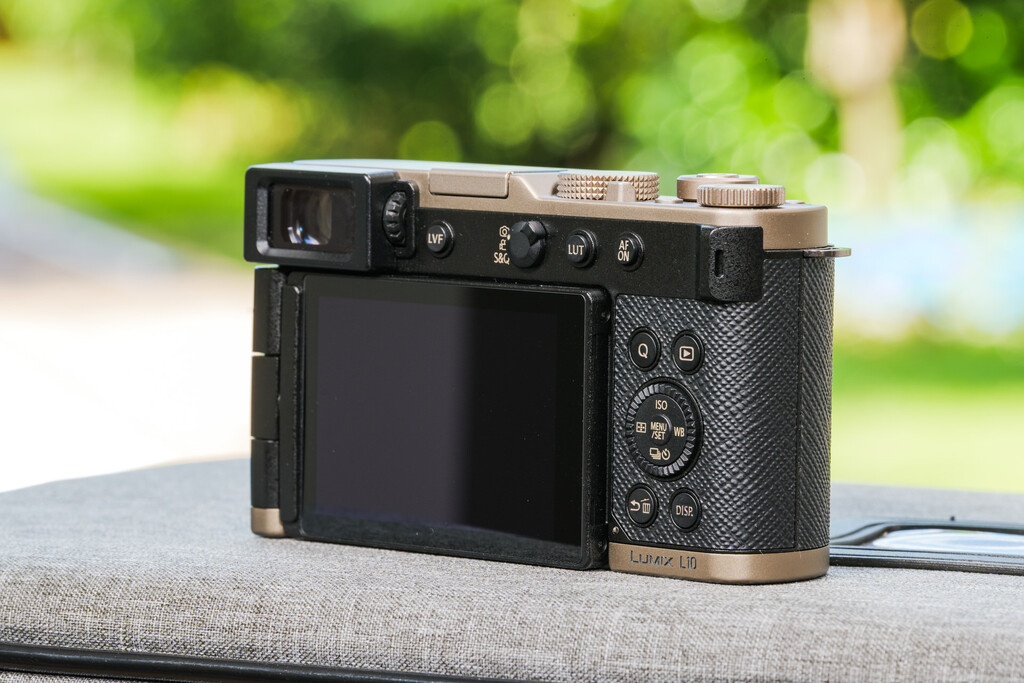
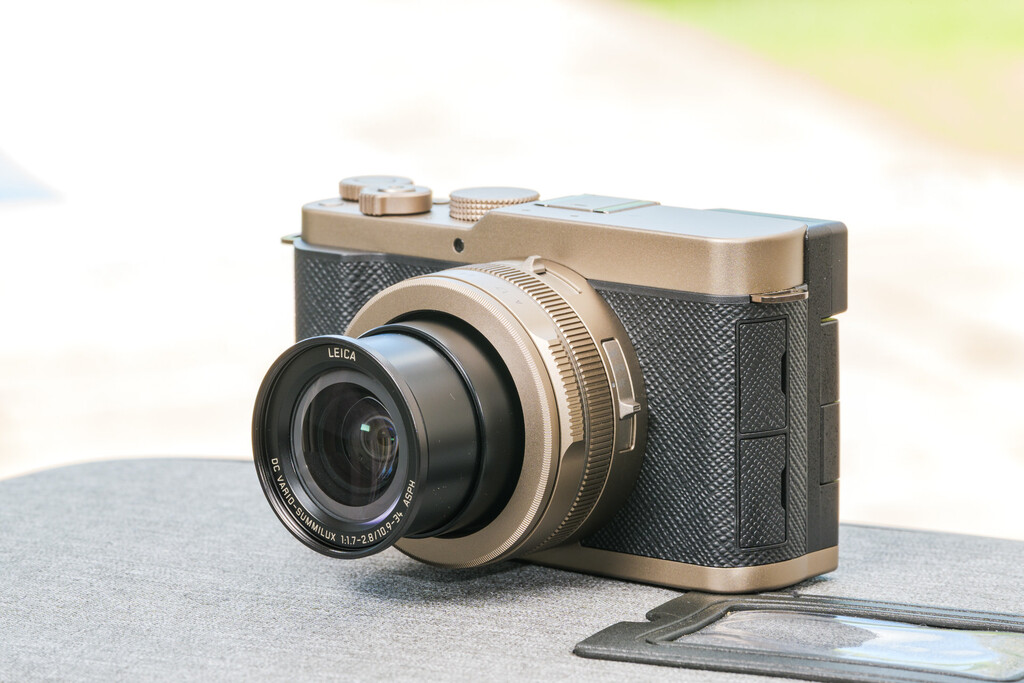
What is the Panasonic Lumix DC-L10?
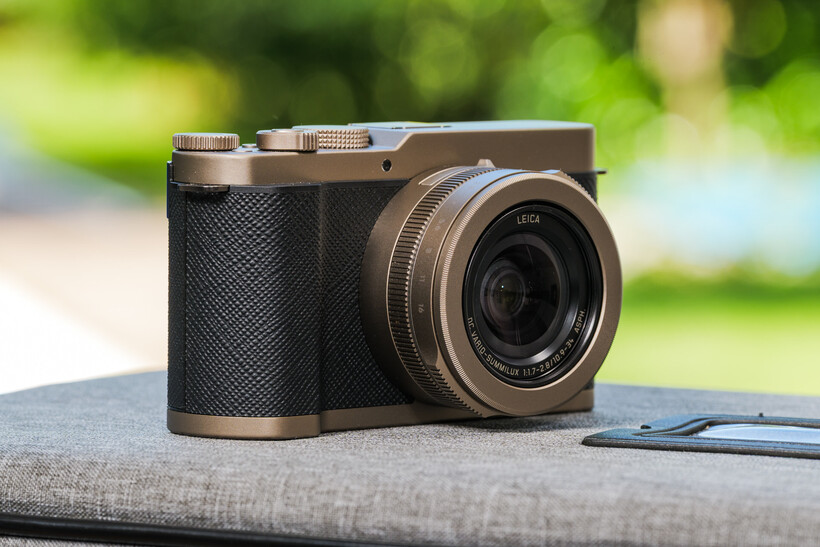
The Panasonic Lumix L10 is an enthusiast-level fixed-lens compact camera built around a Micro Four Thirds sensor and a Leica-branded 24-75mm f/1.7-2.8 zoom. It’s aimed squarely at photographers who want something more capable than a phone but less bulky than an interchangeable lens system camera. While it could be considered the spiritual reincarnation of Panasonic’s successful, but now ancient, Lumix DMC-LX100 series of compacts, this Lumix DC-L10 has arrived in a significantly bigger body and with an equally significant upgrade to the feature-set. Panasonic says it isn’t a successor to the Lumix LX100 series, but appears to be the only one who can’t see the connection.
The camera uses the 26.5MP BSI-CMOS sensor from the Lumix GH7 Micro Four Thirds mirrorless hybrid flagship to replace the older 20MP unit found in the LX100 II, and brings phase-detection autofocus with subject recognition to fully modernise the AF system. The multi-aspect-ratio sensor design returns too, allowing users to switch between 4:3, 3:2, 16:9, and 1:1 formats while keeping the same diagonal field of view. Now too we have a fully articulated screen and really quite strong video functionality that includes 5.6K at 60p, 4K at 120p and Open Gate recording. Panasonic’s Real Time LUT system lets you bake personal colour grades straight into JPEGs and video, which will appeal to those who want a ‘final look’ straight out of the camera instead of having to colour grade footage afterwards.
Potential buyers should note there’s optical stabilisation in the lens, but no in-body IBIS, and the lack of an HDMI port means streaming, monitoring and external recording are limited. The premium build and premium feature-set come with a premium price (£1299/$1,499) which will feel like good or poor value depending on your priorities.
What Digital Camera’s opinion
I have a pair of 1m-long, aluminium-mounted prints in my kitchen that were shot with the predecessor to this Lumix DC-L10 – the Lumix DC-LX100 ll. I’m a big fan of that DC-LX100 ll. I’ve used it a lot for street, travel and social events, and have always been very pleased with the results it turned out. The things that frustrated me though were the fixed rear screen, the piddly viewfinder that was like looking through a keyhole, and the awkward methodology for achieving more than +/-3EV of exposure compensation. Had the Lumix DC-L10 simply fixed those three issues I’d have been delighted, but in this new model Panasonic gives us solutions to those gripes plus a whole lot more.

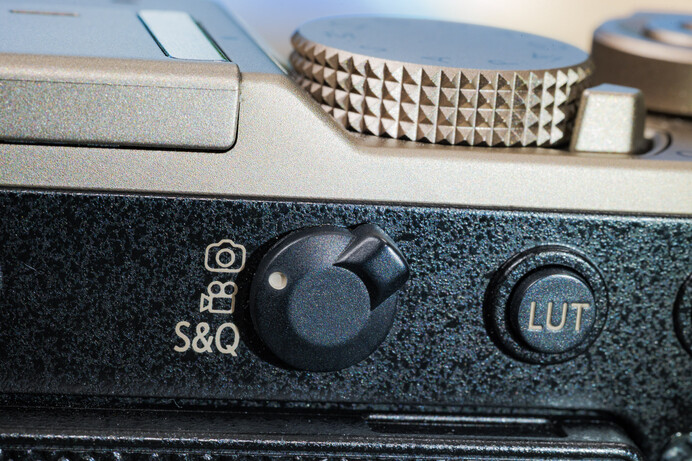
What many reviewers neglect to dwell on is the astonishing amount of colour control this camera now gives us. We have colour control via the newly-expanded Photo Style collection, but also through the unique integration of LUTs. These instant colour/contrast styles not only give us colour-graded JPEGs direct from the camera, but also video that looks like it’s been through a Hollywood studio direct to the memory card. Being able to create LUTs in your video editing software, or even in the Lumix Lab smartphone app, and load them to the camera ready to bake into our images is pretty astonishing. It gives us endless options, and can save hours in software afterwards – leaving more time to shoot instead of sitting behind a computer screen.
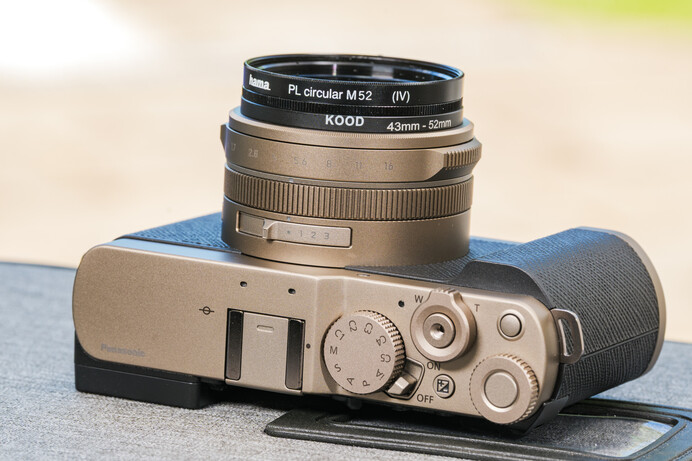
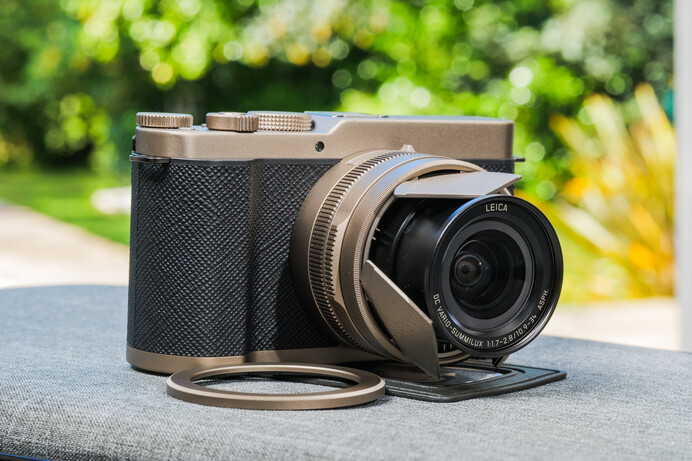
And who has mentioned that you can screw in a filter with an adapter ring or attach a slot-in filter system, and leave it on even when the lens retracts?
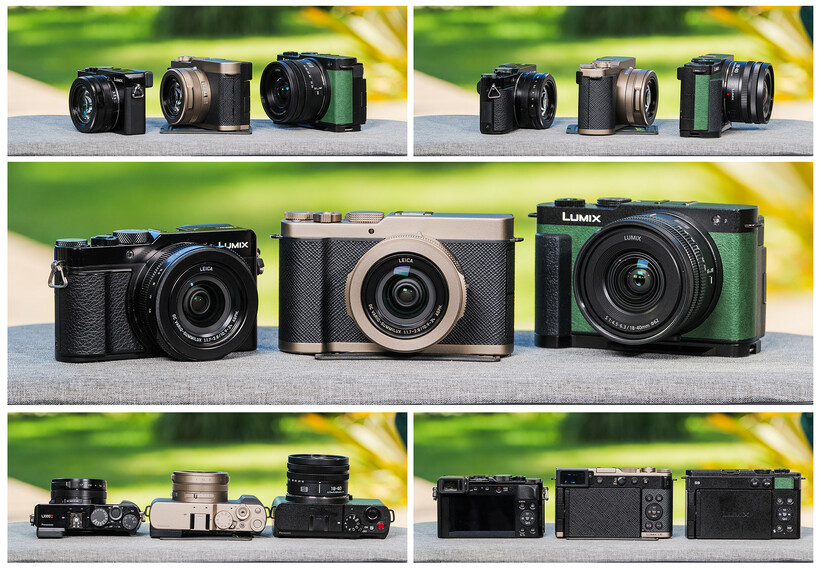
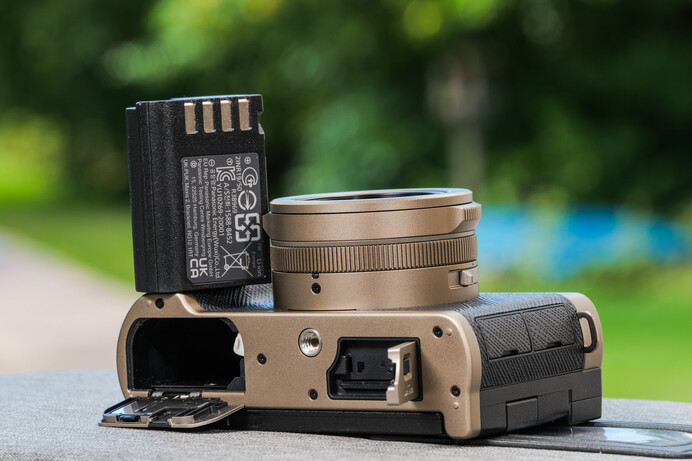
While the new camera is bigger than the Lumix DC-LX100 ll, the difference isn’t actually as great as it at first seems, and each dimensional shift can be accounted for by some significantly-improved feature. The body is thicker, but only by the thickness of the flip-out screen and hinge mechanism; the body is longer, but only by the amount needed to accommodate that new and beautiful electronic viewfinder – which also accounts for some of the extra height. And the extra depth and height allow us to have the same DMW-BLK22 battery that powers all the modern Lumix bodies, and which will keep this DC-L10 running all day. The Lumix LX100 ll needs three DMW-BLG10E batteries for a day’s shooting – one for the morning, one for the afternoon, and one for ‘chimping’ on the train on the way home.
Yes, the Lumix DC-L10 is more expensive than the Lumix DC-LX100 ll was at launch, but that was a full eight years ago and we’re getting a whole lot more camera. If you think it’s too much there’s always a secondhand LX100 ll – that didn’t suddenly become a bad camera just because there’s a new model in town.
Damien Demolder
What Digital Camera score
9/10
Lumix DC-L10: Opinions From Around The Web
But for a few complaints about size and the AF system, reviews of the Lumix DC-L10 have been remarkably favourable. This WDC report explains what the main photo websites are saying about it
Averaged Score:
8.2/10
Praise:
- Good focusing system
- Nice build
- Hinged rear screen
- Great colour control options
Complaints:
- No weather sealing
- No IBIS
- No Joystick controller
- Slow start up
Lumix DC-L10: Collective Verdict
Reviewers are broadly enthusiastic about the Lumix DC-L10, with a general admiration of its handsome retro styling, that flexible wide-aperture 24-75mm equivalent Leica zoom, and that it offers strong stills and video performance in a travel-friendly body. TechRadar called it exactly the kind of camera Panasonic fans needed for example, but The Phoblographer goes further by declaring it the best point-and-shoot on the market, with autofocus that punches well above its price class. Near-universal agreement also forms around a handful of weaknesses: the body is bigger than many reviewers expected for a “compact,” there’s no weather sealing, and no in-body image stabilisation. Amateur Photographer adds that the default control layout is awkward out of the box, though it rewards anyone willing to customise it. PetaPixel flags slow start-up times and modest low-light autofocus as minor frustrations alongside that $1,499 price, which it feels is a touch ambitious. Averaging a score of 8.2 out of 10 across the reviews we visited, the L10 seems to be a camera most enthusiasts will genuinely enjoy using, provided they aren’t chasing a truly pocketable body or all-weather capability.
Lumix DC-L10: Comments on specification
The sensor is the headline focus in specification sections, as it isn’t straight a forward arrangement. Panasonic uses the same 26.5MP BSI-CMOS sensor found in the Lumix DC-GH7, which is a real step up from the 20MP chip in the older LX100 II and Leica D-Lux 8. In practice though, the narrower imaging circle of the lens means only 20.3MP of those pixels are available in the native 4:3 ratio, dropping to 19.5MP at 3:2 and 18.1MP at 16:9. Digital Camera World points out that the 1:1 crop is a particular oddity, technically leaving usable pixels redundant. Amateur Photographer agrees, calling it a shame Panasonic couldn’t push the square mode to cover the full sensor height. The multi-aspect design does at least keep the diagonal angle of view consistent across ratios. Burst shooting reaches 11fps with the mechanical shutter in AFS, or 30fps electronically, with a buffer of around 40 raw-plus-JPEG frames before things slow down. The mechanical shutter tops out at 1/2000s, though the electronic shutter stretches to 1/32000s. What’s missing is IBIS. TechRadar and Digital Camera World both flag this as a genuine omission at this price, especially given rivals like the Fujifilm X100VI and OM System OM-5 II include it. Battery life at 410 to 420 rated shots is a significant improvement on the LX100 II, thanks to the larger DMW-BLK22. USB-C charging is universally welcomed for its convenience.
Video Spec
On paper the video spec looks exceptional for a compact camera. Every codec is oversampled from 5.8K, with 5.6K 17:9 available at up to 60p, the 5.2K 4:3 Open Gate mode at up to 30p, 4K 16:9 up to 120p, and Full HD up to 240p. V-Log is included as standard, alongside waveform display and Real Time LUT support. PetaPixel notes the camera also offers the more common MP4 capture alongside MOV and Panasonic’s unique file-size-friendly MP4 Lite codec. Digital Camera World describes this as a surprisingly full toolkit for a camera Panasonic itself pitches as stills-led. There are some practical frustrations though. There’s a 3.5mm mic input, which is welcome, but as Amateur Photographer, TechRadar and PetaPixel all note, there’s no headphone socket for monitoring audio and no HDMI output at all, making the L10 awkward for anyone who needs to check audio or feed a monitor on a serious shoot. The Lumix DC-L10 isn’t one of the Lumix cameras compatible with the Lumix Flow app, so connecting to a smartphone via USB isn’t an option either.
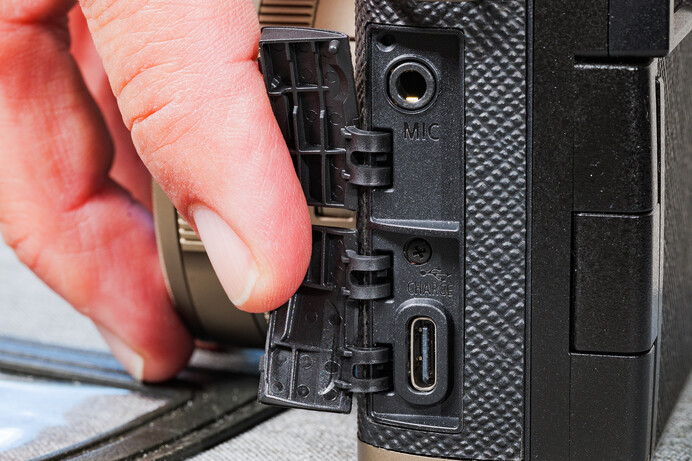
The optional DMW-XLR2 XLR adapter is compatible however so we can add audio from XLR microphones and record across four channels, but that hogs the only accessory shoe. Without IBIS, handheld footage is reported to be shakier than users of current Panasonic bodies have come to expect. Amateur Photographer found optical stabilisation alone produces a visible sway, and while enabling electronic stabilisation helps it introduces a field-of-view crop and isn’t ‘on’ by default. PetaPixel comes to the conclusion that the L10 works best for B-roll rather than as the primary camera, an idea Digital Camera World broadly shares.
Lumix DC-L10: Focusing system

Panasonic’s Phase Hybrid AF system uses 779 points and operates in a brightness range of -5 to 18 EV. The specification details here matter less than what the Lumix DC-L10 actually does with those 779 points in practice. The short answer: quite a lot – most of the time. Amateur Photographer found that with static subjects, performance is “practically faultless,” locking on quickly and near-silently wherever the subject sits in the frame, with only very low light or near-zero contrast causing hesitation. TechRadar agrees, calling AF “snappy and reliable,” and Digital Camera World noted the autofocus is silent – contrasting it favourably with the audible noise of the Fujifilm X100VI’s lens.
Subject recognition covers people, animals (with pose detection), vehicles, and more dynamic subjects such as urban sports, though Amateur Photographer complains there’s no auto option to switch between subject types, so you have to specify manually. More seriously, if you combine subject recognition with tracking mode, the camera won’t fall back to conventional tracking when it fails to find a recognised subject. Digital Camera World’s reviewer found that once the camera locked onto a subject it generally stayed locked, but noted “I still don’t think Panasonic’s AF tracking is quite at Sony or Canon level.” PetaPixel is blunter, reporting that “the tracking AF is still poor,” with the tracking box frequently jumping to unintended objects. So there’s a degree of disagreement about just how good this AF system actually is.

The Phoblographer, after a month of daily use, enthusiastically disagrees with PetaPixel. The reviewer found the L10 feels “so much faster than what I’ve used before for Micro Four Thirds”, going on to declare it has the best autofocus performance of any Micro Four Thirds camera currently available, specifically praising its low-light reliability with people of colour.
In the settings menu, left-eye-dominant shooters might consider disabling Touchpad AF to stop their nose repositioning the focus point during viewfinder use. The D-Pad can be reassigned to move the focus point directly, though that requires reassigning AF Mode and Drive buttons elsewhere. The Phoblographer suggests putting scene detection on the video record button and assigning AF-On to toggle between single and continuous AF. A decent suggestion for stills photographers that might be worth following.
Rear screen and EVF
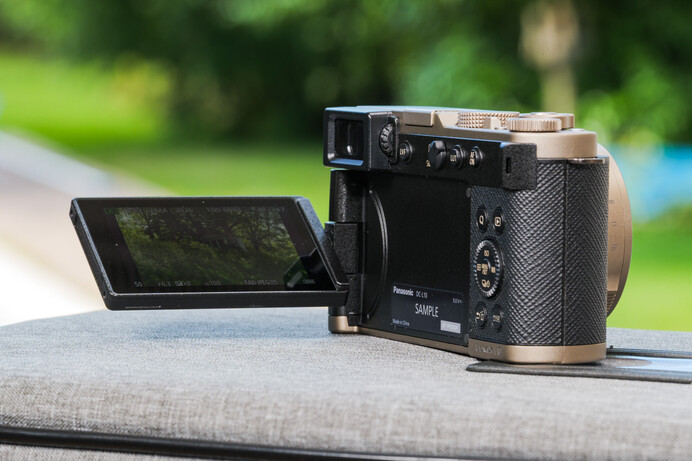
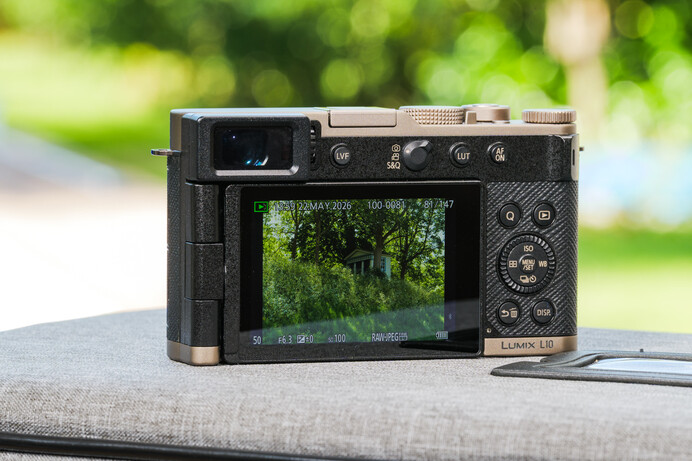
The rear screen is a 3-inch, 1.84-million-dot fully articulating touchscreen, the vari-angle design of which earns consistent praise across publications for its flexibility with video, vertical shooting and awkward angles. Digital Camera World is restrained in its praise about the panel itself, calling it “not class-leading” but noting it “gets the job done,” while TechRadar feels both screen and EVF feel “a little dated now.” Amateur Photographer is considerably more enthusiastic, largely because of two features unique to the L10 among Panasonic compacts. The first point of enthusiasm is for the rotating on-screen information display that pivots to match vertical shooting orientation, making it far easier to read. Secondly, this is a camera that actually has both an articulating screen and an excellent OLED EVF. The AP reviewer tells us that the Panasonic Lumix DC-L10 offers “probably the best viewing experience of any compact camera I’ve ever tested.“
The touchscreen handles AF point placement too, which matters more here than on most cameras because there’s no autofocus joystick – as PetaPixel points out. You’ll be relying on the touchscreen to move your AF point around unless you customise the D-Pad.
The EVF is a 0.39-inch OLED unit with 2.36 million dots and 0.74x magnification. PetaPixel notes the resolution “isn’t exactly astounding” but is a genuine step-up from the field-sequential viewfinders in the LX100 series, a point Amateur Photographer echoes, adding that the OLED design wipes out the colour-tearing artefacts that plagued the older technology. Opinions diverge on how well the EVF performs in daylight: Digital Camera World finds it “easy to see in bright sunshine,” while Amateur Photographer found it “can become difficult to see on a really sunny day.” Both accounts can be true depending on conditions, but worth keeping in mind if you shoot frequently in direct overhead light.
Build and Handling
The Lumix DC-L10 is pretty chunky by compact camera standards. At 127.1 x 73.9 x 66.9mm and 508g, it seems substantially larger than the LX100 II it replaces, and both Amateur Photographer and TechRadar note it now sits in roughly the same size bracket as the Fujifilm X100VI. Digital Camera World found that fact slightly puzzling, considering the Fujifilm camera also sports a larger APS-C sensor, IBIS, and a hybrid viewfinder, adding “I am not entirely sure where all the extra space has gone on the Panasonic.” TechRadar explains some of the bulk by the adoption of the larger DMW-BLK22 battery, the same unit used across Panasonic’s mirrorless range, which makes the L10 a convenient companion for existing Lumix owners.
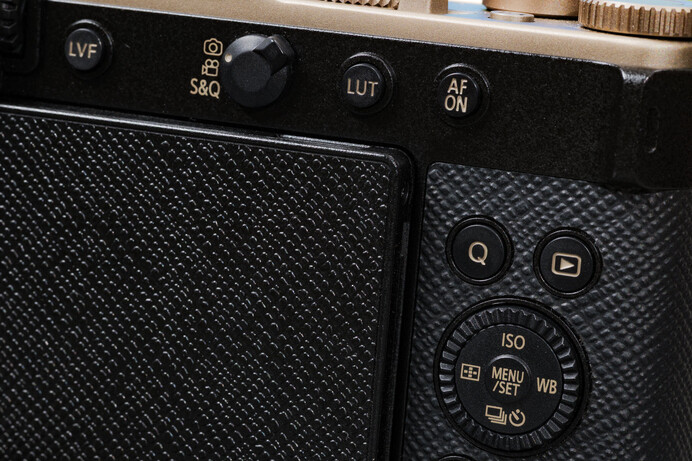
Opinions vary regarding how comfortable the camera is to hold and operate. Amateur Photographer finds the small finger and thumb grips genuinely effective, rating the DC-L10 more comfortable to use one-handed than either the Fujifilm X100VI or the Lumix S9. ePHOTOzine agrees that the overall tactile experience is positive, finding “controls are well thought out and operate with just the right amount of firmness,” and says with rear buttons are calibrated carefully enough to avoid the accidental-press problem that plagues many compacts. The zoom toggle around the shutter release, ePHOTOzine notes, is “light enough to avoid camera shake and positive enough to avoid accidental release.“
A dedicated central button on the command dial gives direct access to Photo Style settings without any menu diving, and a side switch on the lens barrel handles AF, MF, and macro selection directly. PetaPixel adds that the leaf shutter and built-in stabilisation together make confident handheld shooting at slower speeds achievable in practice.
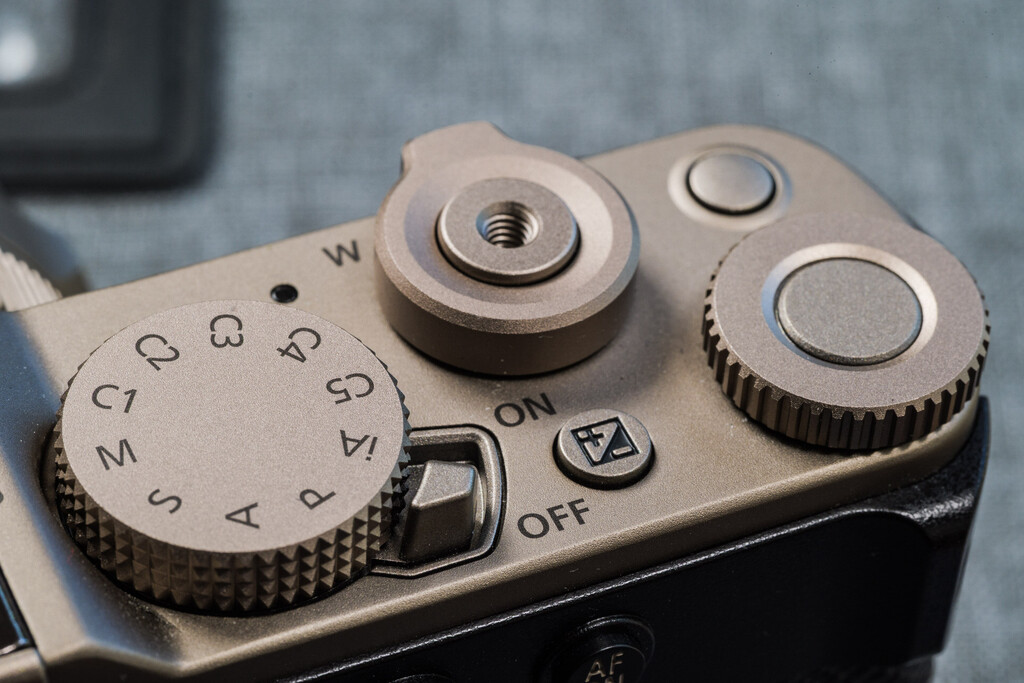
The Phoblographer found metal construction comes as a surprise because the camera is “so lightweight” despite the aluminum top plate and magnesium front. The reviewer goes on to say that in the winter the camera body will feel cold to the touch and he’ll be ‘reminded of the fact that I’m using a serious device by how cold it feels’. He also calls the Lumix DC-L10 “a proper rangefinder experience.”
Not everything feels premium however. Digital Camera World found the L10 “less polished” than the Fujifilm X100VI when held side by side, with “buttons and dials” that “have more heft” on the Fuji. TechRadar flags a “slightly plasticky feel in parts,” suggesting it needs to be looked after rather than thrown into a bag. The Phoblographer wished the dials locked, though acknowledged that locking would alter their functionality, and found the top back dial placement odd, preferring it closer to the mode dial. Digital Camera World calls the thumb wheel fiddly, a complaint echoed by PetaPixel. Amateur Photographer was harsher about the rear dial/d-pad, saying it “really doesn’t feel like it belongs on a camera at this level.“
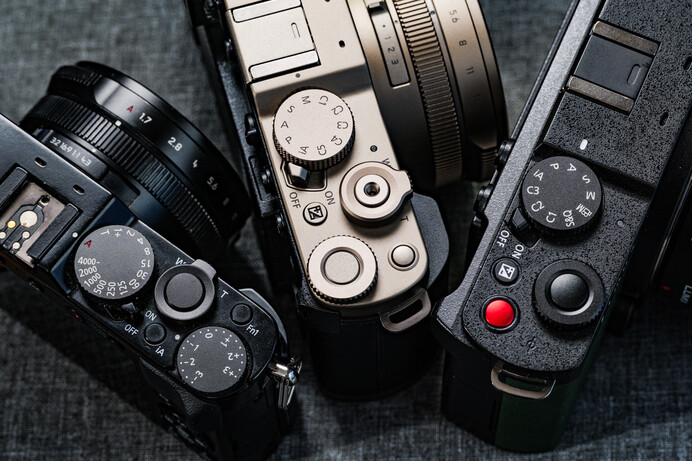
The control layout marks a clear break from the LX100 series. The dedicated shutter speed and exposure compensation dials are gone, swapped for a mode dial and a multifunctional control dial. Digital Camera World sees this as a concession to hybrid shooters at the expense of photographer appeal. Amateur Photographer uncovered a genuine logical gap: shoot in aperture priority using the aperture ring, and both body dials become inert without pressing another button first, which the reviewer called “nonsensical” for some users. He offers a fix though, that involves reassigning some of the dials. PetaPixel noted that ‘due to the L10 having tons of customization options and features like auto ISO with a minimum shutter speed option, I could use the L10 the way that I like, and didn’t feel like I was struggling with a lack of controls’, going on to offer a few different ways to set the camera up.
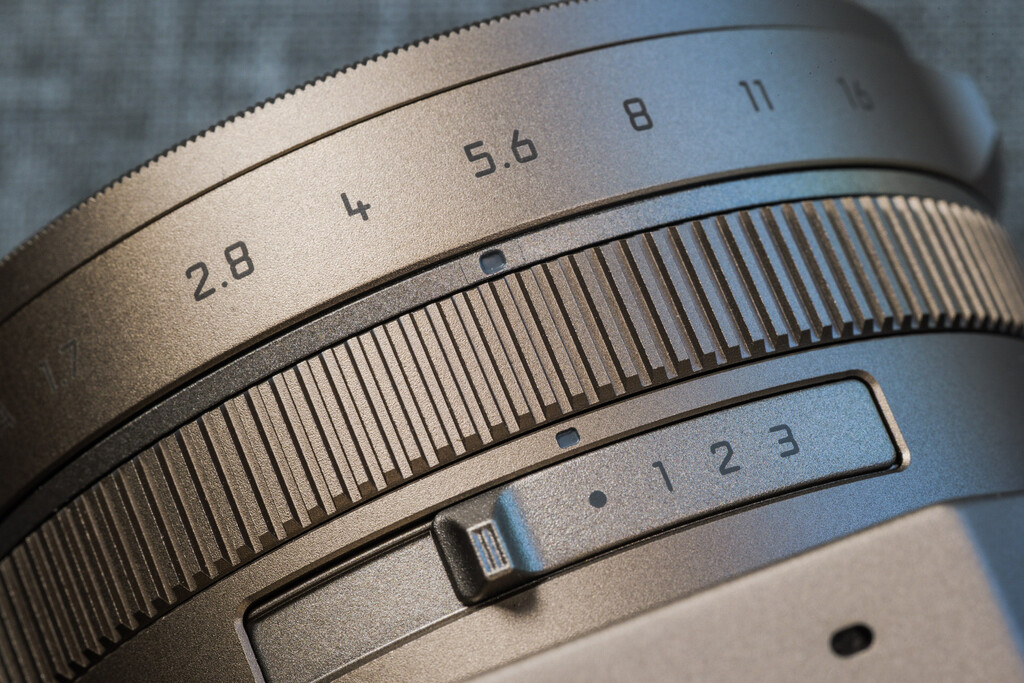
There’s no joystick, which TechRadar, Digital Camera World, and The Phoblographer all flag as a genuine inconvenience for repositioning autofocus points, leaving the touchscreen as the main alternative. The Phoblographer also missed a top dial for traditional shutter-speed control, noting that “instead, you’ve got a zoom rocker around the on/off switch.” Switching between AFS and AFC has no dedicated control at all. Amateur Photographer had to drop it into the Q menu. The lens barrel’s customisable switch is genuinely useful but now labelled just ‘1, 2 and 3’ rather than aspect ratio values, means it’s a little harder to set the ratio by glancing down at the lens. Digital Camera World found repurposing it to cycle between LUTs more practical anyway.
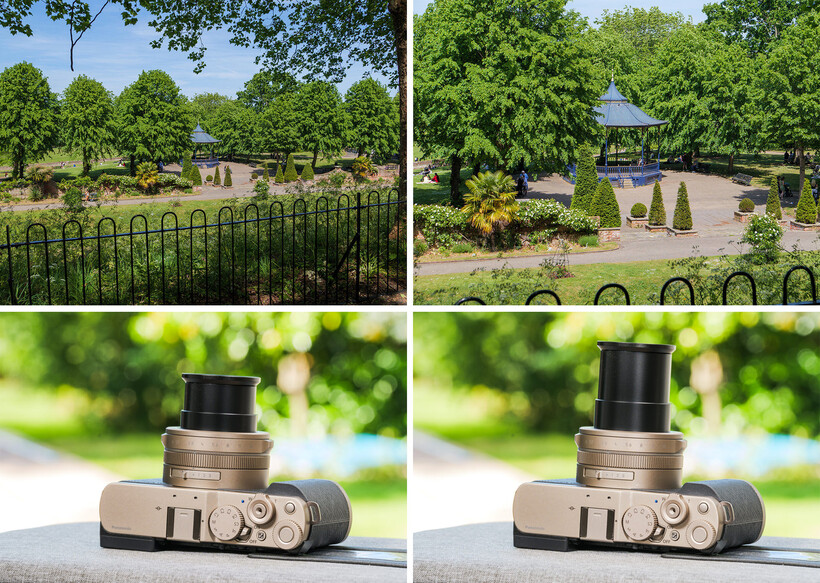
Amateur Photographer also flagged that the longest focal length is only a 75mm equivalent, and the reviewer was “constantly” finding the reach too short and wishing for something closer to 100mm”.
Performance
Battery life is one area where the L10 earns consistent praise. Multiple reviewers confirm real-world performance comfortably meets or beats the manufacturer-quoted figures: ePHOTOzine cites 460 shots via the rear monitor, while TechRadar puts it at 420. Digital Camera World found that on a full day of walking and shooting, the rated figure was exceeded, and Amateur Photographer was similarly impressed, noting the camera “will get most users through a day’s shooting with no trouble at all.” The Phoblographer lists solid battery life as one of the camera’s clear positives. The catch, flagged by Digital Camera World, is that high-resolution video will take a significant toll on endurance.
Burst performance is genuinely impressive. Amateur Photographer measured around 40 raw-plus-JPEG frames at 9fps with continuous AF and live view before the buffer slows things down. TechRadar’s longer-term assessment backs this up, finding the camera “happily rattles through 11fps burst shooting sequences” without missing a beat across three weeks of testing. In electronic shutter modes the speed climbs to 30fps, but Amateur Photographer points out that the camera offers almost no feedback that it’s actually firing, stops hard at 45 frames, and won’t continue shooting until the buffer clears. You have to fully release and re-press the shutter to restart the burst.



The start-up delay is a recurring sore point. TechRadar clocks roughly two seconds for the lens to extend before you can shoot, and PetaPixel describes the patience it requires in spontaneous moments. PetaPixel does note you can leave the camera powered on with an extended auto-off timer to sidestep this, but doing so drains the battery and leaves the lens barrel exposed while you’re wandering around. The power zoom can also be frustrating: PetaPixel finds it slow and notes it “feels like such a basic point-and-shoot issue on an otherwise sophisticated camera.” Amateur Photographer adds that during image playback the lens retracts after just 15 seconds regardless of power-save settings, meaning you may miss shots waiting for it to extend again. On stabilisation, Amateur Photographer found OIS delivered consistently sharp results down to around 1/4 sec, though it notes this optical system can’t correct rotational movement the way IBIS would.
Image quality
At the sensor level, Digital Camera World’s lab results throw up a genuine surprise: the L10’s 20.4MP Micro Four Thirds sensor “manages to equal the 24.2MP Lumix S9 throughout most of our tested sensitivity scale,” only losing ground at high ISOs where noise obscures fine detail. Dynamic range at low ISOs actually outperforms the full-frame S9, though from ISO 3200 upward the S9 pulls ahead while the L10 still matches APS-C rivals. Signal-to-noise ratio is where the smaller photosites tell against it, and both TechRadar and Digital Camera World note that without IBIS, users can’t compensate with longer handheld shutter speeds in low light. ePHOTOzine is more bullish, calling ISO performance “very impressive,” and Digital Camera World says it “wouldn’t hesitate to take this camera out at night,” though some finer detail does get smoothed over. Amateur Photographer draws the practical line at ISO 3200 with modest luminance noise reduction applied, while noting the top two settings “clean up surprisingly well using more sophisticated software like Adobe Denoise.“
At the base end, Amateur Photographer found ISO 100 raw files show just a hint of luminance noise and allow at least three stops of shadow recovery in processing.

The Leica zoom is sharp in the centre throughout the zoom range, with ePHOTOzine calling centre-frame performance “outstanding” in places, but both Amateur Photographer and Digital Camera World flag softness at the edges and corners wide open. The lens “simply isn’t as sharp, corner-to-corner, as we’ve become used to seeing from modern zooms,” Amateur Photographer concludes. Maximum sharpness sits around f/4 to f/5.6. Stop down to f/8 or f/11 and diffraction visibly softens fine detail, a point The Phoblographer echoes, noting f/4 is roughly equivalent to f/8 in full-frame depth-of-field terms. The camera does include built-in diffraction correction to help, but Amateur Photographer recommends avoiding f/16 entirely. TechRadar observed only occasional chromatic aberration in out-of-focus areas and some rainbow flare toward bright light, while ePHOTOzine notes the lens produces spectacular flare effects from bright sources that could be used creatively, along with pleasant bokeh from the nine-blade diaphragm. TechRadar highlights that the 3cm minimum focus distance is only available at the wide end of the lens – zoom to 75mm and it stretches to around 30cm, which TechRadar says is “hardly ‘macro’.”

The Real Time LUT system draws consistent praise for JPEG output. TechRadar was tempted to shoot JPEG-only given how straightforwardly it delivers the desired look, and Digital Camera World considers it fully competitive with Fujifilm’s film simulations for producing social-media-ready files straight from camera. New profiles including L Classic Gold and Leica Monochrome add to the palette, and the camera can layer up to two LUTs simultaneously with hundreds available through Lumix Lab. Digital Camera World does caution that the system carries a steeper learning curve than Fujifilm’s approach because “there is more to understand, and more scope to get things wrong.” For white balance, Amateur Photographer recommends the AWB-W warm mode over standard AWB, and also notes a consistent tendency toward underexposure that benefits from a touch of positive compensation dialled in. The Vivid Photo Style suits general shooting but can produce odd-looking skin tones for portraits, so treat it selectively.


Price and value
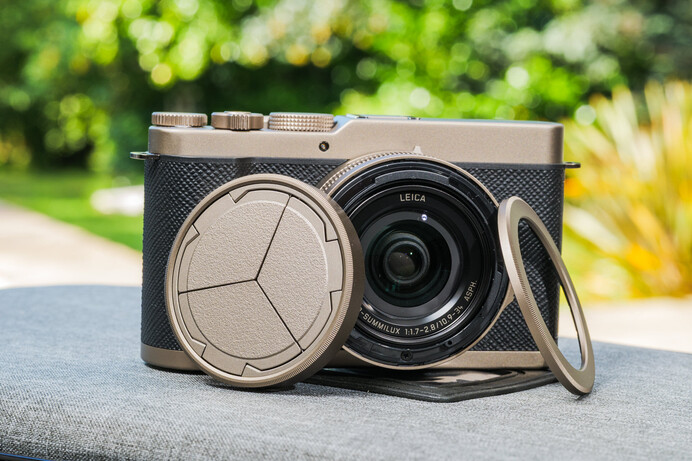
At $1,499 / £1,299 / €1,499 / A$2,599, the Lumix L10 sits in an awkward spot in the market, and reviewers are split on whether Panasonic has pitched it correctly. The Titanium Gold special edition adds $100 / £100 to that figure, and TechRadar notes you’re not paying purely for the colour. The kit also includes “a titanium-colored auto lens cap, a Lumix-branded leather strap, and a dedicated L10 lens cloth.” That version sells mainly through Panasonic’s own store, so availability is more limited than the standard black or silver models.
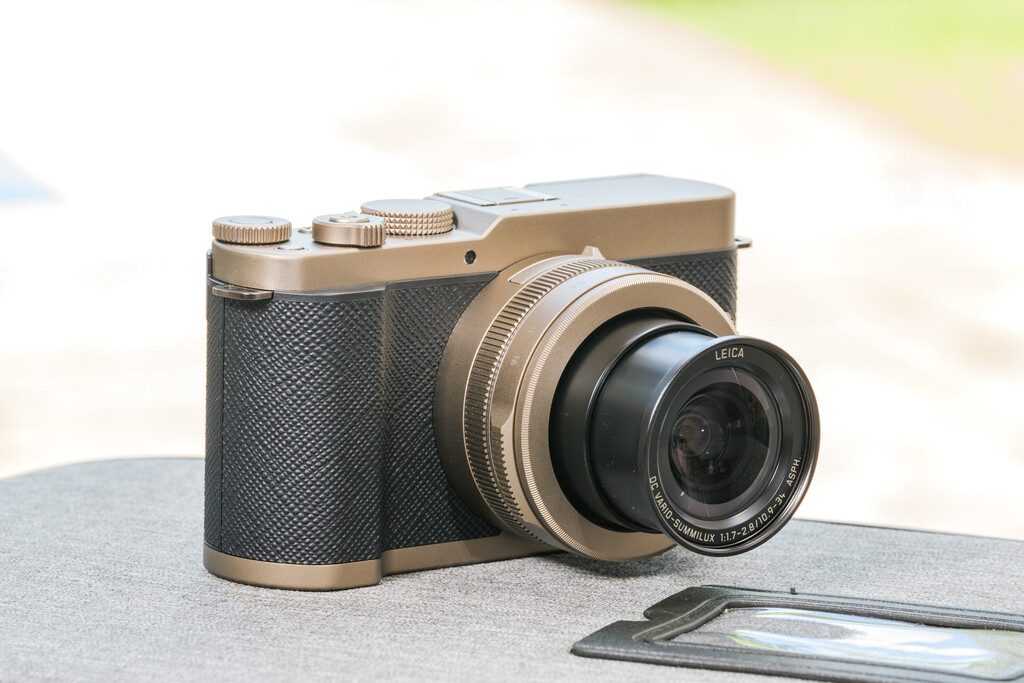
The obvious comparisons come from different directions. At $400 / £300 less than the Fujifilm X100VI, the L10 looks reasonable on paper, but Digital Camera World points out that the Fujifilm brings an APS-C sensor, IBIS, and a hybrid viewfinder to that fight, making it “definitely not a simple decision that will be defined by price alone.” The L10 is cheaper than the Leica D-Lux 8, and pricier than the Sony RX100 VII and Canon PowerShot G7 X III, though both of those use smaller 1-inch sensors and are considerably older designs.
The alternative closer to home is Panasonic’s own Lumix S9. TechRadar points out that pairing the Lumix S9 body with a small prime or collapsible kit zoom lands at roughly the same price, giving you a full-frame sensor in a compact body, albeit without a viewfinder. Digital Camera World ends up at a similar conclusion, calling the L10 possibly overpriced given what interchangeable-lens cameras can offer at this level.
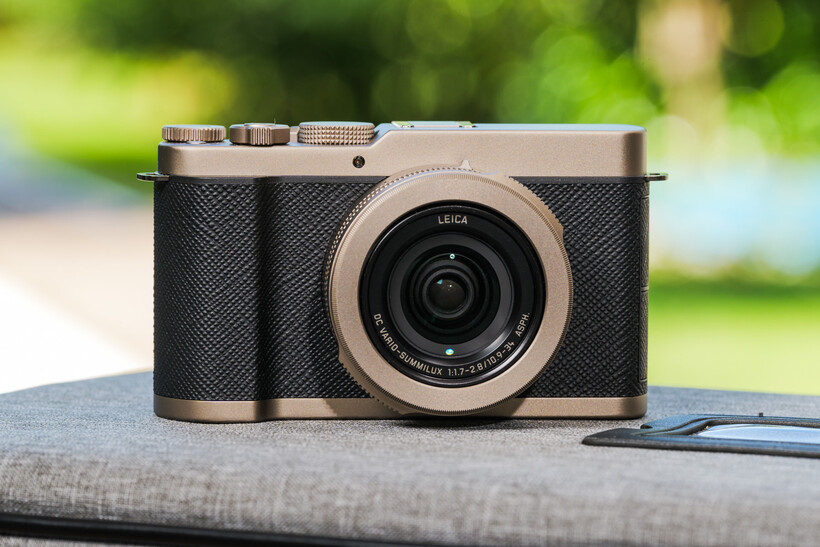
PetaPixel says the price “just *barely* feels like an appropriate cost in 2026” and that shaving a couple of hundred dollars would feel more fitting. The Phoblographer takes the opposite view entirely, rating the L10 the best point-and-shoot on the market and noting its autofocus is “comparable to cameras that cost double the price” a verdict no other publication matched.
Further reading: Some great Lumix DC-L10 reviews
Panasonic Lumix DC-L10 Specification
| Sensor type | BSI-CMOS (Back-illuminated CMOS) |
| Sensor size | 17.3 x 13mm (Four Thirds / 4/3-type) |
| Effective resolution | 20.3MP (4:3); 19.5MP (3:2); 18.1MP (16:9); 15.2MP (1:1) |
| Image file formats and compression | JPEG/RAW |
| Dynamic range / latitude | 13+ Stops when sensor output is 60fps or less |
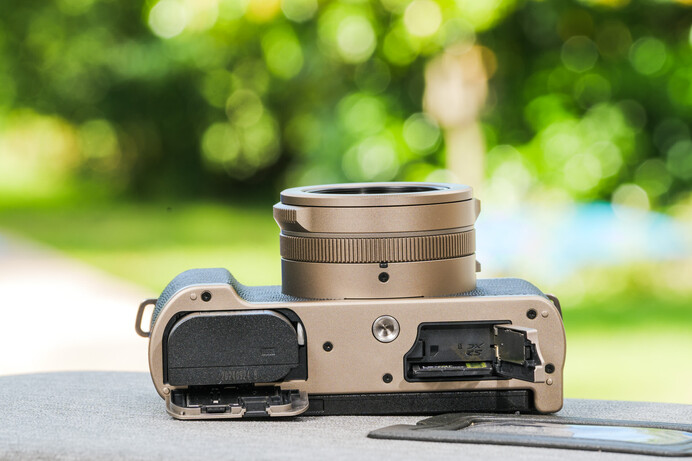
| Storage media | Single SD card slot (UHS-II); SD, SDHC, SDXC (UHS-I/UHS-II) |
| Image stabilisation | Lens-based optical (POWER O.I.S.); no in-body image stabilisation |
| Continuous shooting and buffer depth | 11fps (AFS mechanical), 9fps (AFC mechanical), 30fps (electronic AFC); ~40 frames raw+JPEG before slowdown (mechanical); 45 frames (electronic) |
| Exposure metering | Multi, centre-weighted, spot, highlight |
| Exposure compensation | +/-5 EV in 0.3EV steps |
| ISO range | ISO 100-25,600 (standard); ISO 50-25,600 (extended) |
| White balance options | AWB/ AWBc/ AWBw/ Daylight/ Cloudy / Shade / Incandescent / Flash / Custom Set 1, 2, 3, 4 / Kelvin setting 1, 2, 3, 4 |
| Shutter type and speed range | Mechanical: 60sec – 1/2000sec; Electronic: 60sec – 1/32000sec, Bulb |
| Flash sync speed | All mechanical shutter speeds up to 1/2000sec |
| Flash options and compatibility | Hotshoe. Flash on/off, front/rear curtain, slow sync, red-eye reduction, auto, +/-3EV flash exposure compensation, wireless control with Lumix DMW-FL200L/FL360L/FL580L flash units, TTL with Panasonic/OM dedicated flashes |
| Battery and CIPA rating | DMW-BLK22; 410 shots (EVF), 420 shots (LCD), 1000 shots (power save mode) |
| Charging and power | USB-C charging and data transfer |
| Connectivity and ports | USB-C (charging and data transfer), 3.5mm stereo mic input, Wi-Fi (2.4GHz, 5GHz), Bluetooth 5.0; no headphone, HDMI or remote release connector |
| Weight | 508g (with battery and card) |
| Dimensions | 127.1 x 73.9 x 66.9 mm |
| Video specification | |
| Video resolution options | 5.6K (17:9); 5.2K (4:3); C4K/4K; Full HD |
| Frame rate options (including any crop factors) | 5.6K up to 60fps; 5.2K (4:3) up to 30fps; 4K up to 120fps; Full HD up to 240fps |
| System frequency | 24.00Hz, 50.00Hz, 59.94Hz |
| Bit depth | 10bit |
| Aspect ratios / open gate | 17:9 (5.6K), 4:3 (5.2K), 16:9 (4K/FHD); 5.2K 4:3 |
| LUTs, colour profiles and log formats | Real Time LUTs (downloadable via Lumix Lab app); Photo Styles including L.Classic, L.Classic Gold, L.Classic Neo, Leica Monochrome; VLog colour profile |
| Raw video output (BRAW / ProRes RAW) | No |
| Clip length limit | No |
| Cooling | No active cooling |
| Video storage options | Single UHS-II SD card slot; MP4 Lite codec available for smaller file sizes |
| Audio recording options | Built-in stereo microphone; 3.5mm stereo mic input; 4-channel audio via optional DMW-XLR2 adapter on hot shoe |
| Mic input port (size and type) | 3.5mm stereo |
| Headphone monitoring | No headphone socket |
| HDMI output (connector type) | No HDMI output |
| Internal audio format | LPCM/AAC, up to 96kHz/32-bit with DMW-DMS1 microphone or XLR2 XLR adapter. Up to 96kHz/24-bit via 3.5mm mic port or internal mics |
For more information see the Panasonic website