




As the superzoom market continues to hot up, Sony’s latest HX100V dips its oar into the 30x ultra-zoom sector. With unique features such as GPS (Global Positioning Satellite), does it have the goods to be the very best superzoom out there? The What Digital Camera Sony Cyber-shot HX100V review takes a look…
Sony Cyber-shot HX100V Review
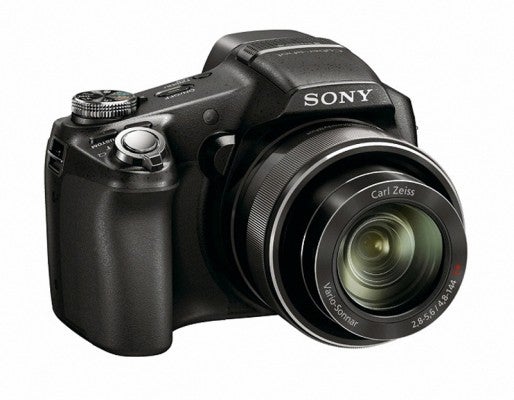
Sony Cyber-shot HX100V review – Features
The Sony HX100V joins an expanding group of 30x optical zoom superzoom cameras, going head to head against the likes of the Canon PowerShot SX30 IS and Fujifilm FinePix HS20 EXR. Where the HX100V sits apart from the competition is with its GPS (Global Positioning Satellite) technology (as represented by the ‘V’ designation in the name) that can track and geotag images with location data.
The Sony HX100V’s 27-810mm (30x) optical zoom has a long-reaching range and can be adjusted by either using the manual zoom ring or zoom rocker on top of the camera – the choice is yours. For added control the same zoom ring doubles up as a manual focus ring by the flick of a switch, meaning that both zoom and focus are always well-positioned for optimum control. Optical Steady Shot, Sony’s brand of image stabilisation, means lens-shifts take place to counteract camera sake for sharper images that benefit image preview in real time. Plus an f/2.8-5.6 aperture means a reasonable amount of brightness and depth of field control at all focal lengths.

Sony Cyber-shot HX100V review sample image – click for full size gallery
On the Sony Cyber-shot HX100V’s inside is a 16.2-megapixel Exmor R CMOS sensor – the ‘R’ being Sony’s way of saying ‘back-lit’ for an improved construction for better image quality. The sensor size is the same as that found in the majority of compact cameras, however.
As well as a tilt-angle 3in, 920k-dot LCD on the camera’s rear, the HX100V also has a built-in electronic viewfinder (also 920k-dot) that’s ideal for use in bright sunlight or for added support and stability when framing at long focal lengths.
Back when the HX1, Sony’s 2008 superzoom, hit the shelves it was the first model to feature Sweep Panorama. This innovative mode allows for real-time panorama capture that auto-stitches in-camera for immediate results. Not only did this start a craze for competitor manufacturers to create similarly-named (but ultimately the same) modes, it’s also lead the HX100V’s Sweep Panorama to step things up a gear. Now there’s iSweep Panorama HR (High Resolution) that uses a larger portion of the sensor for larger final images and, should you have the right equipment to display it, 3D panoramas can also be shot too.
Stills images are the order of the day and can even be reeled off at a rate of 10 per second in the burst mode. But, as with all things Sony, 3D is also at the forefront. A ‘3D’ option on the mode dial shoots two consecutive images and processes them in camera to create an MPO file that can be played back on 3DTVs or similar devices. The HX100V’s screen itself is standard, so the effect cannot be witnessed on the camera itself.
Add 1080p50 movie capture to the fold and the Sony Cyber-shot HX100V also presents top-spec moving image capture. It’s possible to make full use of the lens’ zoom during recording and full-time autofocus takes care of the focusing for you.