




Full-frame DSLRs offer the very best in image quality, but which one is best suited to you? We've pick a selection of the best full-frame DSLRs to help you decide
The term ‘full frame’ refers to a full-frame sensor that’s the same size as an individual frame of traditional 35mm film.
The advantages of full-frame sensors over smaller digital camera sensors, such as APS-C or Micro Four Thirds, are numerous.
For starters, the larger surface area of a full-frame chip means that the individual light-capturing photodiodes (pixels) can be larger, which in turn improves performance in low light.
Creatively speaking, another advantage of full-frame sensors is that it’s possible to attain a shallower depth of field compared to their smaller-sensor comrades.
As a result, full-frame sensors are considered to deliver the very best in image quality; although they do feature high price tags, so you’ll want to be sure you’re picking the right full-frame camera.
Key points of a full-frame camera
Sensor
Full-frame cameras are well known for producing the best performance in low light, thanks to their large photodiodes (pixels)
Pop-up flash
Not all full-frame cameras feature a pop-up flash, so for extra illumination you’ll require a hotshoemounted flashgun
Lenses
Full-frame cameras can only be used with full-frame lenses. Canon EF-S lenses, for example, are not compatible with Canon fullframe DSLRs
Build quality
Expect a full-frame camera to be robustly made with weather seals for maximum protection
Best full-frame DSLRs
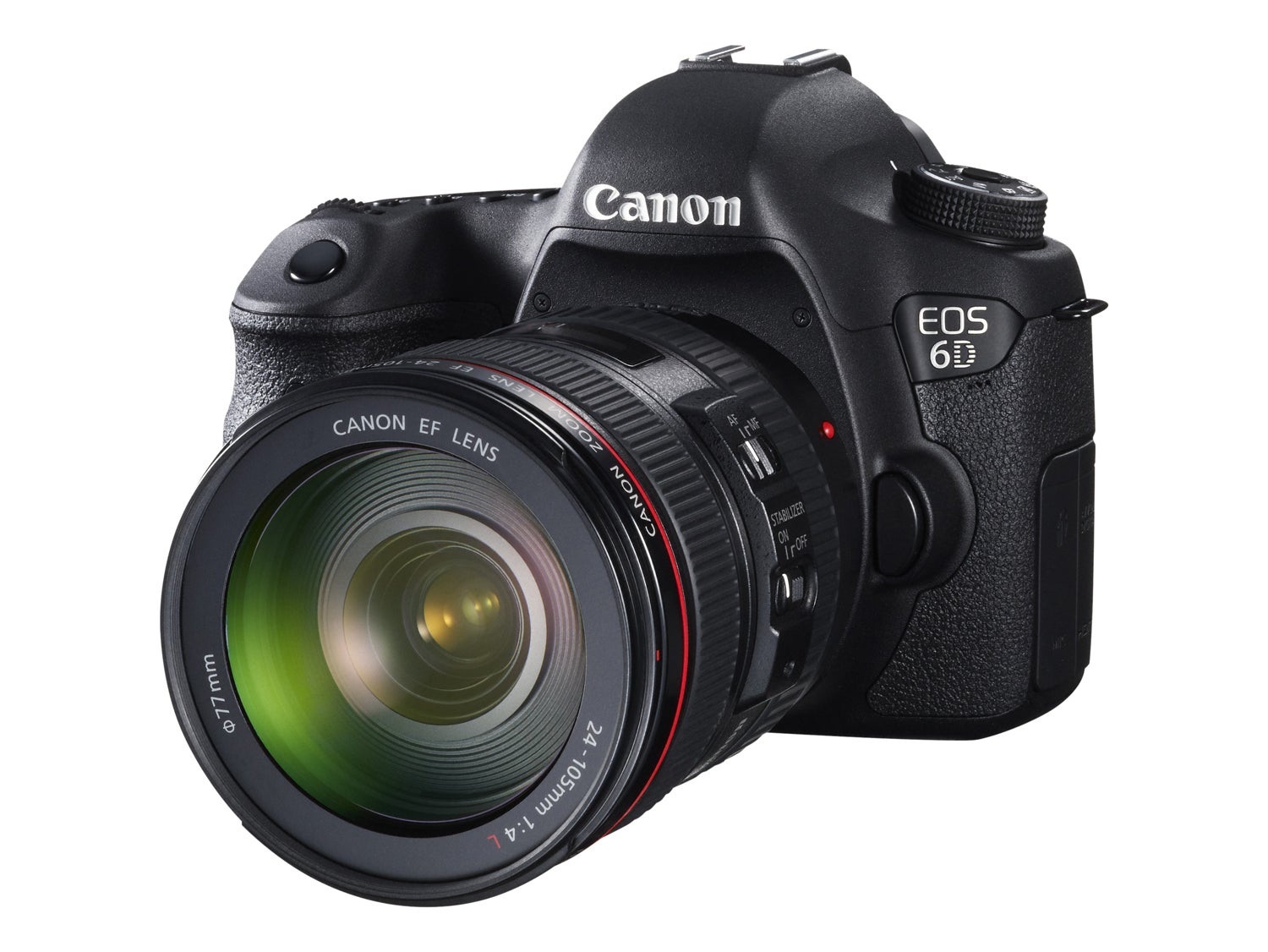
Canon EOS 6D
 Best for:
- Enthusiasts wanting to upgrade from a DSLR to full-frame
- Travel photography because of the inbuilt GPS and Wi-fi
- Shooting in low light
Key specs:
Price: £1140
Sensor: 20.2MP full-frame CMOS
File formats: JPEG, Raw, Raw+JPEG
Display: Fixed 3in, 1,040k dots
ISO range: 100-25,600 (exp. to 100-102,400)
Exposure modes: PASM, Scene Intelligent Auto, Scene
Drive mode: Single, Continuous, Self-timer, Silent
Movie mode: 1920 x 1080p Full HD at 30/25/24fps
Dimensions: 144.5 x 110.5 x 71.2mm
Weight: 755g with battery and card
Pros
- Image quality
- ISO performance
- Inclusion of both Wi-fi and GPS
- AF performance in low light
Cons
- One cross-type AF point
- JPEG sharpness
- Playback zoom control
- 97% viewfinder
Cheaper, smaller and lighter than any existing Canon full-frame DSLR, the EOS 6D is equipped with a 20.2MP sensor and Canon’s DIGIC 5+ image processor – the same processor used inside the 5D Mark III. This combination provides a native sensitivity range of ISO 100-25,600,which can be extended to a base ISO 50 and upwards to an equivalent of ISO 102,400. As for the speed it shoots at, the 6D offers a maximum continuous burst of 4.5fps.
The EOS 6D’s 11-point focusing system features a single cross-type sensor in the middle, with ten additional points scattered around the perimeter. The optical viewfinder provides 97% frame coverage and 0.71x magnification, while the 3in rear display boasts a 1,040k-dot resolution.
The 6D offers Wi-fi connectivity, and complements this with a built-in GPS system – a rarity among DSLRs. In terms of design and build, the 6D shares characteristics with the 5D Mk III, minus a few subtle differences. The rubberised handgrip isn’t as chunky and it’s also noticeably lighter in the hand. The layout of the top-plate is clear, with independent buttons to control AF mode, drive mode, metering modes and ISO. The EOS 6D excels in terms of its low-light AF performance. The central cross-type AF point can lock onto subjects right down to -3EV, which enables the 6D to find focus even in extremely dark situations. That said, it can’t quite match the Nikon D610 for advanced AF tracking. The 63-zone metering system can be relied on to attain accurate exposures. The 6D’s sensor is capable of resolving finely spaced horizontal lines right down to 32 lines per mm (lpmm), which is equal to its main rival – the Nikon D600 – at the same ISO sensitivity. Up to ISO 3200, you’ll get clean, noise-free images.
Verdict
It’s great to see an affordable full-frame body in Canon’s line-up for under £1,200, and for APS-C DSLR users considering the jump up to full-frame, it’s a logical option. The addition of Wi-fi is excellent, and though it’s no 5D Mark III, it goes above and beyond what most enthusiasts are calling out for. To sum up, the 6D offers superb image quality to more consumers at a price that’s realistic.
Scores:
Features: 18/20
Performance: 18/20
Design: 18/20
Image quality: 18/20
Value: 18/20
Overall score: 4 1/2 out of 5
Read our review of the Canon EOS 6D
Find the best deals for the Canon EOS 6D
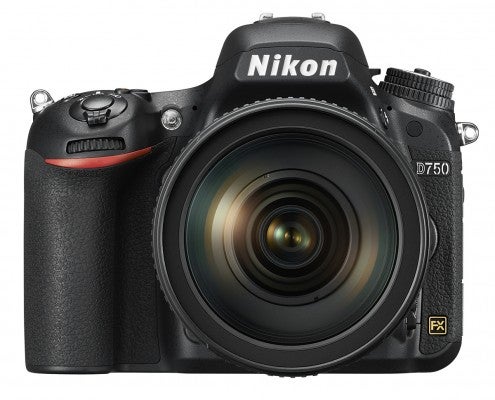
Nikon D750
 Best for
- Excellent all-round performance
- Those after their first full-frame DSLR
- Users not needing to record the same level of detail as the D810
Key specs
Price: £1750
Sensor: 24.3MP full-frame CMOS
File formats: JPEG, Raw, Raw+JPEG
Display: Tilt-angle 3.2in, 1,229k dots
ISO range:100-12,800 (exp. to ISO 50-51,200)
Exposure modes: PASM, Auto, Scene
Drive mode: Single, Continuous, Quiet
Movie mode: 1920 x 1080p Full HD at 60/50/30/25/24p
Dimensions: 140.5 x 113 x 78mm
Weight: 840g body only
Pros
- High-resolution sensor
- Vari-angle LCD screen
- Inclusion of Wi-fi as standard
Cons
- Maximum shutter speed of 1/4000sec might be restrictive for some
- Lack of GPS
Tailored for enthusiasts, while catering for both the hobbyist and the aspiring pro, the D750 features a redesigned version of the 24.3MP sensor found in the D610. The presence of an optical low pass filter distinguishes it from the D810 and helps to prevent moiré patterning, although it does so at the expense of finer detail reproduction. With a maximum shooting speed of 6.5fps and a native ISO range of 100-12,800 (extendable to 51,100) it shoots faster and a stop higher than the D610. It’s also Nikon’s first DSLR to feature a 3.2in, 1,299k-dot screen with variangle functionality and introduces built-in Wi-fi connectivity to boot.
The body is a monocoque design, constructed with a mix of materials including thermoplastic and carbon fibre. Magnesium alloy is used on the top and bottom to add strength and though by no means light, it’s smaller than the D610. It feels well balanced and well matched with heavy telephoto lenses, while its control layout is more akin to Nikon’s enthusiast models – the mode dial is on the left of the top-plate, with a selection of controls beside the screen. One slight disappointment is the lack of an AF-ON button.
Equipped with a new Multi-Cam 3500FX Mark II autofocus module that sports 51 AF points with 15 cross-type sensors, the D750 is quick to focus. It can lock on in dark conditions down to -3EV and there are 1.2x (16.7MP) and 1.5x (10.3MP) crop modes if you’d like a bit more reach from your Nikon lenses.
Colour rendition is much the same as the D810 and it can now perform spot white balance in live view. Images are noise-free up to ISO 1600, while JPEG files do a great job of managing fine detail through noise reduction at higher ISOs.
With a tilting LCD and featuring Wi-fi , the D750 is a full-frame DSLR that breaks new ground and, thanks to a modified grip, it handles exceptionally. Though the resolution isn’t as good as some of Nikon’s full-frame cameras lacking anti-alias filters, it’s good enough for most. It’s one of the best all-round DSLRs currently available and has dropped by more than £50 from its launch price.
Scores:
Features: 19/20
Performance: 18/20
Design: 19/20
Image quality: 19/20
Value: 18/20
Overall score: 5 out of 5
Read our review of the Nikon D750
Find the best deals for the Nikon D750
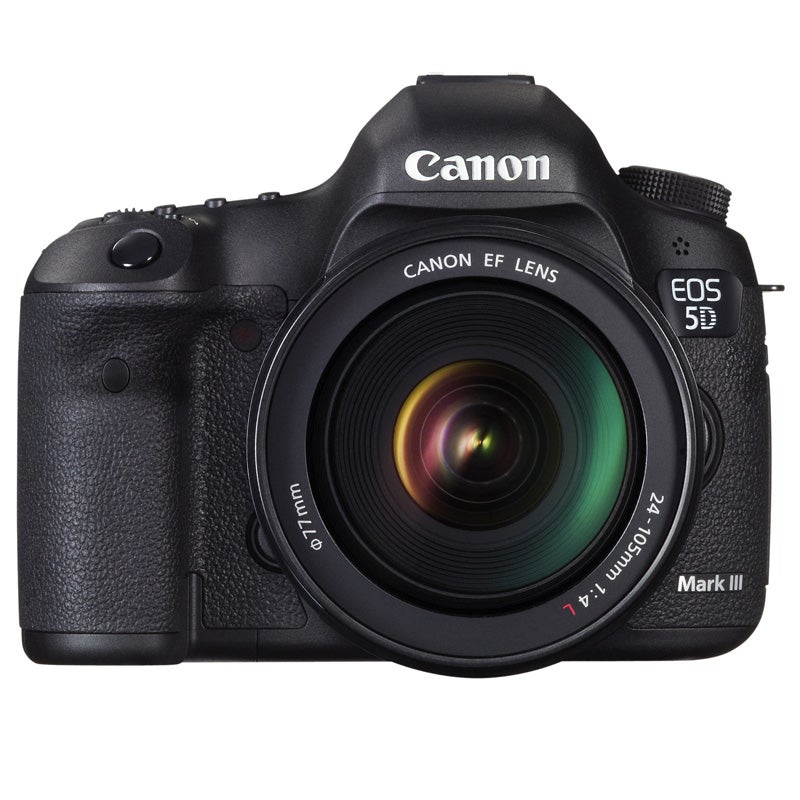
Canon EOS 5D Mark III
 Best for
- Those seeking a well-rounded, advanced DSLR
- Shooting everything from detailed landscapes to portraits or action
- High ISO shooting
Key specs
Price: £2250
Sensor: 22.3MP full-frame CMOS
File formats: JPEG, Raw, Raw+JPEG
Display: Fixed 3.2in, 1,040k dots
ISO range: 100-25,600 (exp. to ISO 50-102,400)
Exposure modes: PASM, Auto+
Drive mode: Single, Continuous, Self-timer
Movie mode: 1920 x 1080p Full HD at 30/25/24fps
Dimensions: 152 x 116.4 x 76.4mm
Weight: 950g body only
Pros
- Excellent set of features
- Build quality is much better than Mk II
- Great AF system
- Video performance
Cons
- Expensive compared to some rivals
- Very occasional underexposure
- No built-in flash
While resolution remains similar to that of the EOS 5D Mk II, the 22.3MP CMOS sensor inside the 5D Mk III has a different design that employs gapless microlenses for improved light-gathering. This is paired with Canon’s DIGIC 5+ image processor – the same processor used inside Canon’s flagship EOS 1D-X. The 5D Mk III offers a native sensitivity range of ISO 100-25,600 which can be expanded to the equivalent of ISO 102,400. Continuous shooting, meanwhile, maxes out at 6fps.
The optical viewfinder is large and bright and offers a 100% fi eld-of-view, while the back of the camera is adorned with a 3.2in, 1,040k-dot LCD display, though it’s not a touchscreen.
The body is constructed from high-grade magnesium alloy, and further benefits from weather-sealing to keep dust and moisture out. In Single One-Shot AF, focus locks on very quickly. You can use all 61 AF points if you wish, using the joypad on the back of the camera, or a combination of the rear and front command dials. If you don’t need to use all 61 AF points, then the number of active AF points can be reduced to the 41 cross-type points, along with 15 points or nine points. The 5D Mk III’s metering system copes well under a range of lighting conditions, though it can be guilty of underexposure at times, which requires a touch of exposure compensation (typically +0.3EV or +0.7EV) in order to get more balanced results. Images generally display a pleasing and smooth tonal range. The camera’s built-in Highlight Tone Priority feature can be used to further improve gradation in brighter areas. Raw and JPEG images look similar at low sensitivities and image noise is very well controlled in general, with images up to ISO 1600 relatively noise-free.
Verdict
While the Mk II was more suited to specific photographic disciplines, the Mk III is a much more well-rounded, versatile DSLR, thanks to boosts in many aspects of its performance. The autofocus and low-light improvements make it one of the best cameras around for shooting at high sensitivities. The more you shoot with it, the more you realise what a capable camera it is.
Scores:
Features: 19/20
Performance: 19/20
Design: 17/20
Image quality: 19/20
Value: 18/20
Overall score: 5 out of 5
Read our review of the Canon EOS 5D Mk III
Find the best deals for the Canon EOS 5D Mk III
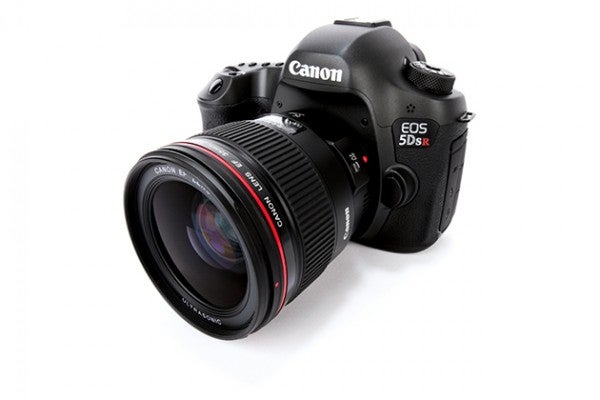
Canon 5DS R
Best for
- High-resolution shooting
- Detailed shooting
- Studio and landscape photography
Key specs
Price: £2390
Sensor: 50.6MP full-frame CMOS
File formats: JPEG, Raw, Raw+JPEG
Display: Fixed 3.2in, 1,040k dots
ISO range: 100-6400 (expandable to 50-12800)
Exposure modes: PASM, Auto+
Drive mode: Single, Continuous, Self-timer
Movie mode: 1920 x 1080p Full HD at 30/25/24fps
Dimensions: 152 x 116.4 x 76.4mm
Weight: 845g body only
Pros
- Super high resolution
- Robust, weather-sealed body
- Excellent autofocus
Cons
- Relatively limited ISO range
- Enormous, difficult to handle raw files,
- Fixed LCD screen
Canon’s EOS 5DS and 5DSR are currently the highest resolution full-frame DSLRs on the market, both sharing the same 50.6-million pixel sensor. Both of the cameras are relatively identical, but the effect of the optical low pass filter on the latter has been “cancelled”. This mans you end up with something with a high resolution, but there’s a possibility of introducing aliasing and moire.
In terms of physicality, the body of the camera is pretty much identical to the EOS 5D Mark III. However, internally, there’s a new shutter and mirror assembly which is designed to minimise vibrations – particularly important for a sensor with such a high resolution. In-camera sharpening algorithms have also been updated to get the most detail out of the cameras’ image files.
While the 5D Mark III is a great all-rounder, essentially the 5DSR has been optimised for studio photography – or for those that need to get the most detail possible.
The 5DSR has been robustly constructed and features a magnesium alloy shell. It’s also dust and weather proof, which is useful for outdoor work. The dials and buttons place every key control at your fingertips.
A large and clear viewfinder has an LCD overlay on it to give lots of useful information. Although there’s no articulating or tilting screen, the fixed one is great for live view shooting. Autofocus uses the same 61-area sensor as the 5D Mark III, but can now work in conjunction with the colour-sensitive 150,000-pixel metering sensor to detect faces and focus specifically on your subjects’ eyes. In practical use the AF system works exceptionally well, even when shooting with fast primes and off-centre subjects.
Image quality is superb, although to get the most from the sensor, you’ll want to pair the camera with high quality lenses (and excellent technique). You’ll need to use fast shutter speeds to avoid blur, but under the optimum conditions, the amount of detail the camera can capture is extraordinary.
At low ISOs, noise is all but invisible. It’s only from ISO 1600 that noise starts to become apparent. Even at ISO 6400, images are perfectly usable, especially when processed from raw. Colours are punchy and well saturated, while the auto white balance system is accurate.
Verdict
The 5DS is an extremely accomplished DSLR which offers fantastic image quality inside an already well-loved design. The 50.6MP is the highest resolution (for now) of any full-frame camera. Dynamic range is very respectable, although images are perhaps not quite as noise-free in very deep shadows as the Nikon D810’s 36 million pixel sensor.
Scores:
Features: 18/20
Performance: 19/20
Design: 19/20
Image quality: 19/20
Value: 17/20
Overall score: 5 out of 5
Read our full review of the Canon EOS 5DS R
Find the best deals for the Canon EOS 5DS R
Nikon D810
 Best for
- Photographers wanting to resolve the highest level of detail possible from a full-frame DSLR
- Those after an ‘S Raw’ format
- Users looking for a solid workhorse of a camera
Key specs
Price: £2350
Sensor: 36.3MP full-frame
CMOS file formats: JPEG, Raw, Raw+JPEG
Display: Fixed 3.2in LCD, 1,229k dots
ISO range: 64-12,800 (exp. to ISO 32-51,200)
Exposure modes: PASM, Programmed Auto
Drive modes: 5fps (6fps in DX-crop mode)
Movie modes: 1920 x 1080p Full HD at 60/50/30/25/24fps
Dimensions: 146 x 123 x 81.5mm
Weight: 880g body only
Pros
- High resolution
- Stunning detail capture
- Superb LCD screen
- Extensive ISO range
- Robust build quality
- Varying file sizes
- Refined button placement
Cons
- Bulky
- Heavy (880g body only)
- Lacks Wi-fi or GPS
- No 4K video
- High price
- Buying the battery grip adds £285 to the price
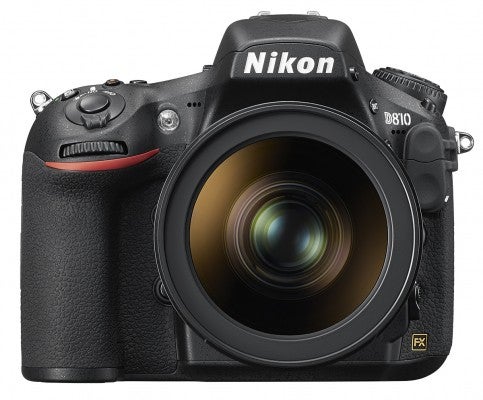
What makes the D810 notable is that it’s the first full-frame DSLR to be completely lacking in an optical low-pass filter and this, combined with the 35mm full-frame CMOS sensor that boasts a resolution of 36.3MP, makes it stand out as one of the best cameras currently out there for recording the finest levels of detail.
Nikon has given it a wider range of image capture formats, too, including a new ‘S Raw’ format, which captures uncompressed files at 9MP. Despite the hefty file sizes it churns out, it shoots continuously at up to 5fps, or 6fps in DX crop mode. A 3.2in, 1.23m-dot LCD screen and Full HD video are present, too, and there’s a small pop-up flash which can be used to illuminate scenes as well as trigger off-camera flash. If you’re interested in video capture, the good news is that the D810 caters well for those needs as well.
Although it doesn’t offer the new ultra-HD 4K video capture, it does still capture at 1920 x 1080p Full HD. The video capture capabilities are also fairly comprehensive in terms of frame rate, with 60p, 50p, 30p, 25p and 24p all on offer, as well as 60 and 50p at the slightly lower resolution 1280 x 720 setting.
The D810 features several button placement refinements: the fiddly metering mode button has been replaced by a dedicated button taking the place of the bracketing button, which is now housed on the side of the camera. The grip also has a larger indentation for the middle finger and there’s a larger thumb rest, too, adding up to give it a more secure feel in the hand. The body is comprised of magnesium alloy and although that makes the camera heavy – at a touch under 1kg in weight – the improved weather-sealing means it’s built to survive the toughest tests and it’s a solid workhorse of a camera. Autofocus is lightning-fast, as you’d expect, and although the 51 focus points are concentrated towards the middle, they can be altered between focus modes. Not only is the LCD screen one of the best specified in the market in terms of size and resolution, but it also benefits from the addition of a fourth white dot per pixel. In real terms, this means the screen offers better visibility in bright conditions and reduces power consumption in lower light. The screen also adjusts brightness to suit the conditions you’re shooting in, and on the whole it’s a screen that impresses and certainly feels like an improvement.
The 9,100-pixel RGB metering sensor delivers well-balanced exposures, and a new ‘highlight’ mode specifically looks to preserve more highlight detail in high-contrast conditions. At its base ISO, it almost out-resolves test charts and the detail the camera captures really has to be seen to be believed.
Noise is handled very well up to ISO 3200, although ISO 25,600 and 51,200 are best reserved for low-light emergencies.
Verdict
The D810 isn’t a complete overhaul in comparison to its predecessors, but the improvements that have been made are certainly welcome. The LCD screen is superb and helps to enhance the image review process no end. It’s also welcome to have the varying file size options so you don’t always have to shoot at 36MP. The level of detail resolved by the sensor is truly stunning, and overall it’s a great upgrade to one of the best DSLRs going.
Scores:
Features: 19/20
Performance: 18/20
Design: 19/20
Image quality: 19/20
Value: 18/20
Overall score: 5 out of 5
Read our review of the Nikon D810
Find the best deals for the Nikon D810
Pentax K-1
Check back to What Digital Camera soon for our full review of the Pentax K-1, and the best deals.
Key specs:
Price: £1,599
Sensor: 36.4MP full-frame CMOS
Display: 3″ 1.037-million-dot, flexible tilt
ISO range: 100-204,800
Exposure modes: P, Av, Tv, M, Sv, TAv
Continuous shooting: 4.4fps
Movie modes: Full HD up to 60 fps
Dimensions: 136.5 x 110 x 85.5mm
Weight: 1010g with battery + card
Pros
- High resolution
- Good stock of new and existing lenses
- Unprecedented levels of manual control using the top plate
- Excellent value for money
Cons
- No 4K resolution
- Small potential for lower corner detail when tracking moving subjects
- Lack of touchscreen
With Canon having launched its first affordable full frame DSLR, the EOS 5D, way back in 2005, and Nikon and Sony following suit in 2008 with the D700 and Alpha 900 respectively, it’s always been a surprise that Pentax hasn’t moved more quickly. Aside from anything else, the perceived advantage of an upgrade path from the APS-C format will surely have tempted many former Pentax users across to other brands in the meantime. So the question is whether the K-1 offers enough to keep the brand’s existing fans loyal, and maybe even tempt users of other makes across to Pentax?
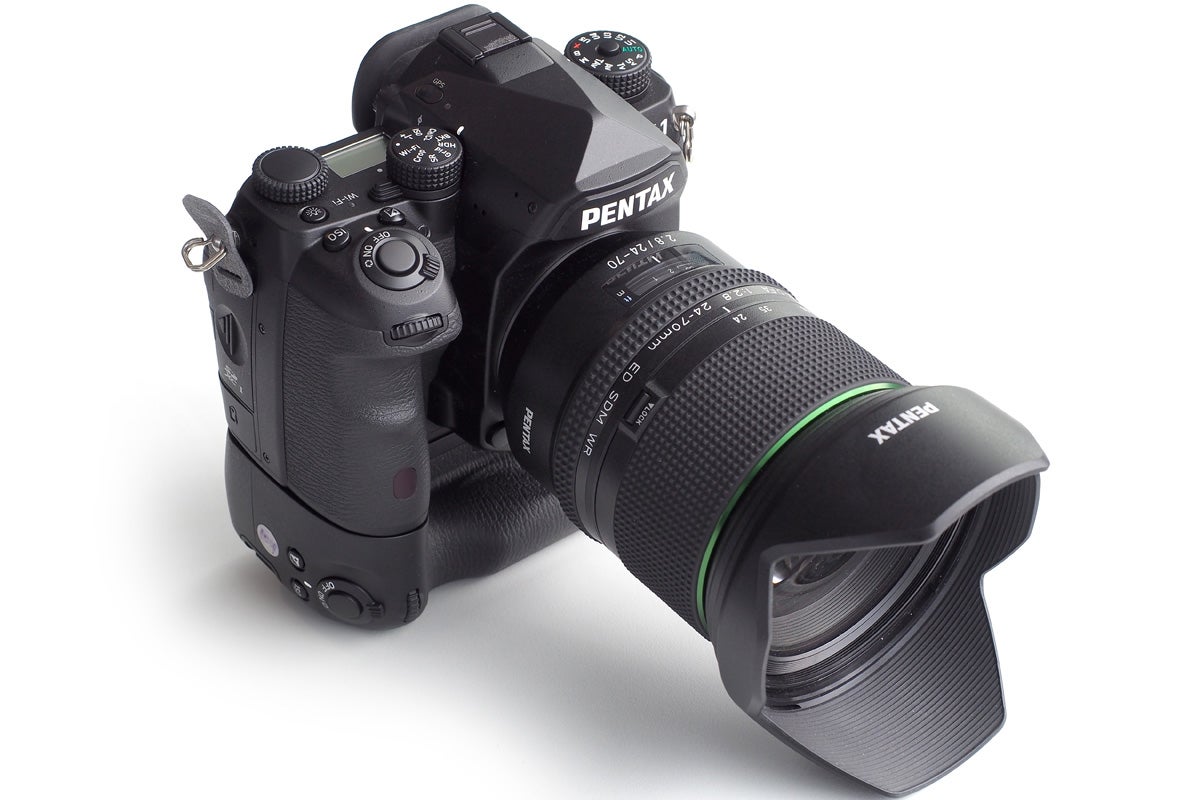
Well, fans ought to rejoice as the K-1 has arrived with a truly impressive set of features. It has a 36-million-pixel full frame sensor, with built-in 5-axis image stabilisation to help keep pictures sharp. This works with every lens that can be put on the camera, which includes a huge range of K-mount lenses made since 1975. The tough, weathersealed magnesium alloy body positively bristles with buttons and dials, and on the back there’s a novel 3.2in ‘flextilt’ LCD monitor. So the K-1 stacks up very well against the likes of the Nikon D810 and Canon EOS 5D Mark III, but with a body-only price of £1599.99, it’s much cheaper than either.
Verdict
We’ve been waiting so long for a full frame Pentax DSLR that there was always a risk it might feel like a let-down. But we’re pleased to say that if anything, the opposite is true – we’re pleasantly surprised by just how much Ricoh has managed to fit into its Pentax K-1 while maintaining an unexpectedly low price point for its specification. It looks like Canon and Nikon suddenly have seriously strong competition to contend with. Indeed, the K-1 offers unprecedented value for money for a full frame DSLR.