




What are the different type of filters available for your digital camera and what does each one do? Our filters explained article covers graduated filters, ND filters, Polarising filters, and UV filters.
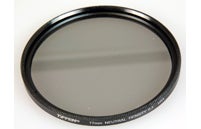
Grad filter (Graduated)
Graduated filters are usually neutral density types (more commonly called ‘ND Grad’), with the ND effect on one half gradually blending to the other clear half. Useful for balancing lighter skies with darker foreground detail.
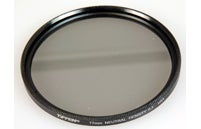 ND filter (Neutral density)
Neutral Density filters reduce all wavelengths of light equally, so that the final result shows no colour bias. Useful for extending exposure times, such as when trying to capture motion blur.
UV filter (Ultraviolet)
Ultraviolet filters block UV
light from entering the lens. As they have almost no effect on images in
everyday use, many people keep these on their lenses permanently to
protect the front element from any damage.
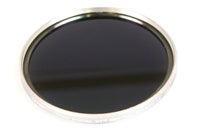
Polarising filter
The most useful filter, a polariser sorts incoming light into a single polarity. By doing so, it can deepen blue skies and minimise reflections in water or glass, for example.