




The 14-megapixel SD14 is the third DSLR from Sigma to employ the unique triple-layered Foveon sensor. Has the company got it right this time?
Sigma SD14 Review
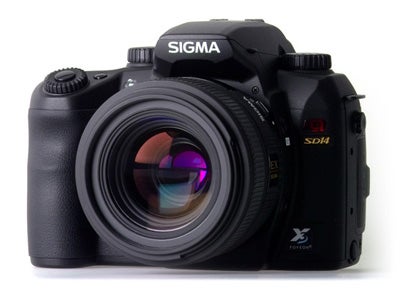
It may be better known as a lens manufacturer, but Sigma has a long-running history as a camera manufacturer too, with a number of well-received 35mm SLRs to its name before digital capture became the dominant force. As the digital SLR market grew it wasn’t long before the company joined the fray, with the SD9 back in 2002.
However, while other manufacturers relied on familiar Bayer-pattern CCD designs, Sigma found its own way, with a little help from sensor manufacturer Foveon and this continues with its third SD model – the SD14. Rather than using a grid of red, green and blue filtered pixels the Foveon CMOS sensor uses silicon, which naturally absorbs the three different wavelengths of light to different depths. By placing pixel sensors at these three discrete depths the Foveon X3 sensor is unique in that it can capture full colour information at each and every photosite, where other sensors will only record a shade of red, green or blue.
This means images from Sigma’s cameras don’t need to go through complicated (and sometimes destructive) interpolation routines to generate a full colour image. As a result, Sigma claims its digital SLRs are capable of delivering better detail and fewer colour artefacts than its rivals, while the tri-layered construction of the sensor effectively triples the camera’s resolution. With the SD14 this means the 4.64 million ‘pixels’ on the sensor translate to a 14MP image… Or do they?
More info:
Compare the Sigma SD14 with other DSLRs